Why premium fashion jewellery costs more: what you pay for
Compare three Miréa designs by their materials, settings, joints, backs and fastenings. Five practical questions to ask before paying a premium.
Maison Miréa editorial team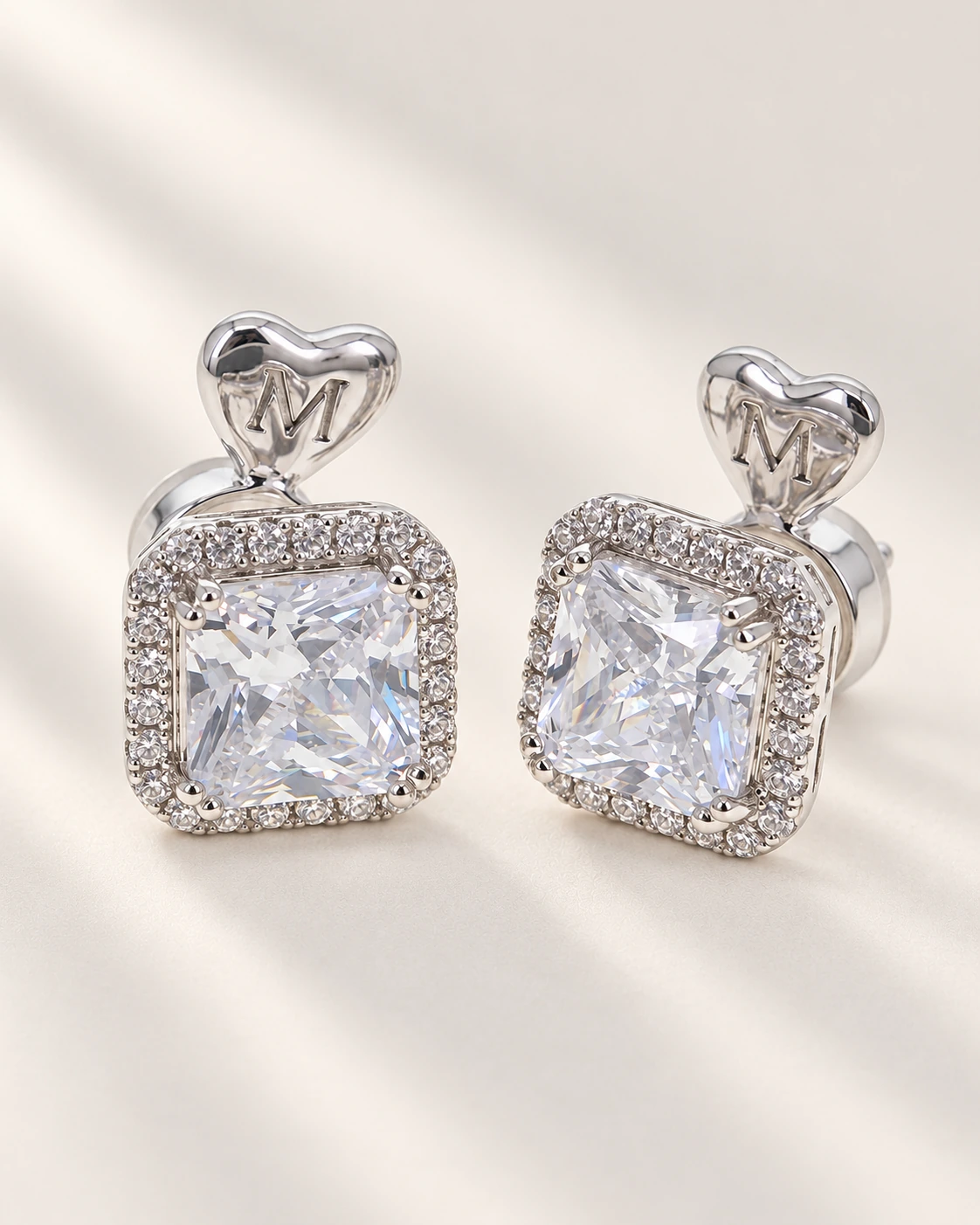
Why can fashion jewellery be expensive even when the base metal is brass? The retail price can reflect design development, making the body, preparing and plating its surface, selecting and setting stones, assembly and inspection. Selling and supporting an order also cost money. A price tag does not break those costs down. As a buyer, you can make a more useful judgment about the shape, finish and ease of wear you are paying for.
To decide whether fashion jewellery is worth its price, compare two pieces you would wear for the same purpose. Check what is included, the base metal, plating and stones. Then look at the front, profile, back and fastening. A front photograph can show the design beautifully while leaving one practical question unanswered: which part will rest against your ear, finger or clothes?
Read the material description in layers
Split the specification into three lines. The base is the material of the body; the plating is its surface layer. A stone is another component with its own seat and means of attachment. In a listing that specifies brass, rhodium plating and cubic zirconia, rhodium describes the surface. A warm or cool reflection depends partly on lighting and cannot identify the metal by itself.
If the material of an earring post matters to you, ask specifically about the post and the back. The base-metal field does not automatically describe every component. Likewise, “rhodium plated” names a finish without specifying its thickness. Leave a missing value blank when comparing two listings. Assuming a thicker layer simply because one pair costs more could outweigh an actual advantage, such as a fastening you find easier to operate.
Three pieces with different construction details
On Éclat Céleste White MS-12, a row of smaller stones surrounds a clear centre with rounded corners. On 22 November 2026 the listed price was UAH 2,700 per pair. Zoom in just enough to see the entire halo. Follow the gap between the centre and the border on all four sides. Then zoom back out. Does the pattern you liked in close-up remain visible at normal viewing size?
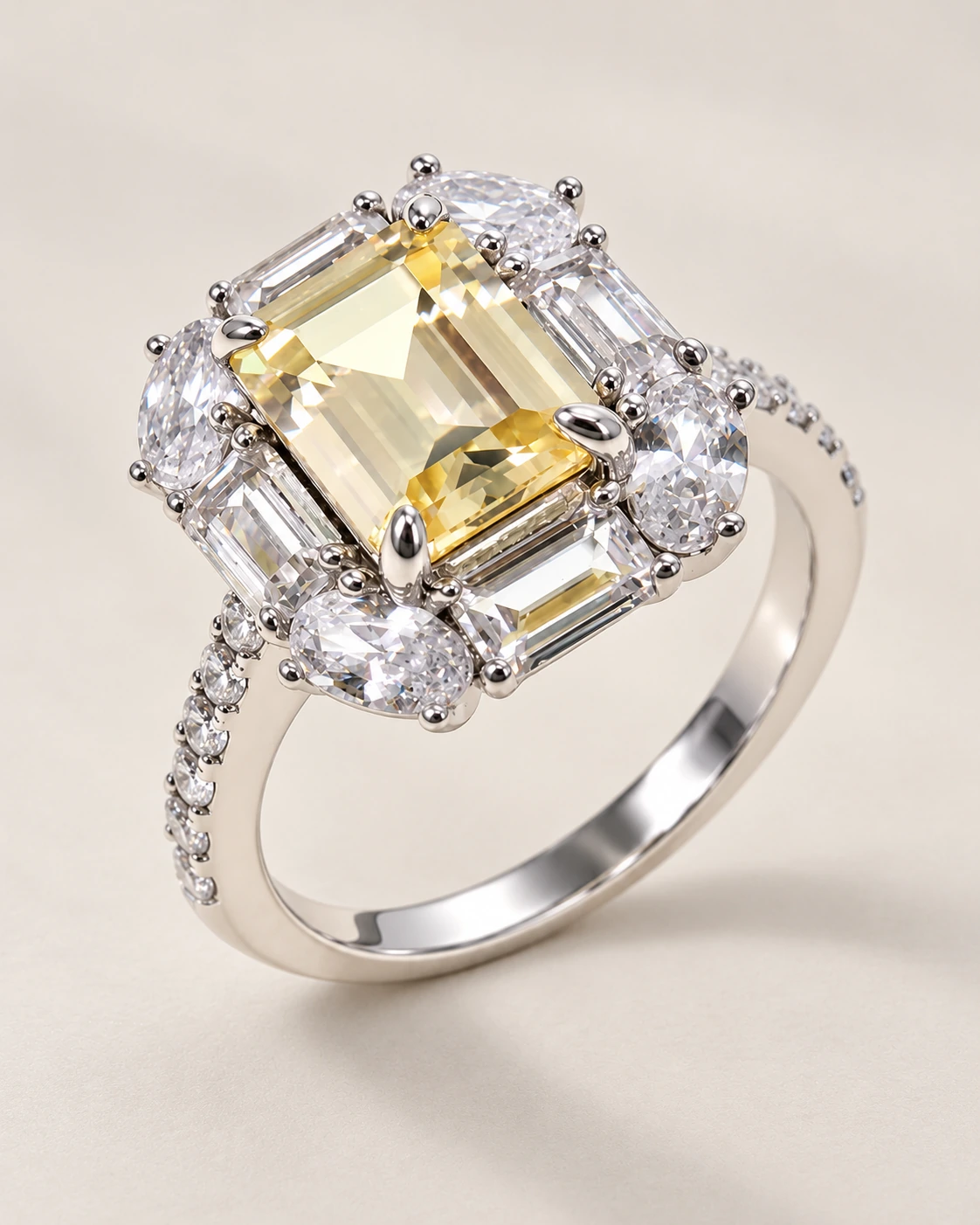
The ring Éclat Aurélie MK-15 has a pale yellow rectangular centre surrounded by clear stones in several shapes. On the same date, the ring was UAH 3,600. In close-up, follow the transition from the short edge of the centre to the round and elongated stones of the halo. To judge comfort, ask for a side and underside view. Where does the edge of the band meet your finger? How far does the setting extend towards the next finger? The front view cannot answer either question.
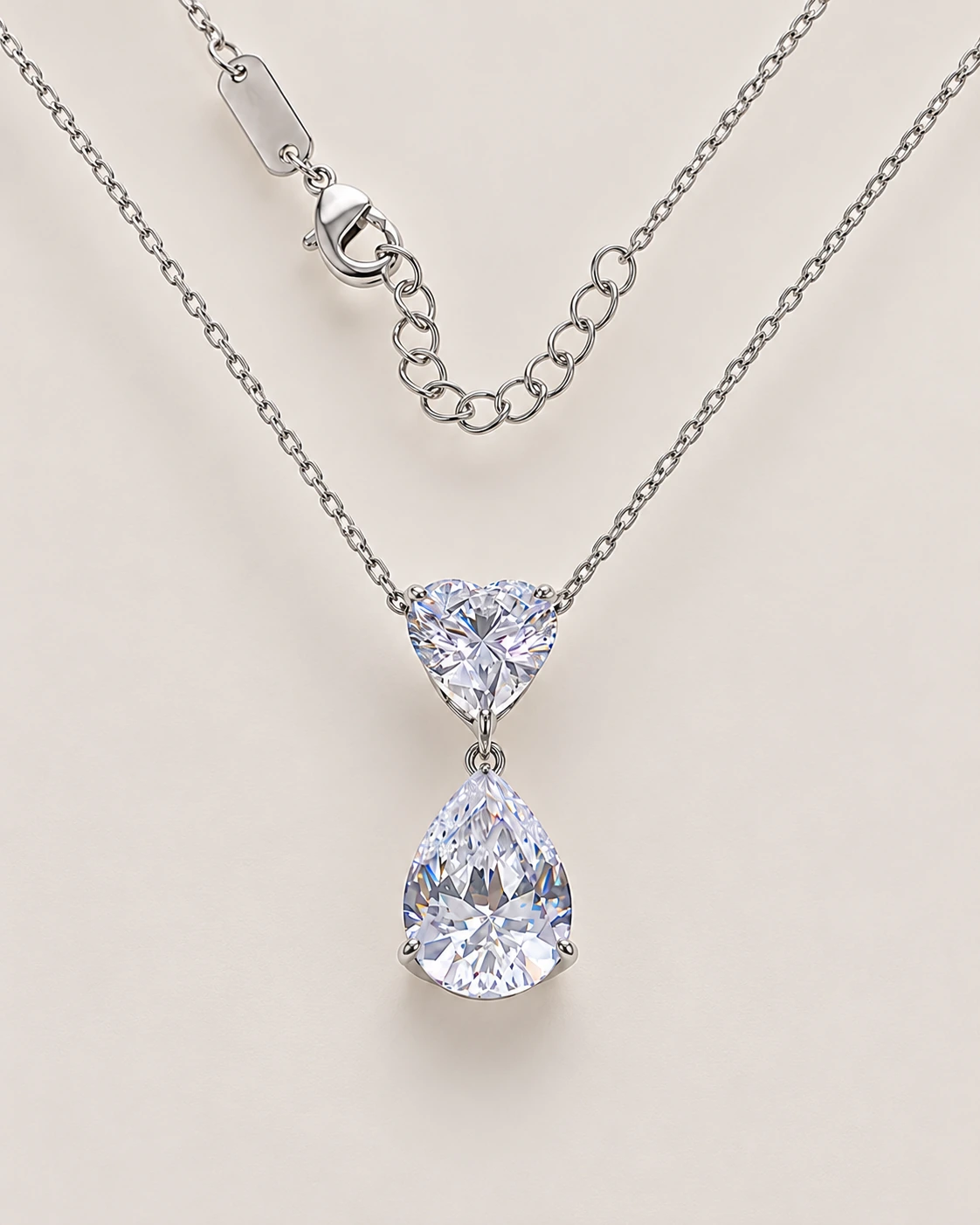
The necklace Lumière Larme MP-17 carries a clear pear and a smaller upper element on a fine chain. The product page gives 42 cm plus a 3 cm extender, and the price on the date above was UAH 2,700 for the necklace. Compare three areas in separate views: the transition from chain to pendant, the rim of the pear setting and the end of the extender near the clasp. Can you operate the clasp yourself, and where does the pear fall at your preferred length? A price-per-gram comparison would miss both points.
What can contribute to the price
There is a visible side to design work. A halo requires a decision about the proportions of centre and border. The two elements of a pendant need to balance. On a ring, the arrangement of stones must work with the width of the band. Assembly raises different questions: how many components meet, how do they align, and which edges remain accessible for finishing afterwards? These are genuine production considerations, but counting the visible stones will not reveal the labour cost of a specific piece.
All three listings specify brass, rhodium plating and cubic zirconia. The designs still ask different things of their construction. The necklace has a chain and pendant, the two earring fronts need to work as a pair, and the ring halo needs room beside the next finger. These differences are visible to a shopper. Without production records, it would be guesswork to attribute a price difference to handwork, exclusivity or a particular number of hours.
Inspect the back, edges and fastening
Ask for a reverse view in diffused light and a side view at the height of the piece. Which surfaces meet the skin, where do edges project, and where do two parts join? A bright stripe could be a reflection from a lamp. Another angle helps distinguish a highlight from an uneven edge. If you spot a gap near a stone, request a close-up from the other side. Avoid levering the stone or pulling on its mount as a strength test.
During a fitting, open and close the clasp as you usually would. Can you see the extender link you need and hold it between your fingers? For earrings, ask whether the weight is for one earring or both. An unspecified weight field is no basis for dividing the number by two. Even with a clear measurement, try the pair on if possible: the length and shape of the front can change how the load sits against the lobe.
Five questions before buying
- Does the price cover a pair, a single piece or a set?
- Can I identify the base, finish and stones separately?
- Can I see the back, joint, edge of the setting and fastening?
- Will the dimensions and fastening work for the way I wear this piece?
- What care does the brand specify, and what do I still need to ask?
To compare the instructions for a cloth, spray or dip with the materials in your piece, read our guide on how to choose a jewellery cleaning product.
A closer look