How to choose a jewellery cleaner: cloth, spray or dip
Compare actual jewellery cleaners, read their labels and check the finish, stones and settings on three Maison Miréa pieces before choosing a method.
Maison Miréa editorial team
To understand how to choose a jewellery cleaner, start with the piece itself. Find the model reference, read its care instructions and identify the base metal, finish and stones. Then check how the stones are held and whether the maker permits the complete piece to get wet. Only then compare a cleaner’s material list and directions. When a detail is missing, start with a clean, soft, dry cloth and ask for advice before buying a liquid.
For an ordinary fingerprint on a Miréa piece, you rarely need to decide between two bottles. A clean, untreated lint-free cloth is the first choice in the care guide. A persistent mark on a ring or a stone that moves calls for a different decision. These three catalogue examples show how to make it. We compared published instructions; no cleaner was applied to the jewellery.
Read the piece before reading the label
A buyer holding a silver-coloured ring might reasonably look for a product labelled “silver”. Colour alone cannot tell you which surface the product would touch. On a plated piece, the visible surface and the metal underneath are two different entries on your checklist. A cleaner designed to remove tarnish from one metal may be the wrong purchase for a finish in the same colour. Look up the actual reference instead of matching the bottle to a photograph.
Read the whole product description once, then write down what you still need to know. A stone described as cubic zirconia identifies the insert. It does not establish how each small stone in the halo was attached. A photograph can help you point out the particular setting you mean; it cannot rule out adhesive elsewhere on the piece. If the setting has previously been repaired, mention the repair. Advice for an original model may depend on what was changed.
What the final step on the bottle tells you
Read the end of the directions before comparing promises on the front. A product that needs rinsing requires a second exposure to water, even if the initial application is brief. A pump that delivers a few drops can still wet a joint between two elements. A basket makes it easier to lift a piece from a jar, but lowers the clasp, chain and pendant together. If you cannot complete the final step permitted by both manufacturers, cross that product off your list.
Distinguish the spray itself from anything supplied with it. An instruction to dry a particular spray with the cloth in its box is different from permission to rub a plated ring with a chemically treated silver cloth. Keep packaging until you know which cloth belongs to which product. If you have an unmarked cloth that came with a second-hand piece, use a known untreated one for the initial wipe.
Five options, compared by their instructions
The branded cleaners below are third-party examples. The table describes the maker’s scope and the finishing step for that exact product. It does not certify a combination with a Miréa model.
Scroll the table horizontally to see every column.
| Product and format | Scope and limits | Aftercare |
|---|---|---|
| Maison Miréa — Plain cloth without polish | For a fingerprint on an accessible Miréa surface, take a soft, dry lint-free cloth with no added treatment. Check both sides for grit before using it. | Gently wipe and stop when the print has lifted. No rinsing stage. A cloth that catches on a stone is a reason to pause, even if the surrounding surface still looks dull. |
| Town Talk Silver Polishing Cloth — Silver polishing cloth | Town Talk’s cotton contains a tarnish-removing treatment for silver. Its intended use differs from that of plain microfibre. A silver-coloured finish alone does not place a ring in this category. | The maker says washing removes the treatment. Keep the identified cloth apart from your plain cloth. A model with a different finish needs its own approval before contact. |
| Town Talk Jewellery Spray — Pump spray with brush and cloth | Town Talk lists gold, platinum, silver, gems and fashion jewellery. Its directions describe spraying the piece and using the brush behind settings. A fragile or moving setting needs individual assessment before a brush goes near it. | Dry with the microfibre supplied; the maker calls for immediate drying of porous stones. Its spray directions do not specify rinsing. Do not borrow the rinse step from the jar beside it. |
| Hagerty Fashion Jewelry Clean — Immersion bath with basket | Hagerty lists costume jewellery with crystal, zirconia and glass. Textile parts are excluded. The maker directs the user to swirl the basket and leave the piece in the bath for two minutes. | Rinse with warm water, then dry with a soft cloth. If a cord or other part must stay dry, lowering the assembled piece into the basket cannot satisfy both instructions. |
| Connoisseurs Delicate Jewelry Cleaner — Ammonia-free dip | Connoisseurs lists costume jewellery and several delicate gems. Its own costume jewellery guidance calls attention to glued stones and delicate coatings. Absence of ammonia settles only one question about the formula. | For glued stones, the maker advises against a long soak. Apply the cleaner lightly with the brush, remove it with a damp cloth and pat dry with a lint-free cloth. Check these steps against the instructions for your piece. Connoisseurs guidance for costume jewellery |
Where immersion ends and ultrasound begins
A liquid bath acts while the piece sits in a solution. An ultrasonic cleaner uses vibration as well. Pouring liquid into a machine or switching the machine on changes the method. A dip approved for a certain material gives you no answer about the effect of vibration on its setting. Equally, a professional having used ultrasound on one ring says nothing about a second ring with a different stone or a past repair.
GIA explains that certain treated gems and organic materials require special care, and that vibration can loosen stones. Think about the difference between an intact stone and a secure setting: these are separate questions. If a stone shifts, if a claw has caught your clothing or if the row of stones looks uneven after a knock, put the item aside. A cleaner cannot determine whether a mount needs attention. Miréa asks for specific confirmation before steam or ultrasound is considered.
Three Miréa examples: what do we actually know?
The specifications for all three pieces list rhodium plating. Their descriptions identify brass and cubic zirconia. Knowing the coating still leaves the attachment method and permission to rinse the assembled piece to be confirmed.
Scroll the table horizontally to see every column.
| Catalogue model | Confirmed in the description | Decision before cleaning |
|---|---|---|
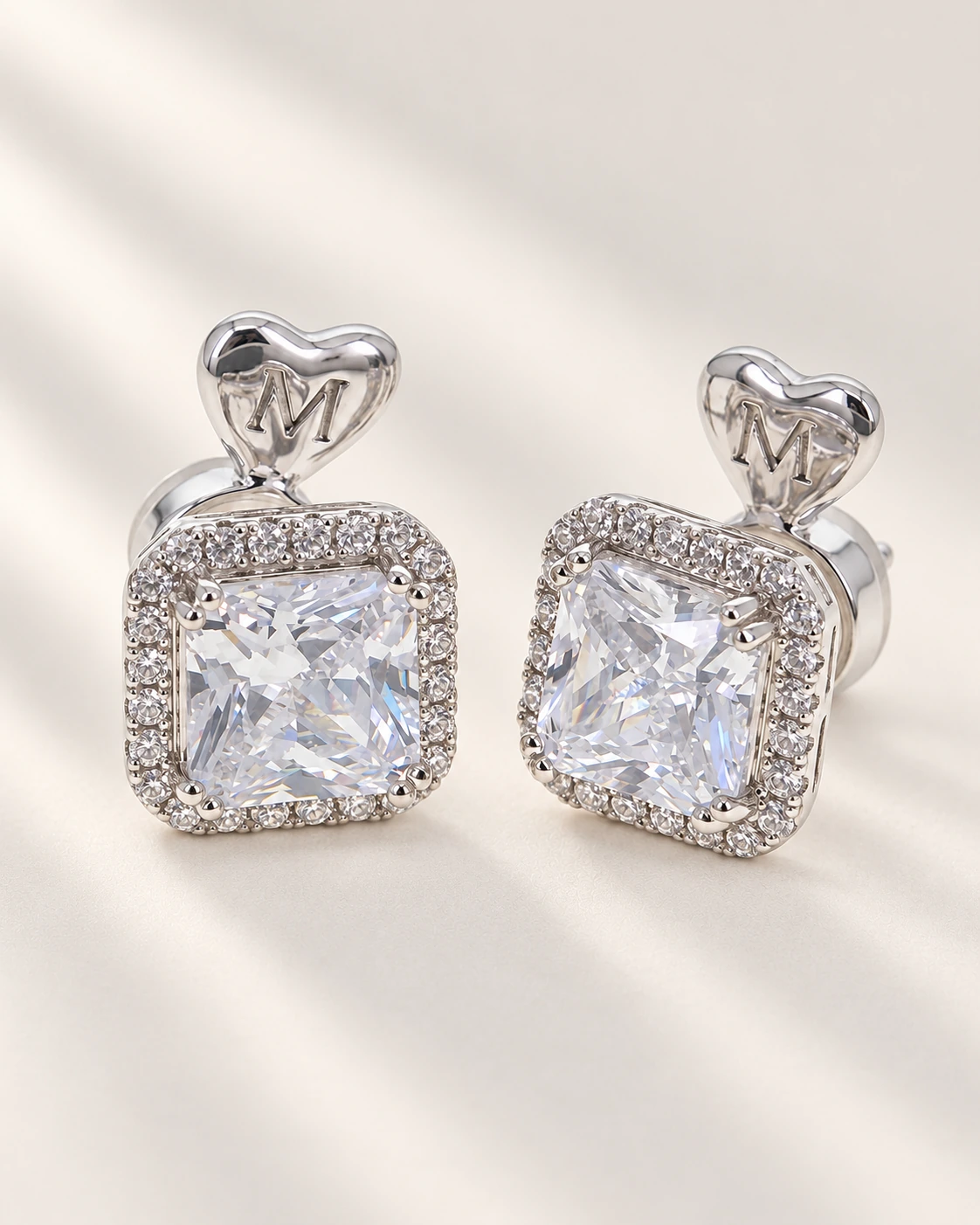
| Éclat Céleste White · MS-12 | Brass base and cubic zirconia; clear centre surrounded by a halo. Sold as a pair. | Compare the front of each earring without disturbing the backs. The description does not specify the fastening method of every small stone. No wet method has been confirmed for this example. |
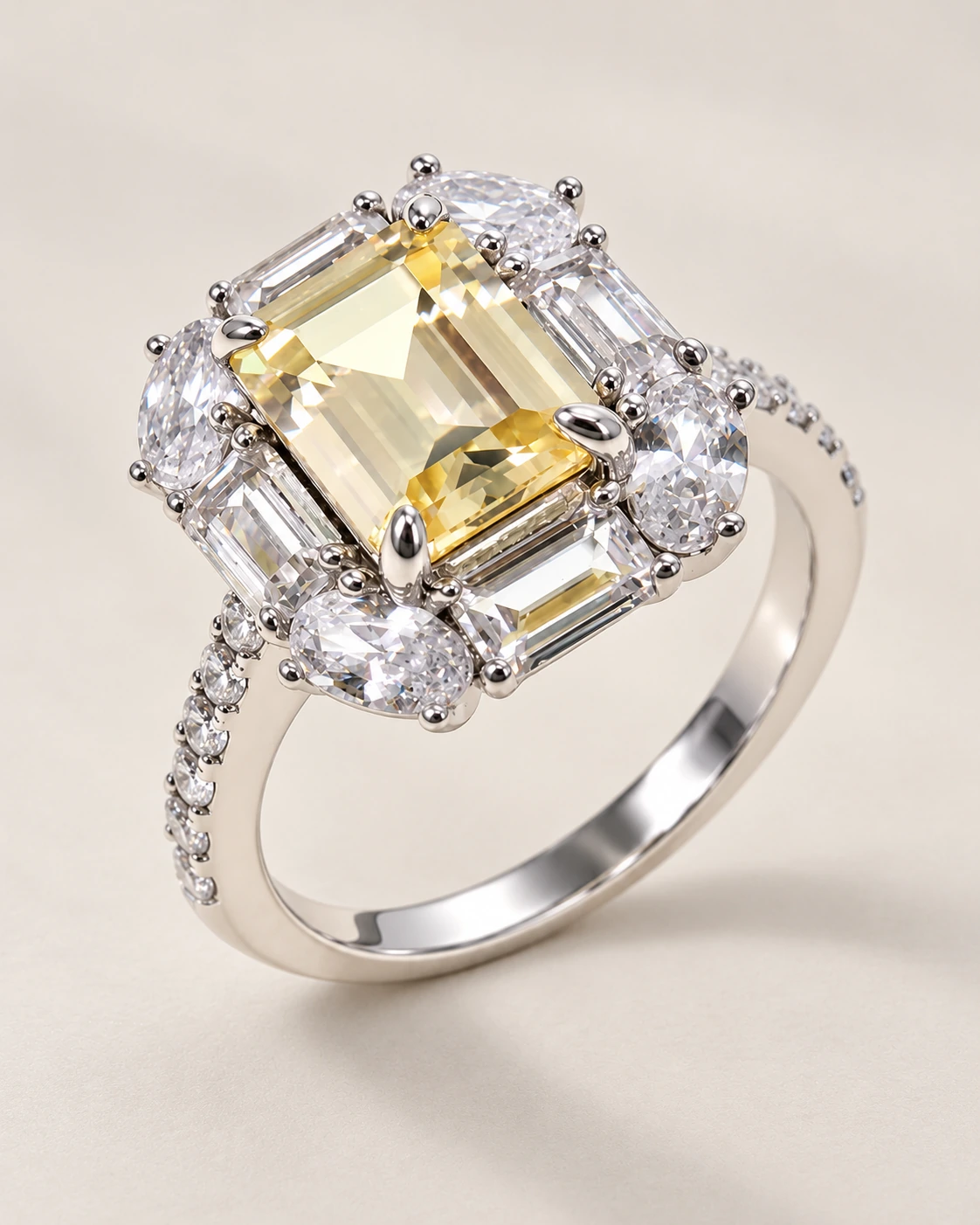
| Éclat Aurélie · MK-15 | Brass base and cubic zirconia; rectangular light-yellow centre with a shaped halo. The description specifies a soft, dry cloth. | Inspect the underside of the band separately from the halo. Ask about the whole setting before considering a brush or a dip. A dry wipe of the band is not a test of compatibility with liquid. |
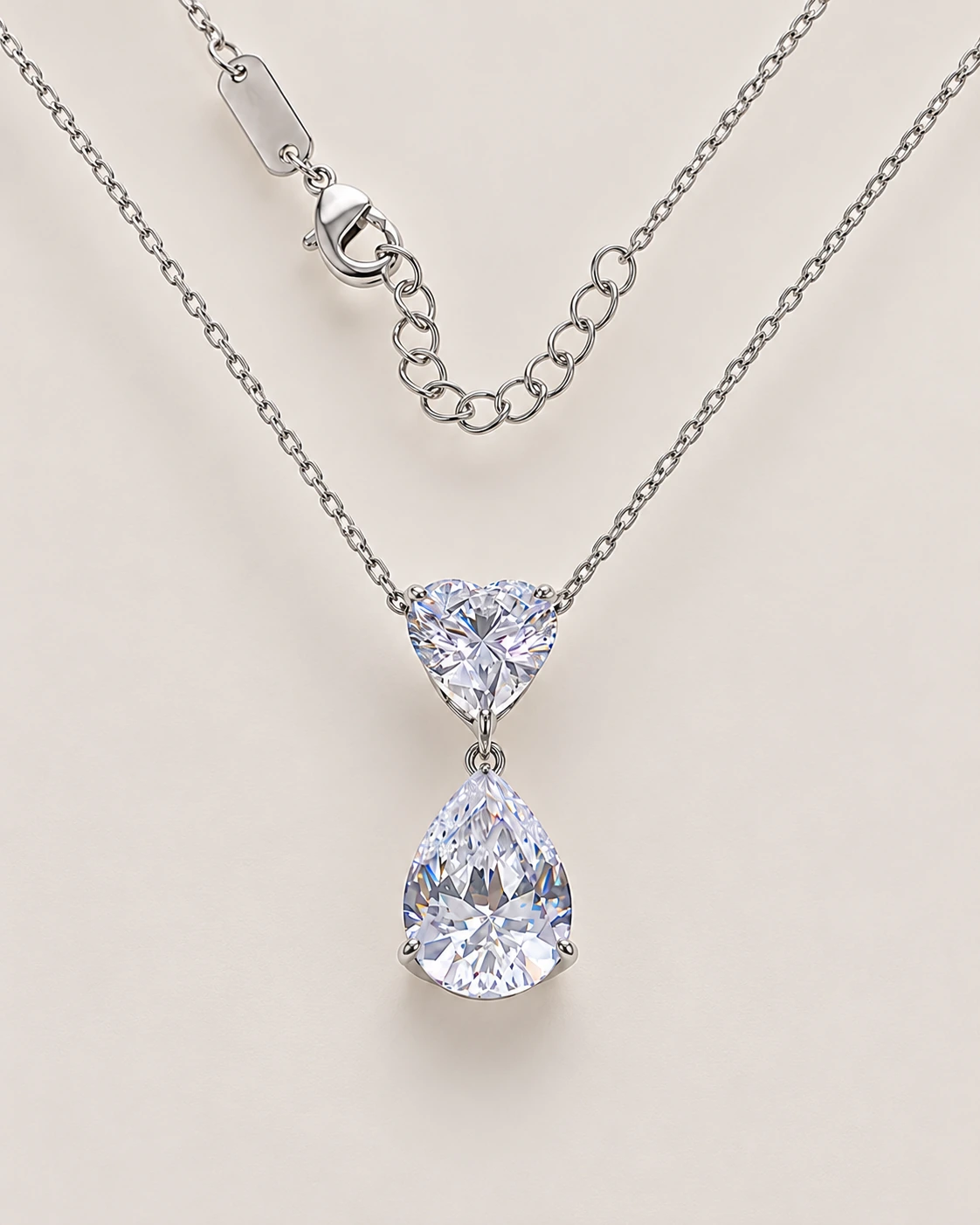
| Lumière Larme · MP-17 | Brass and cubic zirconia; a lower drop connected to an upper element on a chain of 42 cm plus 3 cm extension. | Ask about the connection and the clasp as well as the drop. A cleaner approved for a loose cubic zirconia stone does not establish that the complete necklace can be immersed. |
With the ring, separate two observations in your message: a dull area on the underside where the band touches objects, and a thread catching near the halo. They involve different parts. With the necklace, mention whether the mark is on the drop, the connecting element or the chain near the clasp. With earrings, compare the same area on the second earring under the same light. This is a useful comparison for a jeweller and a poor reason to polish one piece harder to make it match the other.
Scenario one: a fingerprint after wearing the piece
Lay the item on a clean, pale cloth under diffuse light. Find the surface with the print and check the cloth for grit. Hold the item by a stable part and lightly pass a fresh, dry section across the accessible surface. Avoid pushing material between the stones. If the print lifts and the finish looks even, that is your stopping point. The next purchase might simply be a dedicated plain cloth with a clean place to store it.
If a mark stays in a narrow recess, take a closer photograph rather than forcing the cloth into it. Moving a ring under the lamp can reveal that part of the apparent dark patch is a shadow between details. Check it from a second angle before describing it to the maker. For routines before and after wear, see everyday care.
Scenario two: the colour looks different
Compare a frequently touched edge with a protected area on the same piece, keeping the light fixed. Surface residue can soften reflections; a difference that follows an edge and persists after a gentle dry wipe deserves closer inspection. Compare with an older picture in similar light if you have one. Neither an image nor a persistent mark alone establishes tarnish, damage or the thickness of the coating.
Do not use a stronger polish as a diagnostic test. If a surface layer has worn away, removing dirt cannot deposit new metal. Continued rubbing can also obscure the very boundary you wanted a jeweller to inspect. Note the location, when you first noticed it, whether it changes between daylight and indoor light and whether the underside looks different. These observations make a request for advice more precise than asking which solution gives the brightest shine.
Scenario three: when to ask a professional
Stop when there is movement, roughness that catches fabric or a change in the way the clasp closes. Set the piece aside in a separate compartment. Include the model reference, one overall photo and a close-up of the affected area. Add a clear picture of the proposed cleaner’s front and directions panel. If a product has already been used, give its full name and describe exactly what you did, including whether it was rinsed. This helps the adviser distinguish a care question from a repair assessment.
Before buying, ask a question with a verifiable answer: “May I use this exact product on this reference, including the halo, and may I perform the rinse on its label?” An answer about the stone alone leaves the finish, clasp and setting unresolved. Keep the answer with the item reference. If you cannot establish compatibility, you still have a practical course of action: care for the accessible surfaces with the approved dry cloth and leave the unresolved mark for inspection.
A closer look