How to pack jewellery for travel: case, roll or pouch
Choose an organiser around what you actually pack: chain length, ring height and bracelet width. Then secure each piece and check that nothing presses against the lid.
Maison Miréa editorial team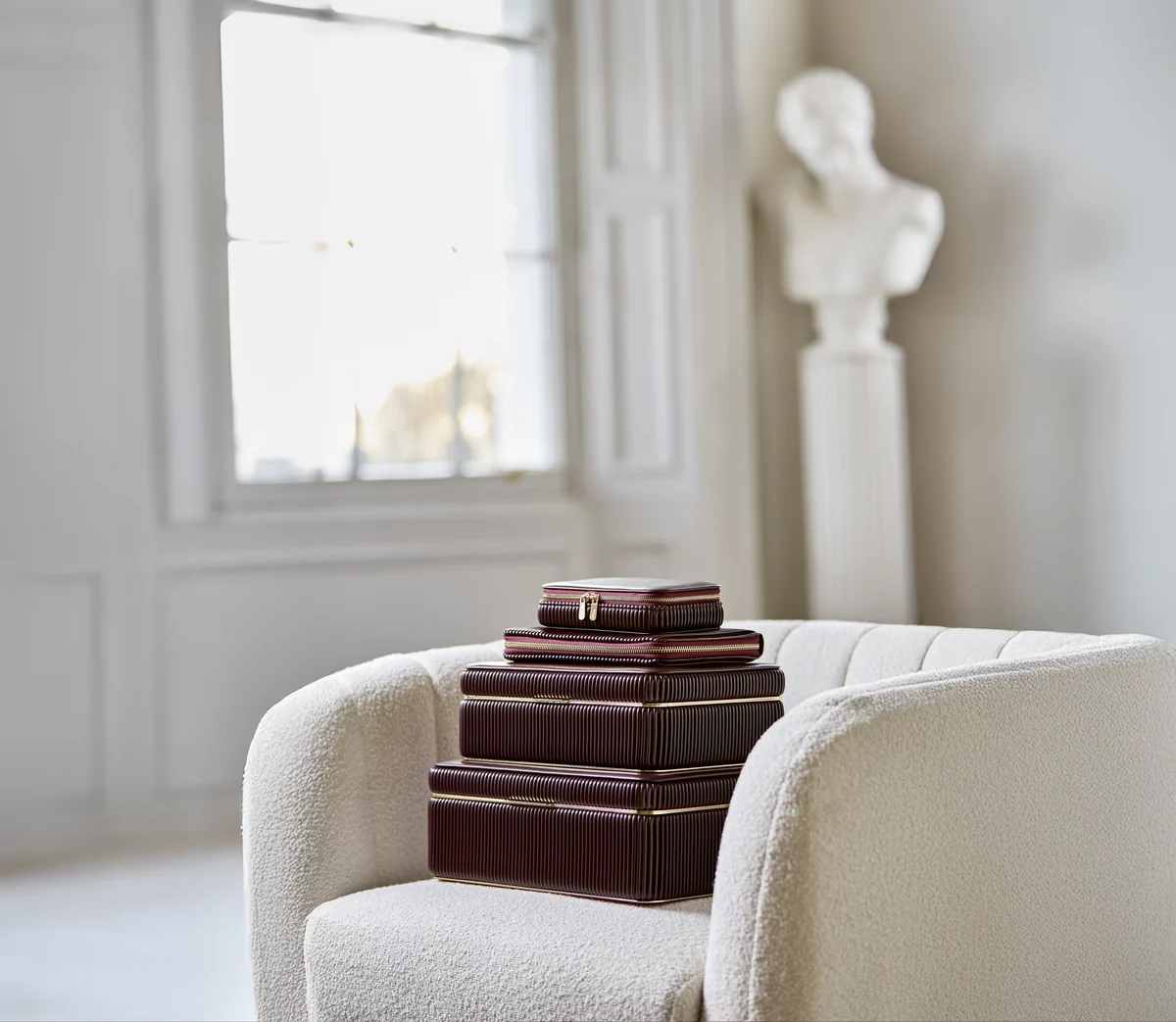
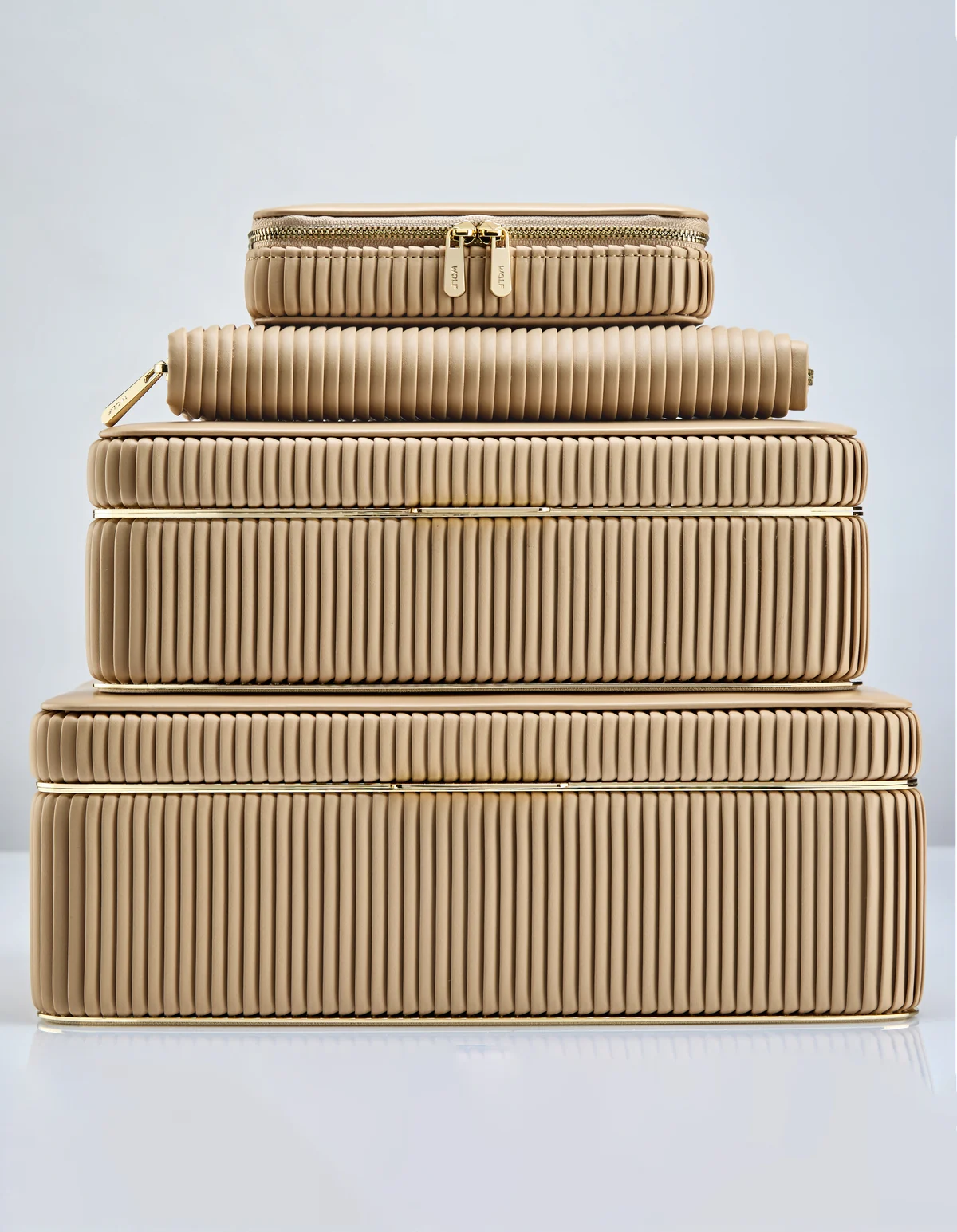
What to look for in the case photographs
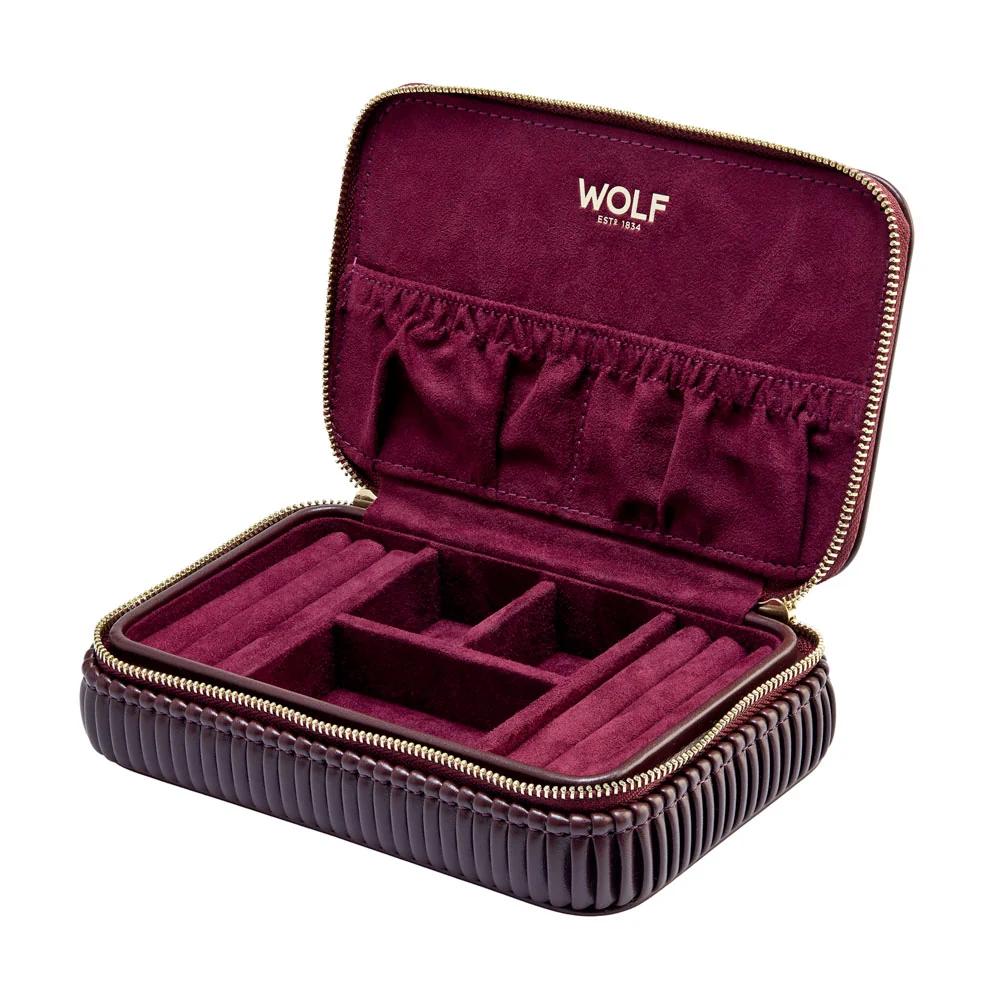
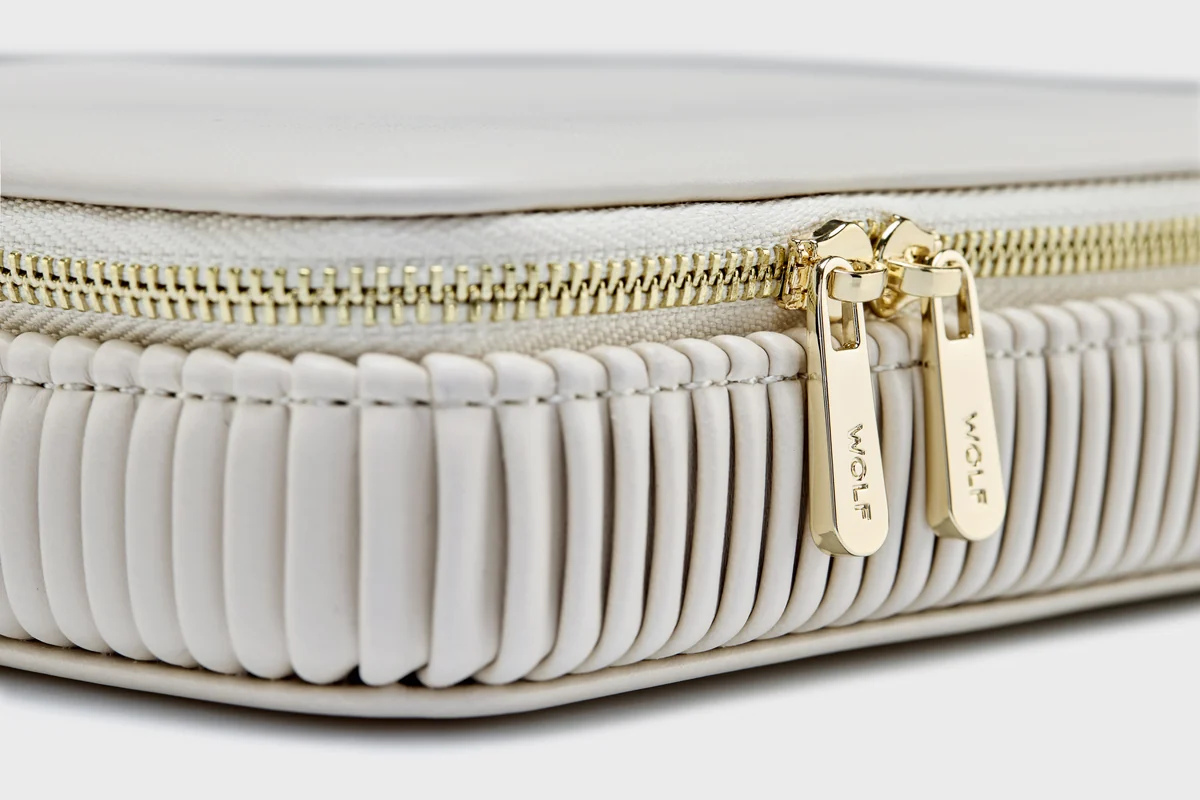
The gallery shows the WOLF Bella collection. The open Bordeaux case reveals ring rolls, divided compartments and a pocket in the lid. Use this angle to check the layout before buying: where a high setting would sit, how many separate spaces remain for earrings, and what would sit above them when the case closes. The group photograph compares formats rather than capacity. Check internal dimensions separately.
Measure the jewellery before choosing a case
Lay the longest chain in the loop it will form inside a pocket and measure the loop’s length. Stand the ring the way it will sit in its slot and measure from the base to the top of the setting. For a rigid bangle measure its widest outside point. Compare those three measurements with usable internal space. Walls, rolls and dividers take up room. If the listing gives only overall dimensions, ask for the inside measurements.
Rigid case: check above settings and behind posts
For bulky pieces, choose a shaped shell with lined compartments. Seat a ring by its band between the rolls. Secure earrings to the bar with room for their backs behind it. Check that filling a lid pocket will not bring it down onto a stone. The Aspinal of London Large Travel Jewellery Case illustrates a combination of compartments, necklace hooks and ring rolls. Compare the layout with the pieces you measured.
A roll and a flat portfolio fold differently
A roll lies open on the table while you fasten the pieces, then wraps into a bundle. A raised setting or long post on a fold can end up under the next layer. A flat portfolio closes like a folder, so check which compartments meet face to face. The WOLF Caroline Large Jewellery Portfolio has four necklace holders, earring and ring bars, and three zip compartments. This layout separates several slender pieces as long as they do not press against one another when closed.
Secure each chain and pendant separately
Fasten the clasp, secure the upper part of the chain to its own holder and lower the rest into a pocket. Keep the pendant apart from the clasp. If several hooks share a single pocket, slip each pendant into its own soft sleeve. Follow the chain from clasp to pendant before closing: it should neither cross the zip nor fold over a sharp edge.
One pouch per piece and a final check
For a weekend, a few soft pouches inside a rigid box may be enough. Use one for each piece; a partition between matching earrings keeps a post away from the other stone. Fabric limits friction but will not protect against the weight of books or shoes. Close the box without force, tilt it slightly and open it again. If a piece has moved into its neighbour’s space or the lid catches a setting, change the arrangement. Pack the dry case apart from toiletries and liquids.
Two packing lists, two layouts
For a weekend with a single fine pendant and studs, put the necklace in its own pouch, the earrings on a bar and both in a small rigid box. For two long necklaces, earrings and a raised ring, try a portfolio with two independent necklace holders plus a deep ring case. A larger single case can replace both if nothing in the closed lid reaches the ring setting.
Before closing the suitcase
- The lid closes without pressure.
- Each chain has a separate holder or pouch.
- Posts do not reach a stone or the opposite wall.
- Pieces stay in their compartments when tipped slightly.