Jewellery for the office: what feels comfortable all day?
Try earrings under your headset, a bracelet at the keyboard and a necklace with your shirt collar. Three office looks using Miréa pieces and one change for each.
Maison Miréa editorial team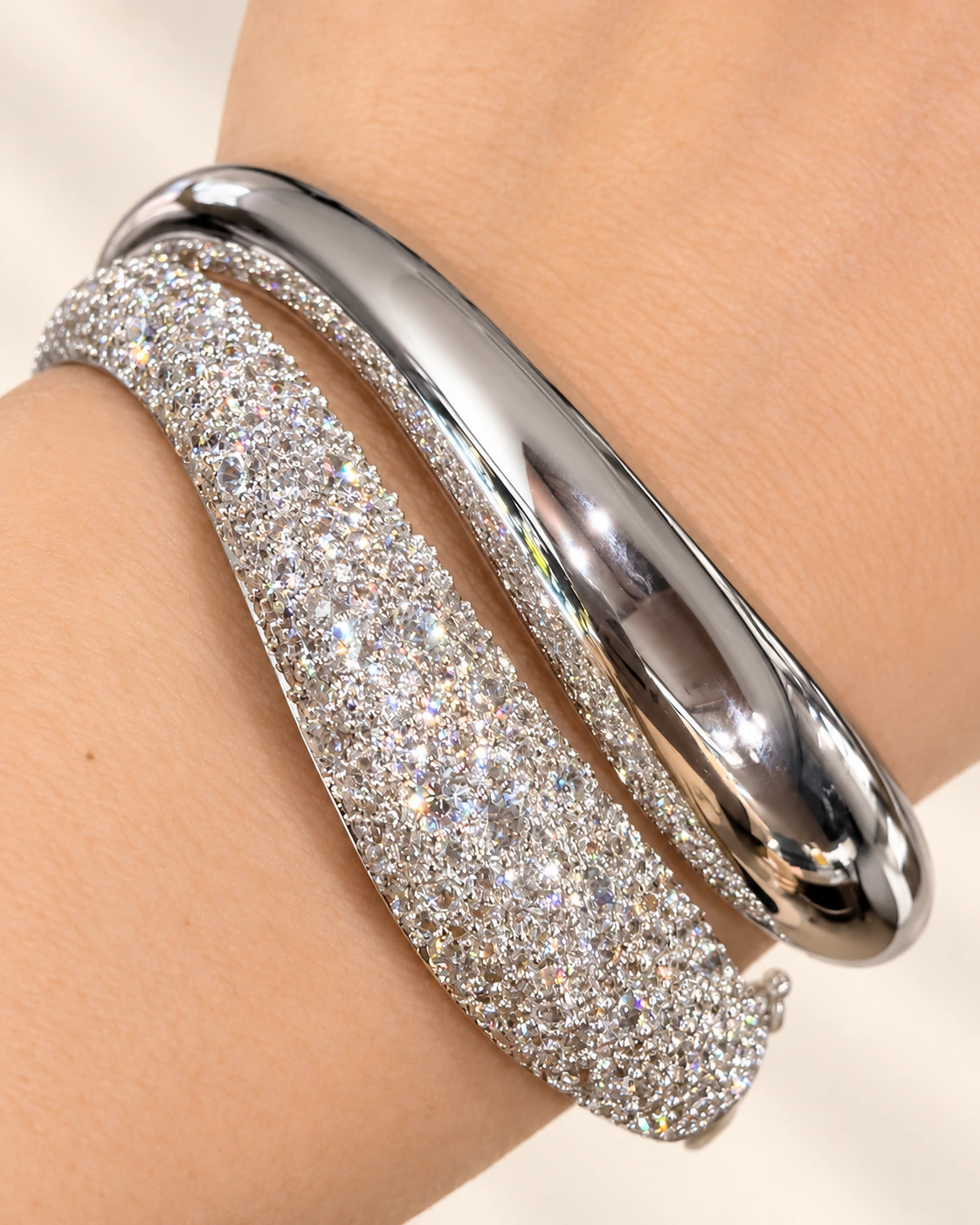
Choose jewellery for the office around the thing you do most. If you spend much of the day on calls, start by trying earrings under your own headset. If you type for hours, try a bracelet on the wrist and at the desk where you work. For video meetings, what shows beside your face and collar matters most. Open the camera preview before adding another detail to the outfit.
Wear your usual work clothes for the first check and put on just one piece in the area you want to assess. Take your headphones off and put them on again, type a few lines, reach for your phone and fasten your collar. Note a specific result for each movement: what touches your skin, what catches the fabric and whether you hear a sound. A product photograph helps with the silhouette. Your own desk is where you check the fit with your headset and cuffs.
What will you actually do today?
Scroll the table horizontally to see every column.
| Work task | A combination to try | What to check |
|---|---|---|
| Long calls on a headset | One compact pair of earrings, or a necklace with bare ears | The cup edge, space behind the ear and one-handed removal |
| Typing and using a mouse | Earrings with a necklace, or one bracelet on the other wrist | Contact with the desk, movement of the clasp and cuff edge |
| Video meetings | One light detail beside the face and a plain top | The ordinary call window, reflections and frame height |
| A meeting followed by an event | A daytime combination with one change of earrings | What stays visible after you take off the jacket and headset |
Split a mixed day into two parts. You might have three calls in the morning and a meeting around a table after lunch. You can start with a necklace and add earrings after the final call rather than asking one pair to fit a headset and carry the evening look. Make sure you have somewhere to keep the spare pair until you need it.
Try three earring shapes with one headset
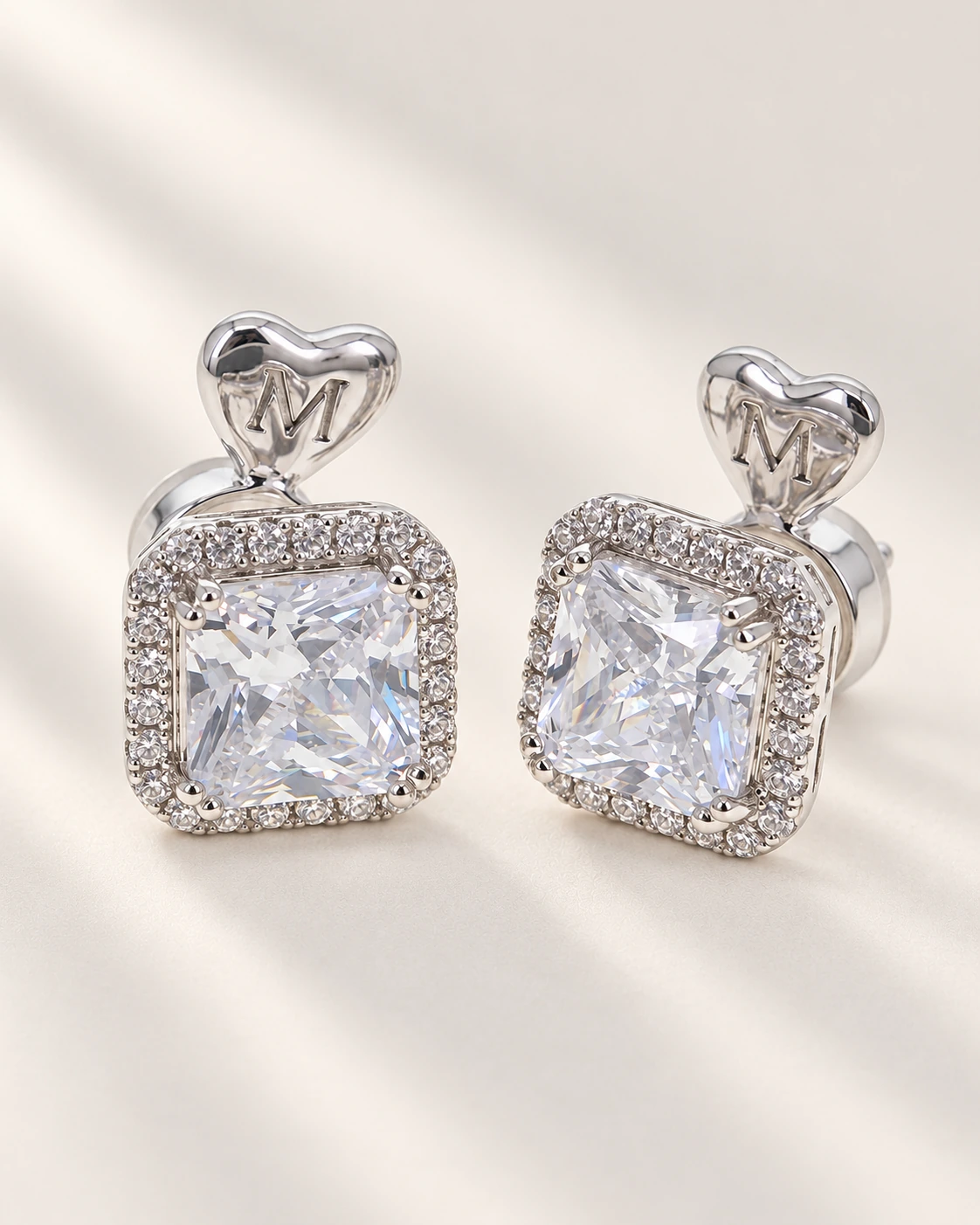
Compare three constructions with the headband in the same position. Start with a compact earring at the lobe. A halo surrounds the clear centre of Éclat Céleste White. Look at whether the ear pad covers the front and check the space between the earring back and your head. Even a small earring can press if the cup edge sits directly on its setting. Take the headset off if you feel pressure. Try another pair with the headset in its normal position.
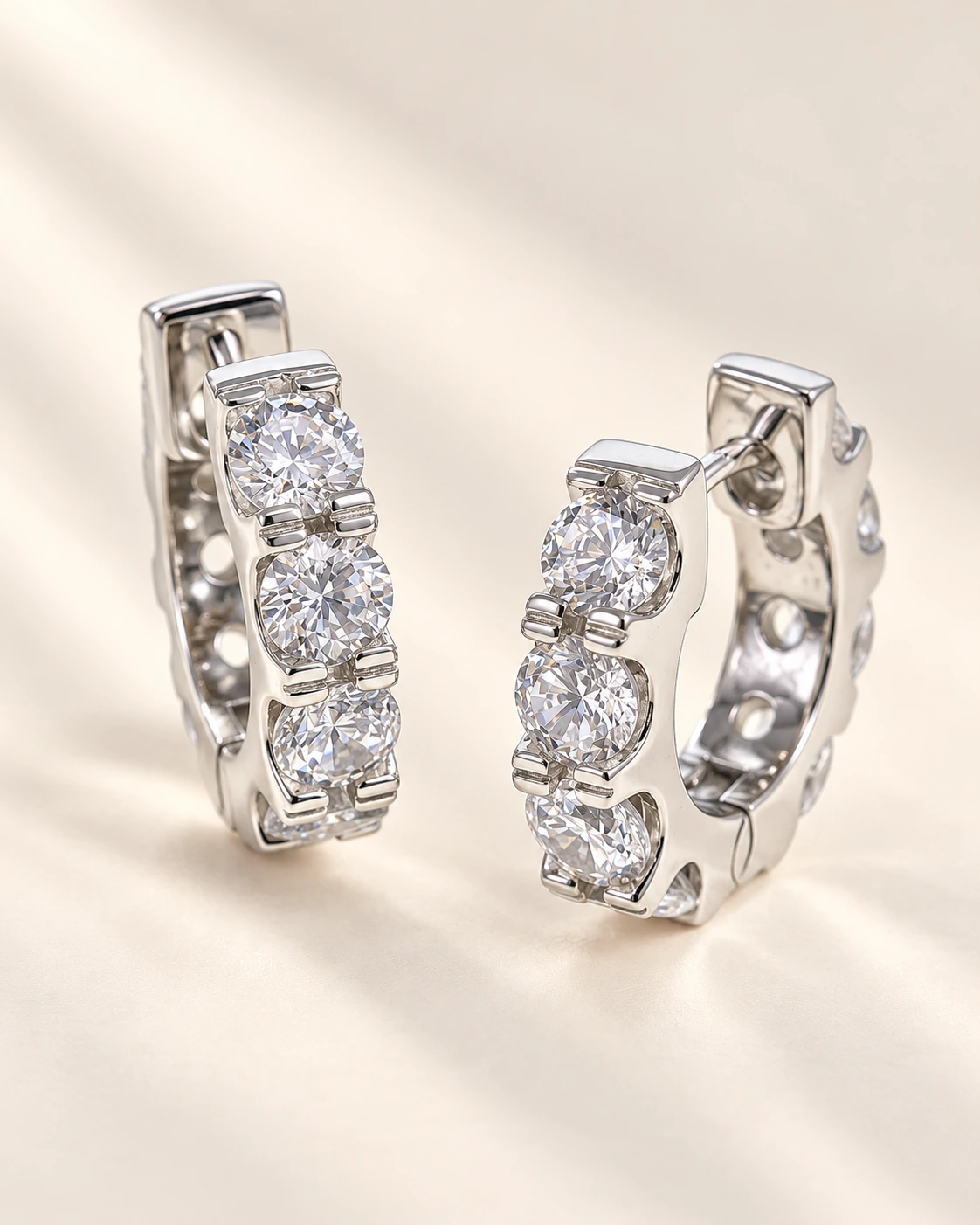
Next, try a small curved pair. On Rivière Épure, a line of clear stones curves around the front and there is no long drop. Check the lower edge of the cup while turning your head, then remove the headphones as you usually do. Notice whether the cushion catches the earring together with a strand of hair. On-ear pads and cups that fit around the ear meet different areas.
For the third comparison, take a pair of drop earrings you already own. Wear your hair loose, then tuck it behind the ear. Watch the direction of the drop as you lean towards the microphone and sit back again. If the hanging part keeps slipping under a cup, keep that pair for meetings without a headset. Changing a comfortable working position just to accommodate one pair rarely makes the day easier.
Compare two bracelets at the keyboard
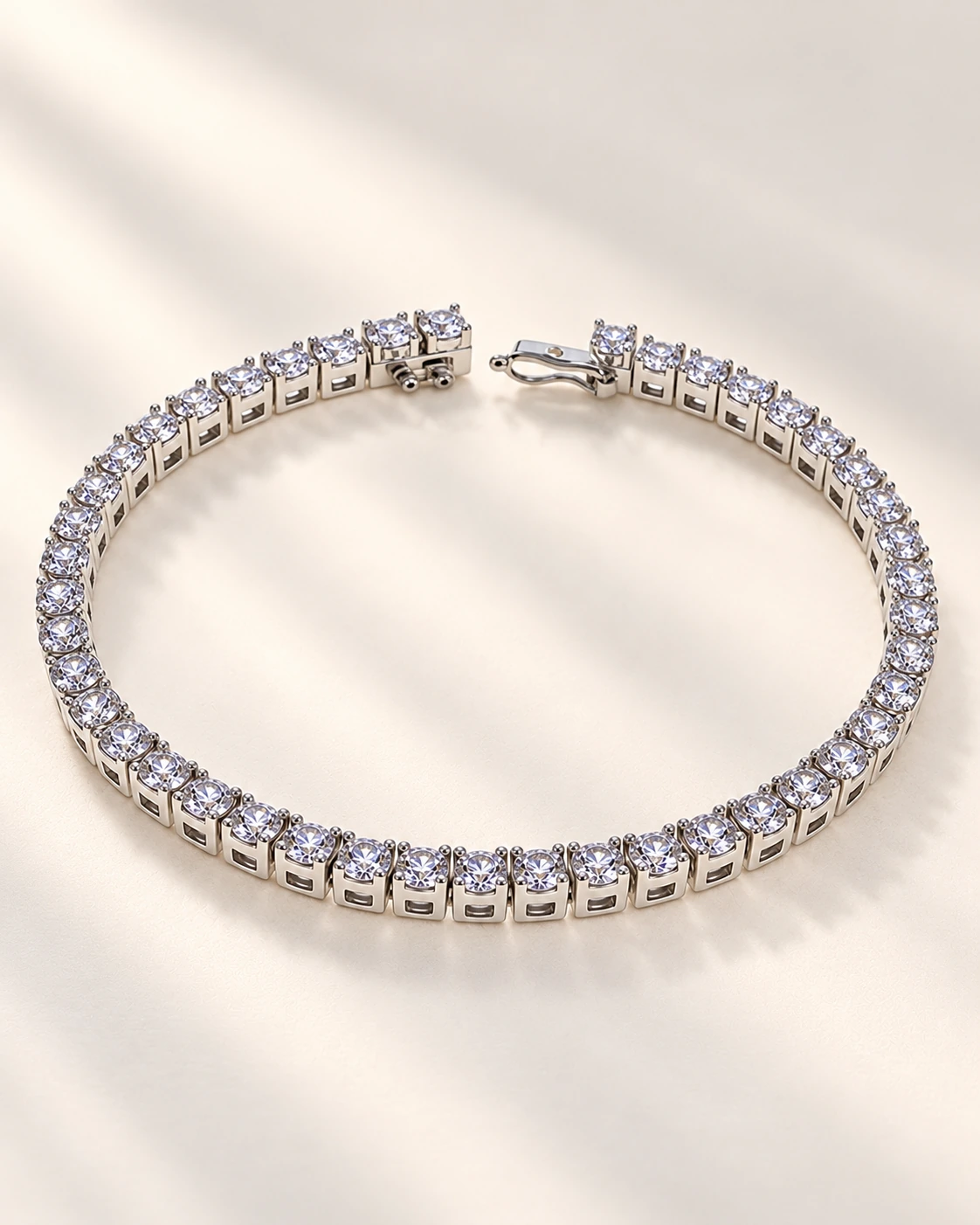
Start with Rivière Ligne. The design features a line of round stones, and the listing gives lengths of 16, 17 and 18 cm. Wear it in the position you normally use and note which part falls under your wrist. Type one sentence, move your hand from the keyboard to the mouse and bring it back. Listen separately for contact with the edge of the laptop and with the desktop: these are two different points.
For comparison, try a second bracelet of your own, perhaps a rigid bangle, on the same wrist with the same shirt. Leave the cuff open first and then button it. When you reach for a folder, the fabric may rise above the bracelet and catch when your arm comes back. If you use an external keyboard, repeat the movement in your usual position at that keyboard. Writing with a pen puts your wrist in a different position.
If contact occurs only on the mouse hand, try the other wrist, taking your watch into account. If the clasp clicks or the bracelet itself gets in the way, leave the wrist clear and move the detail to your collar. Count how often you have to adjust the piece. One adjustment when you put it on feels quite different from shifting it every few lines.
A necklace with an open or buttoned shirt
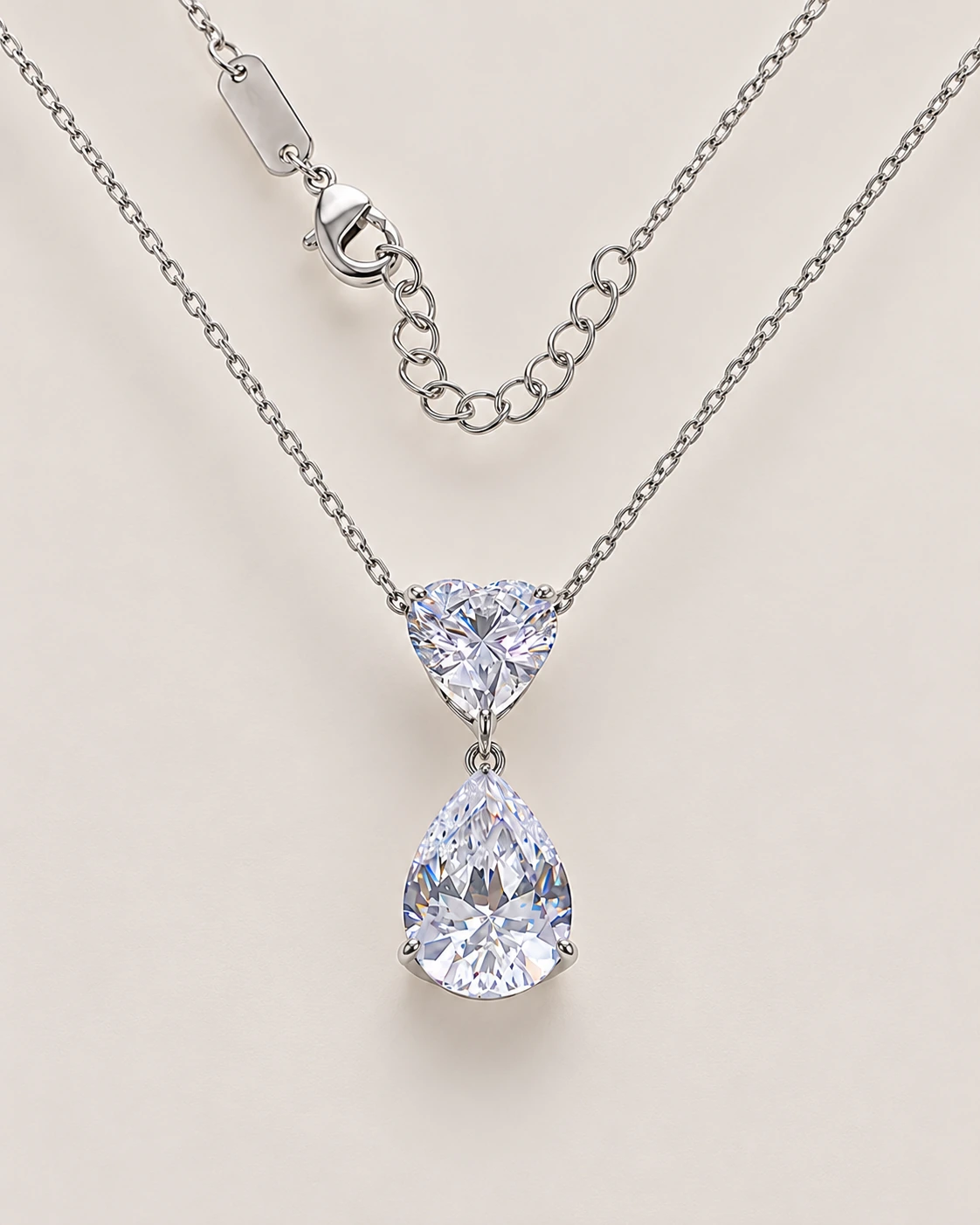
On Lumière Larme, a clear drop hangs below a smaller upper detail. Its chain measures 42 cm with a 3 cm extension. Sit at your usual height before a mirror with the collar open. Does the whole drop show between the two sides of the shirt when you turn to speak? If the pendant lines up with a button, move the clasp to another available link and try the same movement again.
Button the collar and compare two options. Leave the necklace under the shirt and let earrings be the visible detail, or try it over the fabric if there is comfortable room. Keep the chain loose around a substantial collar. If the fabric lifts or the clasp slides towards the front, open the collar or wear the necklace underneath. Check your preferred option while sitting, particularly if you lean towards the screen during calls.
What shows in a video call?
Open the preview in your usual work application under the lighting you use for calls. Sit at your normal distance and inspect the small participant tile. A phone close-up shows the cut of the stones. On the call, the same piece may read as a single bright point. Turn towards your notes, return to the camera and see whether the pendant disappears against a button or a patterned blouse.
Compare two short preview recordings, changing only one thing: the earrings or the collar. If your camera adjusts brightness when you move, watch a moment when you are still as well. A recording also picks up sound: a desktop microphone might register a bracelet on the table even if you hardly noticed it. You can check this without asking a colleague to join a test call.
If you divide the week between home and the office, repeat the short check in both places. Your microphone might be inside a laptop at home but on the table beside your hands in a meeting room. Note where the bracelet could be heard and which wrist you wore it on. Keep a picture of the shirt cuff alongside that note. The next time you change one element, perhaps the shirt, you can revisit that particular check instead of trying every combination again.
Three office looks with one change each
For a headset day, try Éclat Céleste White, a plain shirt and bare wrists. If the cup presses, remove the earrings and wear Lumière Larme in the opening of the collar. For a day of typing and short video meetings, start with Rivière Épure and Lumière Larme. For an in-person meeting, swap the necklace for Rivière Ligne if the bracelet passed the check at your desk.
For a working day that ends in dinner, try a dark top and jacket with Lumière Larme and compact earrings. In the evening, replace the compact pair with your own drop earrings and assess the outfit without the jacket. Carry the spare pair in its own compartment so the backs are easy to find. At the end of the day, think of the movement you repeated most and the piece you kept adjusting. That tells you more about tomorrow’s combination than a rule about how many pieces belong in an office.
A closer look