How to wear a bracelet with a watch: on one wrist or two?
Compare a bracelet beside your watch and on the opposite wrist. Check contact with the case, wrist movement, typing comfort and clearance under a cuff.
Maison Miréa editorial team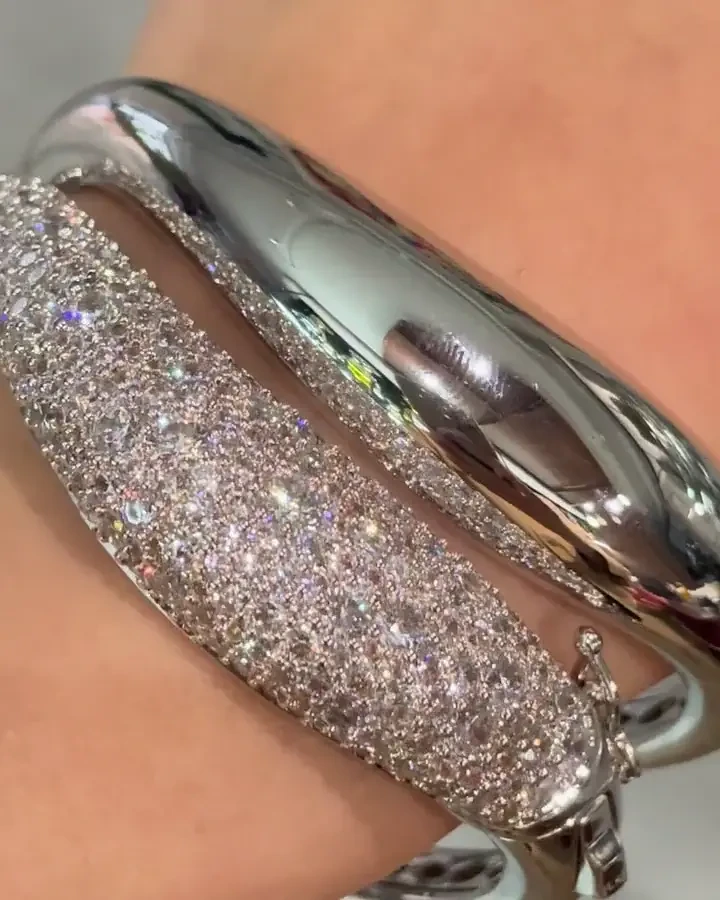
You can wear a bracelet with a watch on the same wrist if it stays clear of the case, the fastenings do not press underneath and your hand bends comfortably. Try it on the hand side and the elbow side of the watch. If lowering your arm repeatedly sends the bracelet into the case or over the crown, move it to the opposite wrist.
Three views that make the choice easier
Fasten the strap at its usual setting. Look at the watch alone, then with the bracelet on the same wrist and on the opposite one. Compare proportions in the mirror, then lower your arms and reach for a door handle. A gap that looked generous on a still wrist can disappear during the reach.
Towards the hand or towards the elbow?
Start with the bracelet between the watch and your hand. Look from the side to see whether an edge has slipped under the case. Gently bend and straighten the wrist as though reaching for a door handle. Does the crown push the bracelet into the skin? Does part of the jewellery sit on the crease? Check the buttons or crown on the actual side of your watch. Having to reach across the bracelet to operate them may be awkward.
Now put the bracelet between the watch and your elbow. Let the arm hang, then raise it as you normally would to check the time. Has the bracelet returned to the case? Look underneath the wrist too. Two fastenings can meet there even when a gap remains between the visible top edges. Keep the strap at its usual setting rather than tightening it to hold the arrangement in place. If the pairing works only on a still hand, try separate wrists.
A line of stones next to a prominent dial
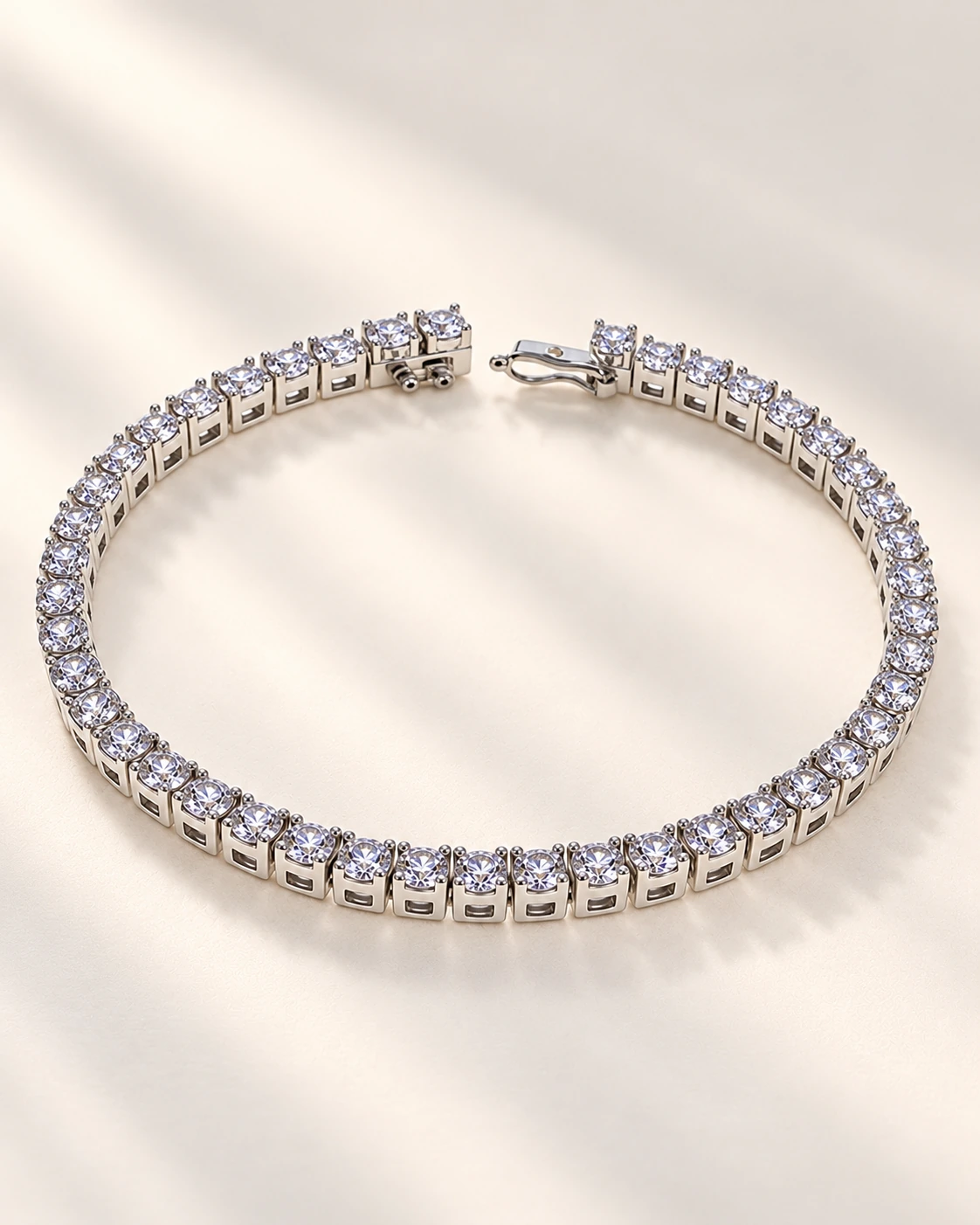
Rivière Ligne has a sequence of round clear stones with no single large centrepiece. Beside a prominent dial the repeated pattern can act as a quieter second line. Start by checking the proportions from above. Then turn the wrist towards yourself. How high do the settings sit relative to the side of the case? A small gap still lets the two shapes read together. The outermost stones do not have to touch the case to make a visual connection.
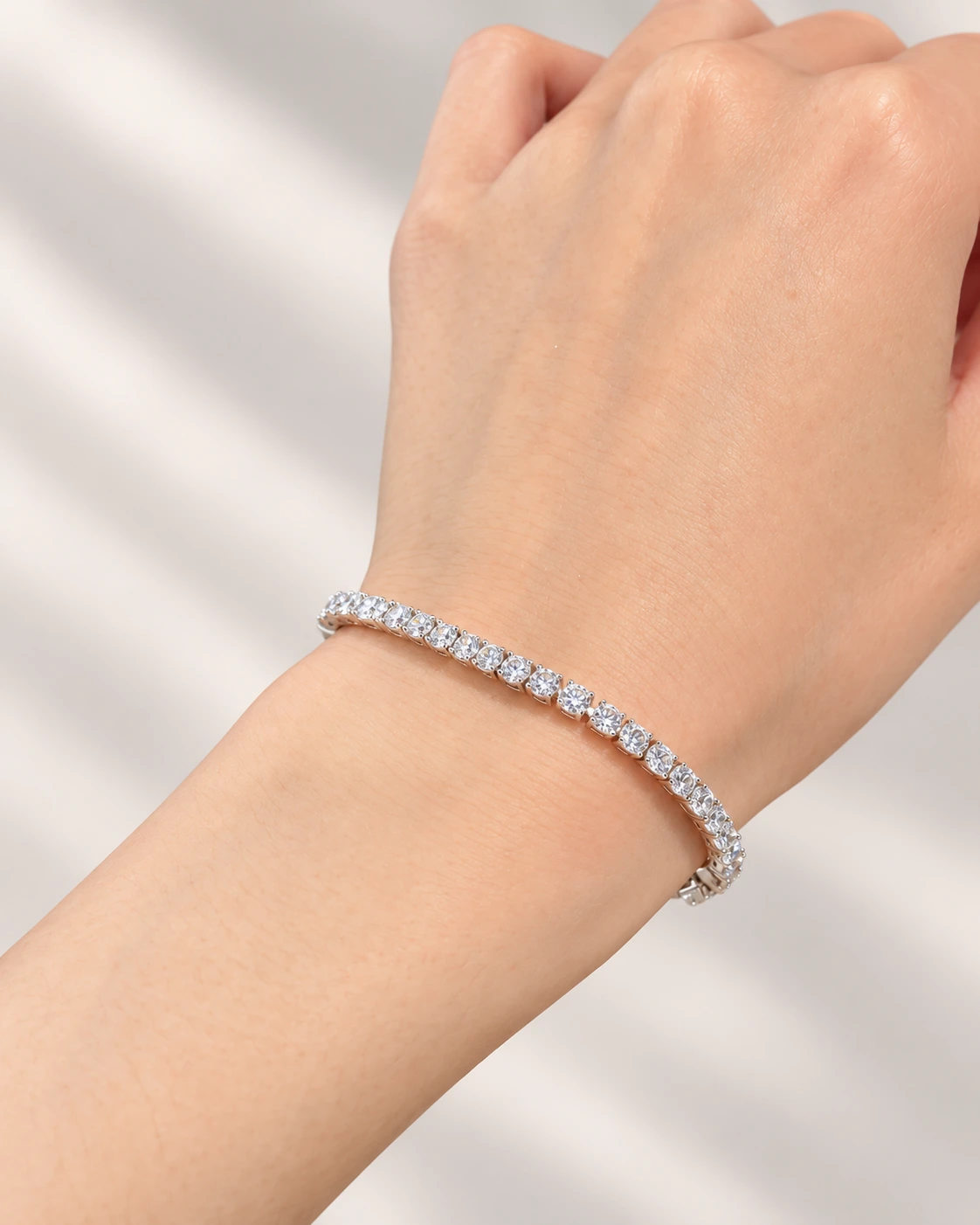
The Ligne listing gives lengths of 16, 17 and 18 cm. These are product lengths, not a prediction of where the bracelet will sit on your arm. Identify your particular version and watch how far it travels past the wrist bone as you turn your palm. A loose fit may feel lovely when it is the only bracelet, but the same freedom can let it slide over a watch strap. For sizing, see the bracelet guide for slender wrists.
A wide bracelet with a simple watch
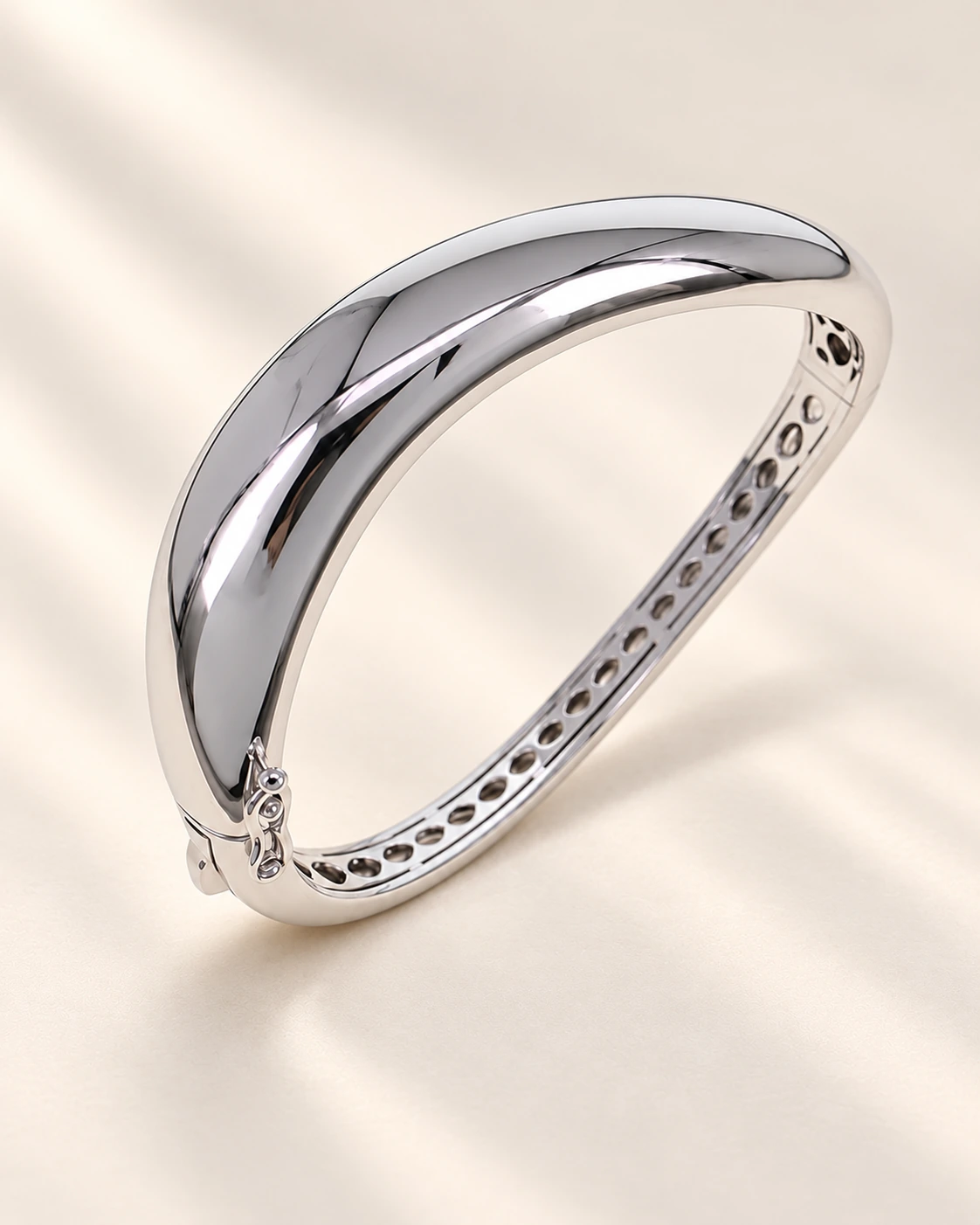
Courbe Galbe has a broad, smooth upper surface with a sculptural curve. Its catalogue length is 17 cm. The broad reflective area can become the focal point even beside a large watch with a plain dial. Start with the same watch you used for Ligne. Changing the watch as well would change both the bracelet silhouette and case diameter, making it harder to tell which one altered the balance.
Look at the gap between the outer edge of the bracelet and the watch lugs where the strap begins. The top may lie flat with your palm down, while turning the hand can bring a raised edge against the case. Repeat on the other wrist without the watch. If the bracelet is comfortable alone but makes you change your natural hand position beside the case, wear them separately. Its curve can still echo the shape of a round dial across two wrists.
Three checks in the clothes you actually wear
At the keyboard. Type a few lines, reach for the mouse and return to the keys. Notice which fitting rests against the desk underneath and whether you are lifting the hand to avoid it. If the mouse side is uncomfortable, try the other hand. The better side depends on how you work and where your forearm actually rests on the desk.
Under a cuff. Button your usual shirt and put on a jacket. Bend the elbow as if taking a phone call, then lower it. If the fabric pulls the bracelet across the case or catches on a raised edge, try a roomier sleeve or separate wrists. Take the jacket off too. The cuff has to travel back over the jewellery in the opposite direction.
On the move. Walk across the room, pick up your bag and check the time. Repeated tapping or one edge sliding over another is reason enough to separate the pieces. There is no need to wait for a visible mark. Even a smooth surface cannot guarantee freedom from scuffs. With a sentimental watch, you can start with opposite wrists and skip the direct-contact trial.
When you like the look but the fit gets in the way
Suppose the row of stones looks like a lovely extension of a metal watch strap in the mirror, but you hear a click while working. Find the exact movement that produces it. If the stones approach the case when you lower the arm, moving the bracelet to the other side of the watch may change its path. If the noise occurs as the wrist meets the desk, look underneath. Take off the bracelet and the watch in turn and repeat the movement. Sometimes it is the buckle itself hitting the desk, in which case moving the bracelet will make no difference.
Which arrangement suits your day?
For a quiet pairing, start with one row of stones beside the watch and see whether you can read the time at a glance. For a statement bracelet, try broad Galbe on a bare wrist with the watch under the other cuff. For minimal contact, separate the pieces from the outset. Before you leave, lower your arms and check the fastenings underneath once more. The arrangement should let you read the time, move your hand and adjust your sleeve as usual.