How to style earrings with a claw clip: scale, colour and hair
Try four combinations of Miréa earrings and Kauri clips. Compare studs and drops, tonal colour and contrast, then check the look from three angles.
Maison Miréa editorial team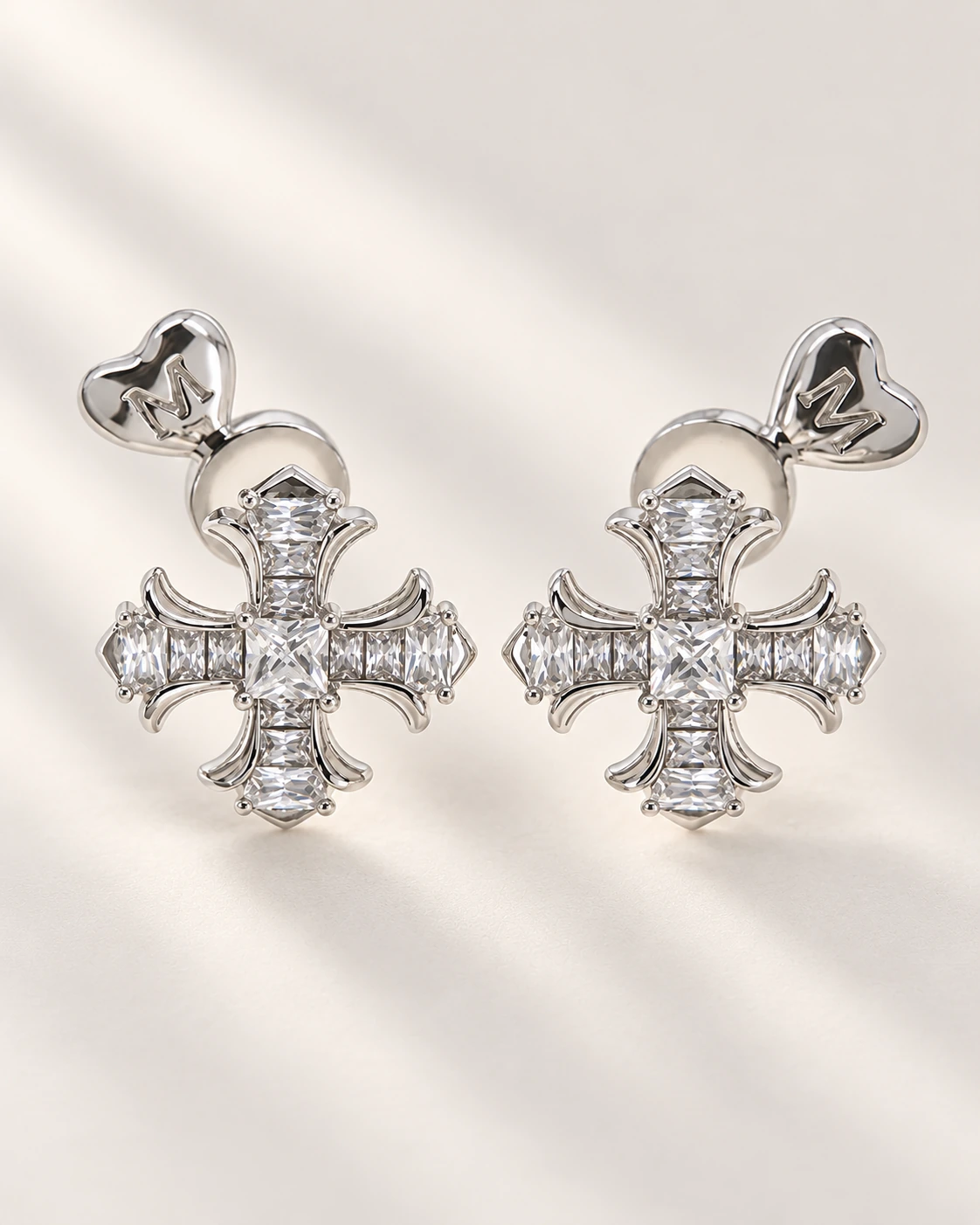
To style earrings with a claw clip, decide which piece you want someone to notice in conversation. For an earring-led look, uncover the lobe and move the fastening behind the ear or towards the back. For a patterned clip, leave part of the body visible in three-quarter view and start with studs. To feature both pieces, try one shared detail such as a warm tone, or a clear contrast such as burgundy beside blue.
Check three angles. From the front you see which part of the earring extends beyond your hair. At three quarters you can judge the space between its top and the clip. The back view shows the background behind the clip and how high it sits. Both pieces need not be fully visible in every photograph. A quiet front view can reveal a second detail as you turn.
Tortoiseshell pattern and clear studs
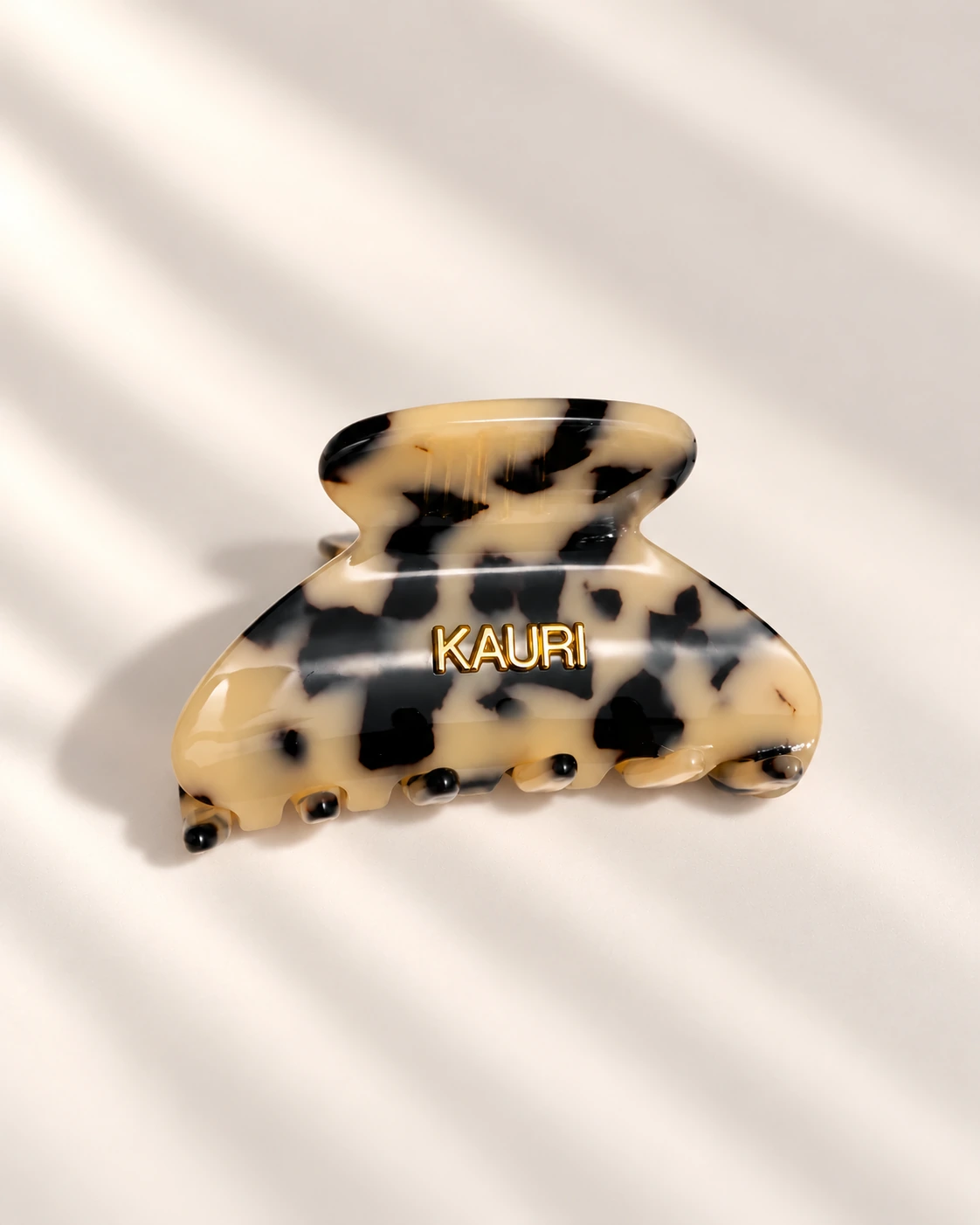
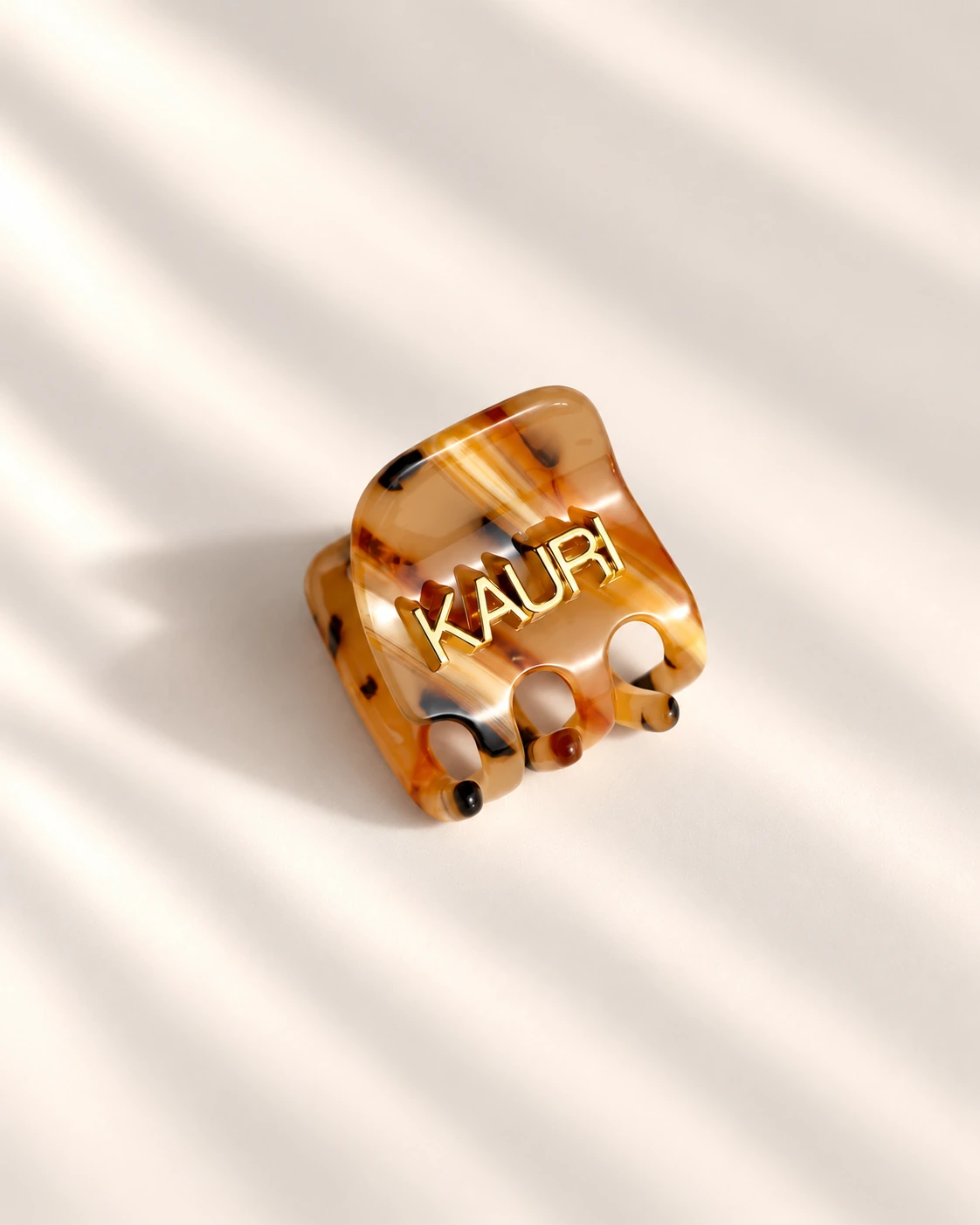
Start with Kauri Curve in variant ZK-004-6 and the Jardin Croix Petite crosses. The 6.9 cm clip has a curved body and a tortoiseshell pattern. The studs have flared tips and clear stones. Gather the top layer and leave the lower hair loose. If the length allows, fasten the clip slightly off centre at the back. The pattern can then appear as you turn, while the lobe carries one small motif.
Look at the side opposite the parting. If a strand covers the entire stud, tuck just its front edge behind the ear without pulling the whole style tighter. Check the back in a hand mirror. Do you see the coloured face of the clip or mostly its handles? To show more of the curve, change the direction of the grip slightly on the same section. Keep the position comfortable at the temple.
Kauri Curve + Jardin Croix Petite
A miniature clip and pear-shaped drops
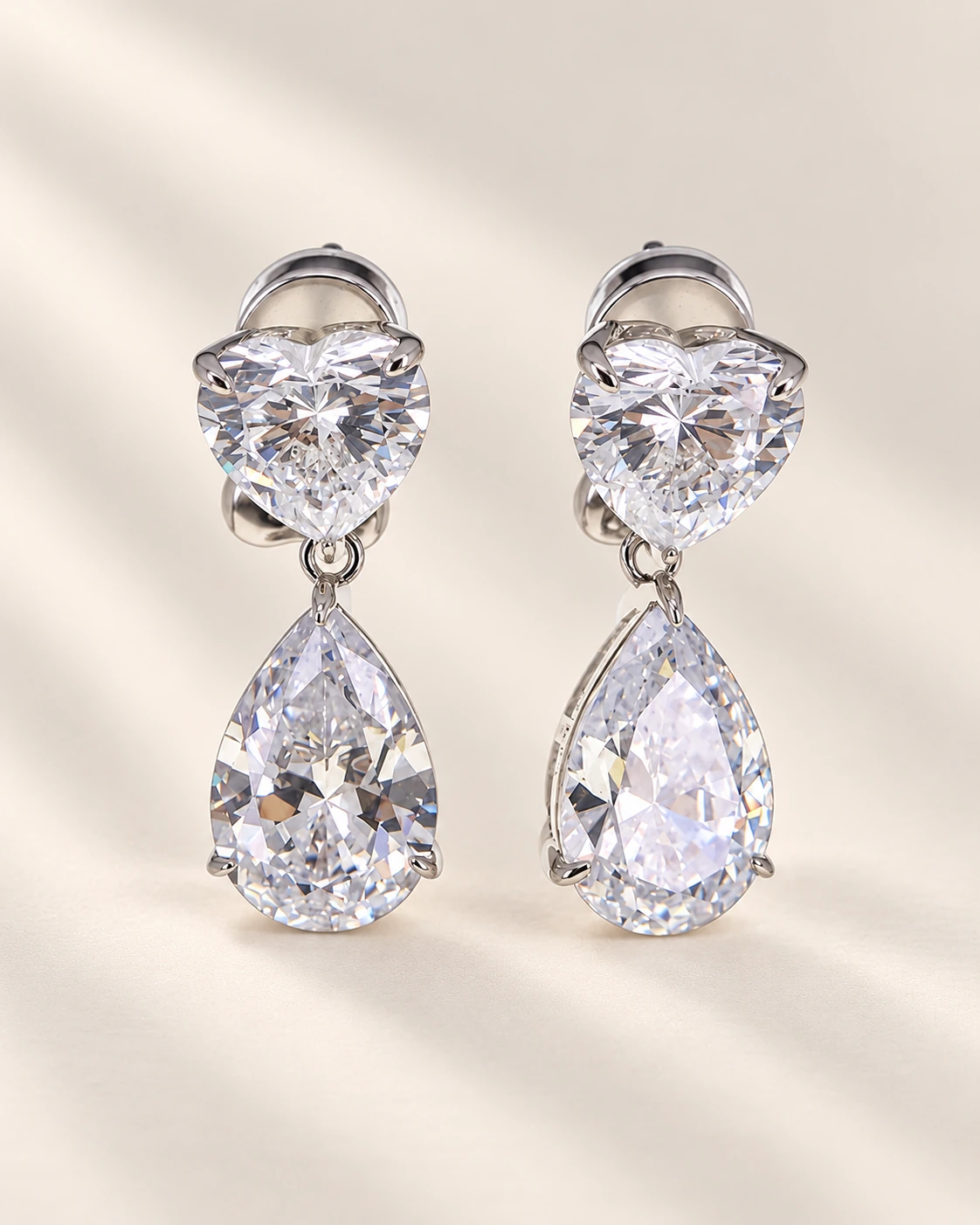
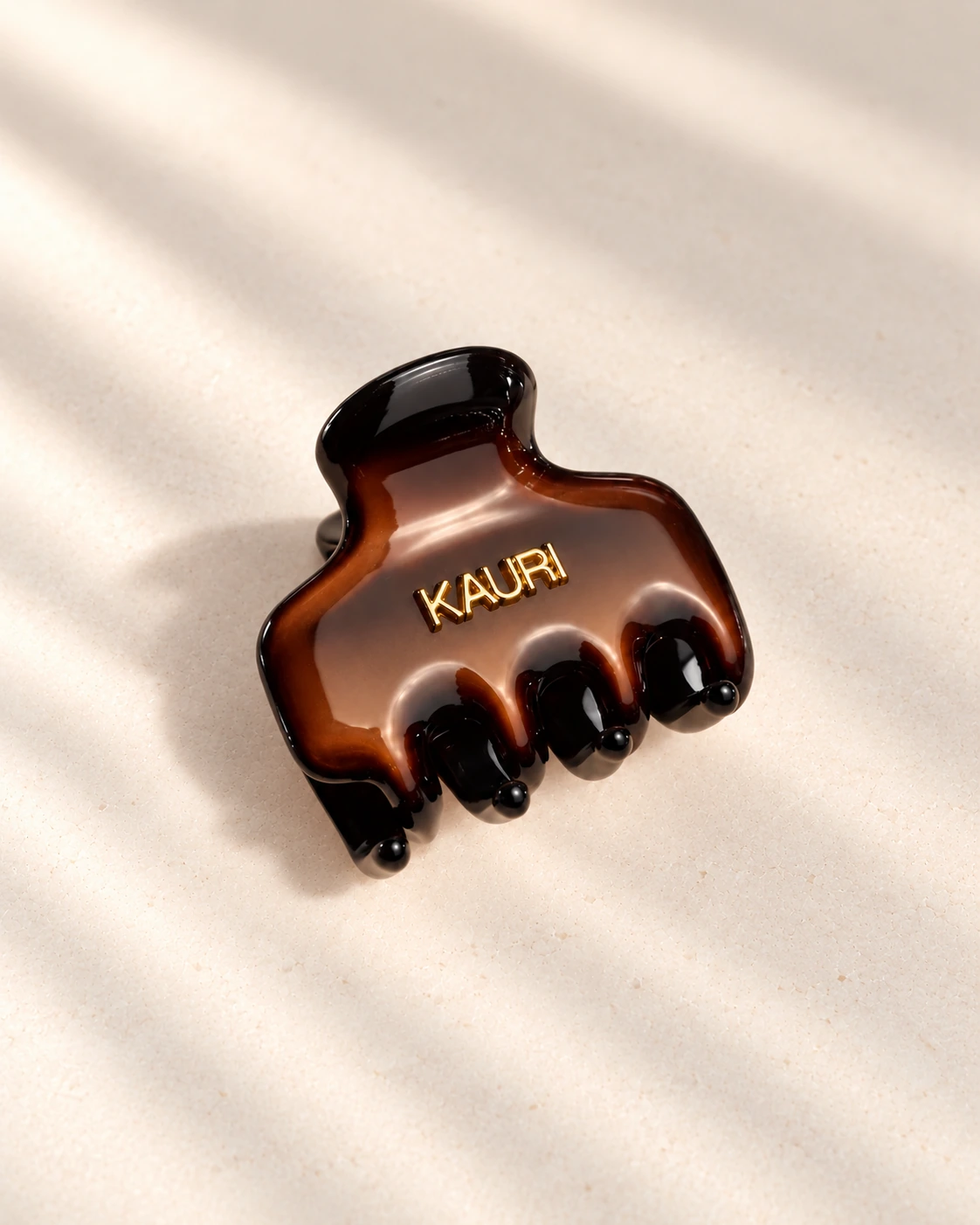
Try the 2.3 cm Kauri Petite on one strand above the ear. The aim is to clear a space for Lumière Larme, whose clear pear hangs below a rounded upper element. Sweep back just enough hair to reveal that upper part too. When only the lower stone shows it can read as a single glint. When both show, the entire vertical shape becomes clearer. Compare them from the same distance without zooming in.
Turn the clipped side towards the mirror. To distinguish the two accessories, look for a sliver of hair or skin between them. The drop may move closer to your hair as you turn even if it hangs free while you stand still. If a loose strand slips between the top and lower stone, move that strand and repeat. From behind, check the ends beside the handles and whether you can release the clip with one hand.
Repeat a warm tone without an exact match
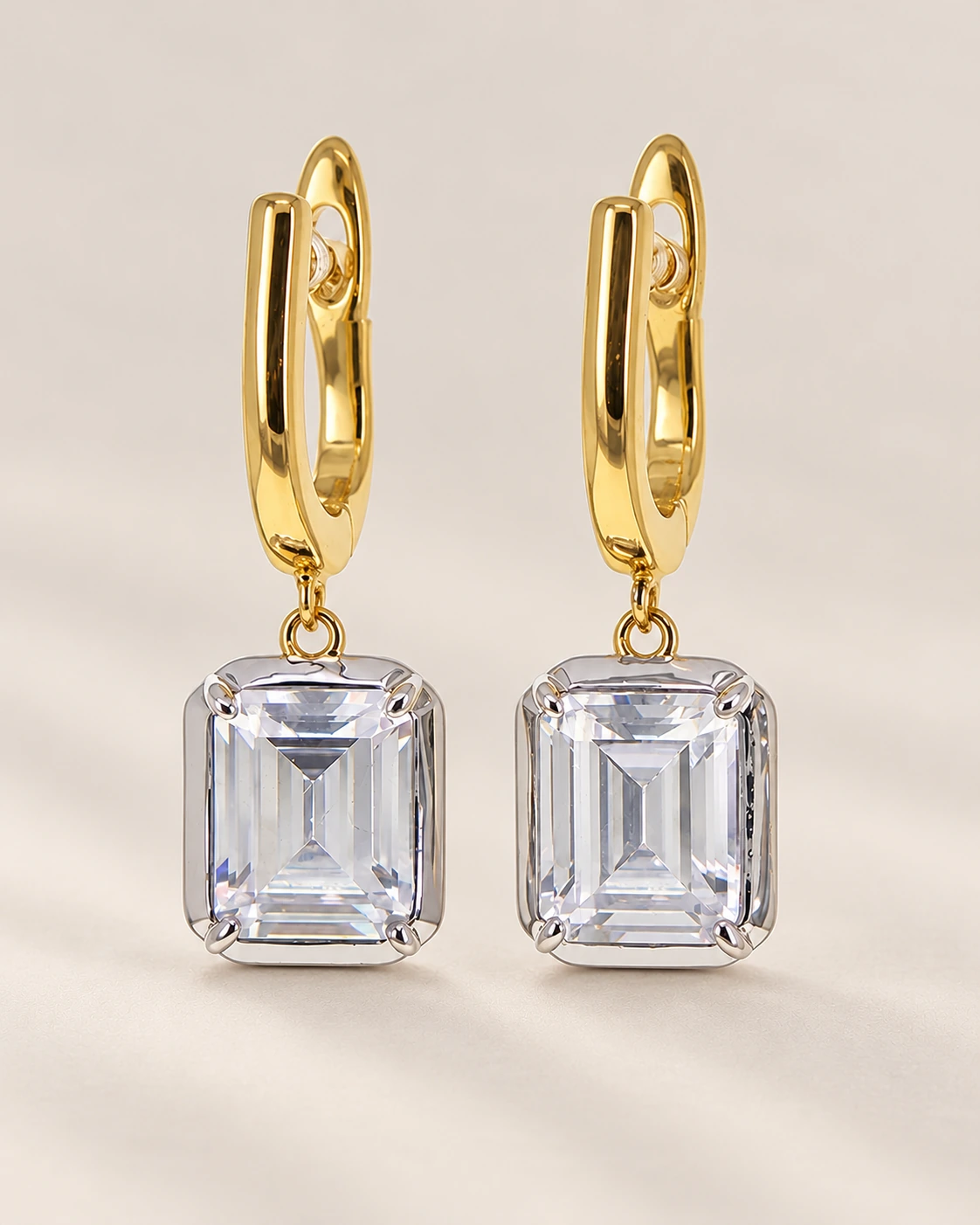
Bring back the tortoiseshell Curve and add the rectangular Lumière Recto drops. Each clear rectangle hangs below a smooth, warm gold-toned upper element. Compare that upper part with a lighter warm area of the acetate pattern. Hold them by a window, then put them on. Marks that stand out on your hand may look different against dark or light strands. Judge the colour connection in the light you normally use.
Arrange the hair at the back so that the curve shows from behind and the clip edge meets the warm earring top in the three-quarter view. From the front, the clear drop introduces a vertical line without another strong colour. If you are wearing a patterned blouse, compare with a plain top. That separates the effect of the clothing from the accessories. Gold-toned describes the visible colour here; consult the product specification for composition and plating.
A burgundy clip and a blue stone
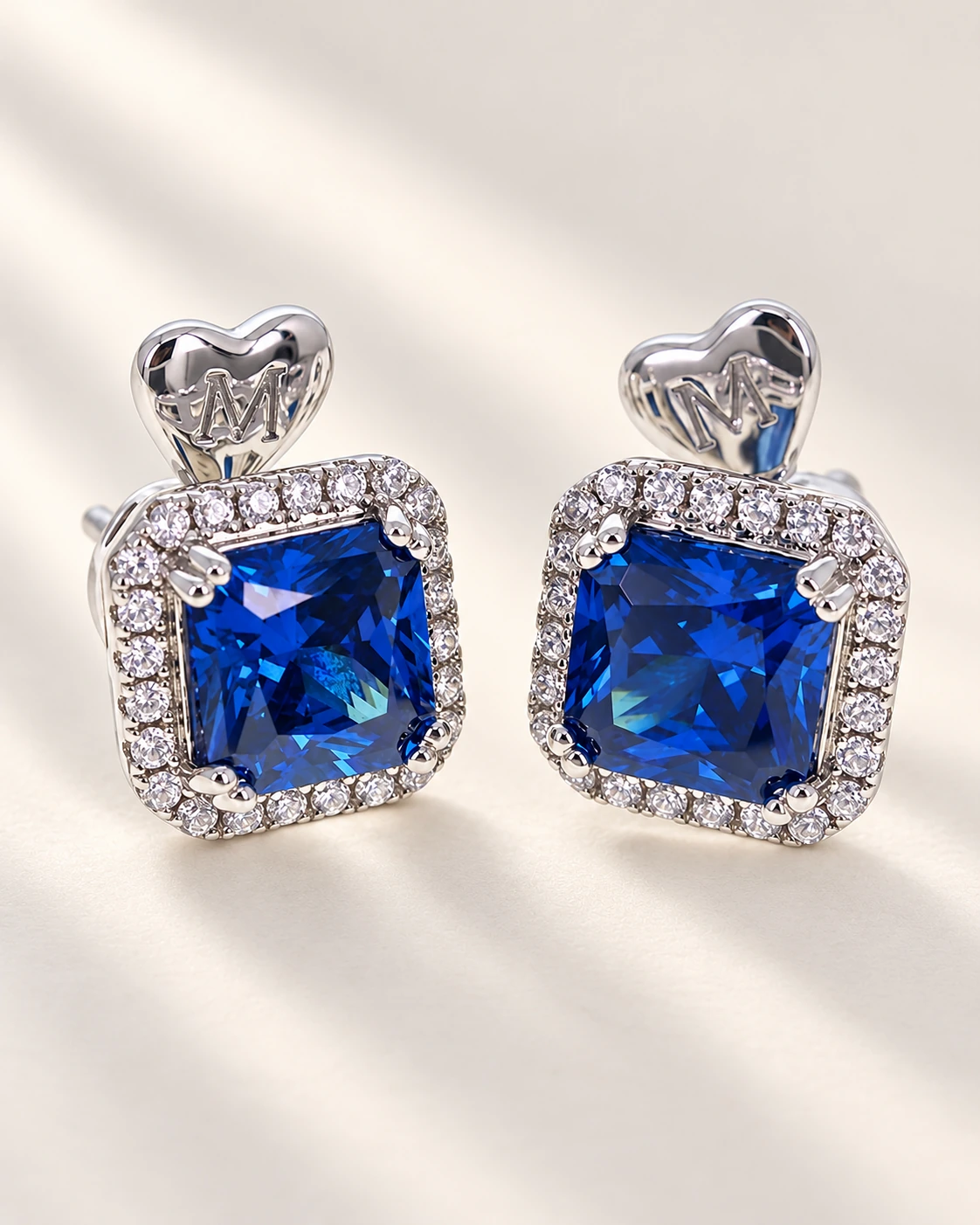
For deliberate contrast, pair the 5 cm Kauri Mini in burgundy variant ZK-003-7 with Éclat Céleste Blue. A clear halo with rounded corners surrounds the blue centre. Fasten the Mini on an upper section towards the back. The blue appears first from the front and the burgundy as you turn. To see both colours together, find the angle at which the clip emerges from behind the hair. A white shirt or smooth grey knit makes a simple backdrop.
Repeat with the same parting and the bright scarf you plan to wear. A third colour near the face can change the balance more than moving the clip a little. To favour the blue centre, leave the clip mainly visible from behind. To highlight the burgundy, arrange the upper layer clear of the body. Keep the fastening on a section it can actually hold.
Kauri Mini + Éclat Céleste Blue
Two comparisons to make in the mirror
First, keep the Curve in place and photograph it with Jardin Croix Petite, then switch to Lumière Recto. Keep the light, angle, collar and head position constant. In the first picture, note the open space below the lobe. In the second, follow the bottom edge of the drop towards the collar. The change goes beyond sparkle: a new vertical line appears beside the neck. Choose according to whether you want the warm colour repeated or the clip pattern to lead.
Second, keep Lumière Larme and the Petite and change only the hairstyle. Fasten a single side strand and let its neighbour fall behind the ear. Then fasten a very small upper section farther back, provided the Petite can close around it freely. Turn the same ear towards the camera each time. Note which part of the earring opens up and whether you can see the clip from that side. Reduce the section if necessary instead of forcing the body shut.
Movement and the choice for the day
Turn each way, lean over a table and move a hand from the temple to the clip as though fixing your hair. Does a strand slip between the back and your ear? Do you have to move the drop to reach the handles? If hair catches, stop and release it by hand. If this happens in ordinary movement, change the fastening position or try studs. A short video makes the movement of hair and earrings easier to see.
For everyday wear, start with a style you can quickly redo and choose the earrings by their front view. For dinner or photographs, reverse the order: choose the earrings, expose the part of the ear that shows their shape, then check the clip from behind. Save three views together. They will remind you where you fastened the clip, which way you parted your hair and how the strand fell beside your face.
When choosing online, lay a familiar earring beside a clip you own. Compare their actual proportions with the body length in the Kauri listing. A miniature clip can fill its catalogue photograph as completely as a long one. Try the closest size you already have near your temple. This helps you decide between a small touch of colour and a pattern that you would like to see even in a waist-up portrait.
For a bob or shorter layers, see which Kauri clip to try on a side strand or half-up section.