How to measure ring size at home using a ring or your finger
Two ways to measure at home, a diameter and circumference chart in millimetres, Miréa model sizes and practical checks for narrow and wide bands.
Maison Miréa editorial team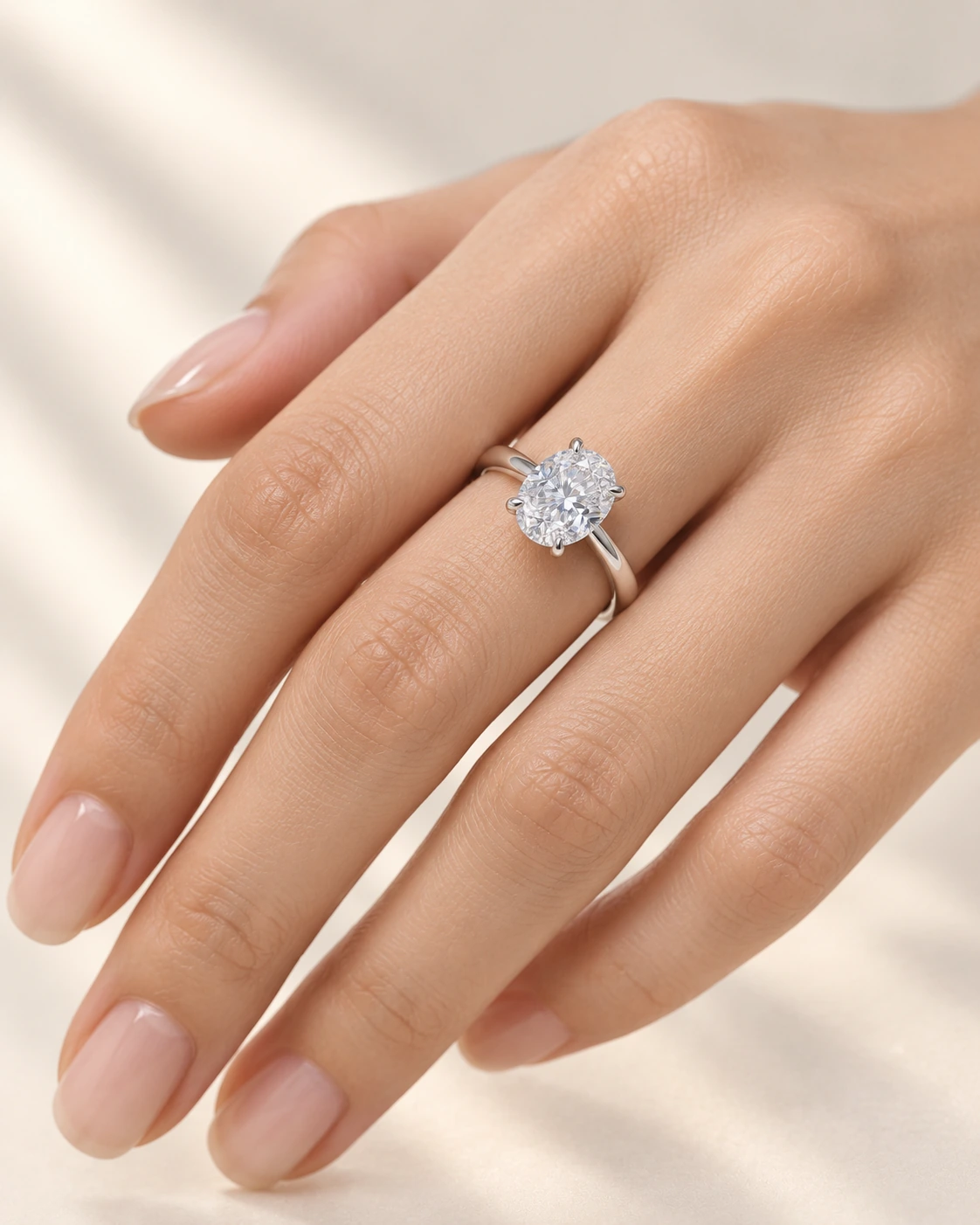
To measure ring size at home, take the inside diameter of a round ring that fits the intended finger, or wrap a narrow paper strip around the finger to measure its circumference. Record the measurement and its name in millimetres. A diameter of 17 mm gives a circumference of about 53.4 mm. Those are two ways of describing one ring, not two sizes to order.
Before you start
Choose the finger and hand. Your two ring fingers may differ, and a ring borrowed from a middle finger is a poor reference for an index finger. For a gift, find out where the recipient actually wears the ring you borrow. An old ring put away because it slips off tells you little about a comfortable fit today.
Gather a flat surface, good light, a ruler with millimetre divisions, a sharp pencil and paper to record your figures. For the second method, use a thin strip that does not stretch. Avoid elastic cord and thick knitting yarn, which stretch or take up extra space. Write down what the number refers to. “17 mm across the inside of a ring” is far more useful to an adviser than “17” on its own.
Method one. Measure the inside diameter
Check that the ring rests flat and the opening looks round. Place the zero mark of the ruler at the inside edge. The zero line can sit a little way in from the physical end of the ruler, so line up the printed mark rather than the end. Look straight down at the scale. Position any prominent stone to one side so it does not obscure your view of the opening.
Read the scale at the opposite inside wall on a straight line across the widest part. If you placed the first edge at 10 mm and the opposite edge reaches 27 mm, subtract to get 17 mm. These figures illustrate reading a ruler. Reading across the outside instead would include the thickness of the band twice and make the ring seem larger.
Rotate the ring a quarter turn and repeat. A noticeable difference can mean that the first line missed the centre, the band has bent or the opening is deliberately oval. Realign the ruler. If the two figures persist, keep both measurements and borrow a different round ring. Averaging the two axes does not make the oval equivalent to a circle with the same fit. An open ring is also a poor measuring tool; leave it in its natural shape.
Method two. Measure around your finger
Measure at an ordinary room temperature when your hands feel as they normally do. After unusual heat, cold or exertion, wait until they have returned to their usual state. Wrap the strip around the base of the finger where the band will sit. Keep its edges level. A strip that climbs diagonally towards the knuckle traces a longer path.
Mark the overlap with a fine line. Relax your hand, remove the strip and lay it flat without pulling. Measure from the starting edge to the mark and record the number in millimetres. If the tape reads 5.4 cm, first convert it to 54 mm. A finger circumference of 54 mm does not mean looking for a Miréa option labelled 54.
Repeat with a fresh strip without looking at your first mark. Form a paper loop at the measured circumference and see whether it passes over the knuckle without force. Paper gives more than metal, so this cannot guarantee that a ring will pass. If the loop feels loose at the base yet catches on the knuckle, record both measurements separately. A jeweller can choose a more representative gauge when you tell them exactly where the ring catches.
A diameter and circumference reference
Diameter is the straight distance across the opening. The inside circumference of a circular ring equals its inside diameter multiplied by π. The second column below is rounded to one decimal place. Use it to compare two home readings. It does not give manufacturing tolerances or guarantee that the circumference of a soft finger will match the inside of a rigid ring exactly.
Scroll the table horizontally to see every column.
| Inside diameter of a circular ring, mm | Calculated inside circumference, mm |
|---|---|
| 15 | 47.1 |
| 16 | 50.3 |
| 17 | 53.4 |
| 18 | 56.5 |
| 19 | 59.7 |
| 20 | 62.8 |
If the paper strip reads 54 mm, use the circumference column. If the ruler reads 17 mm across your ring, use the diameter column. When the two methods give comparable results, move on to the model. A sizeable discrepancy is a reason to check that you measured the correct ring and did not pull the strip tight.
Take the measurement to the Miréa listing
Miréa’s guide describes labels from 15 to 20 across its catalogue. For an individual design, use the options listed on its product page. The table below records the maker’s labels. The geometry above describes your measurement; the label on a product page identifies the variant you would order. Keep US or EU numbers separate unless a conversion for the actual system has been confirmed.
Scroll the table horizontally to see every column.
| Miréa design | Labels listed for the model (unitless) | Profile to compare |
|---|---|---|
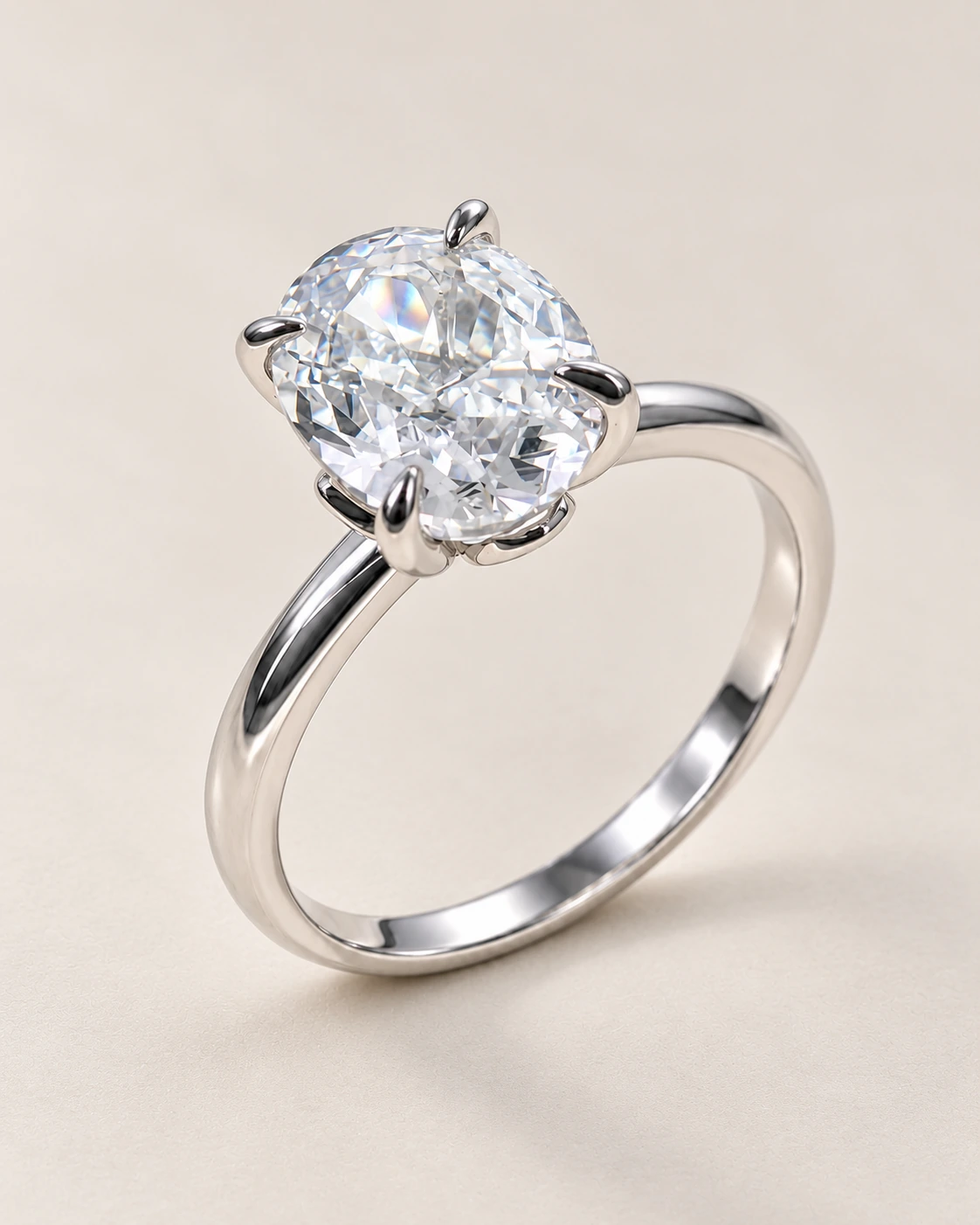
| Lumière Point, MK-06 | 15, 16, 17, 18 | Narrow smooth band with a round central stone |
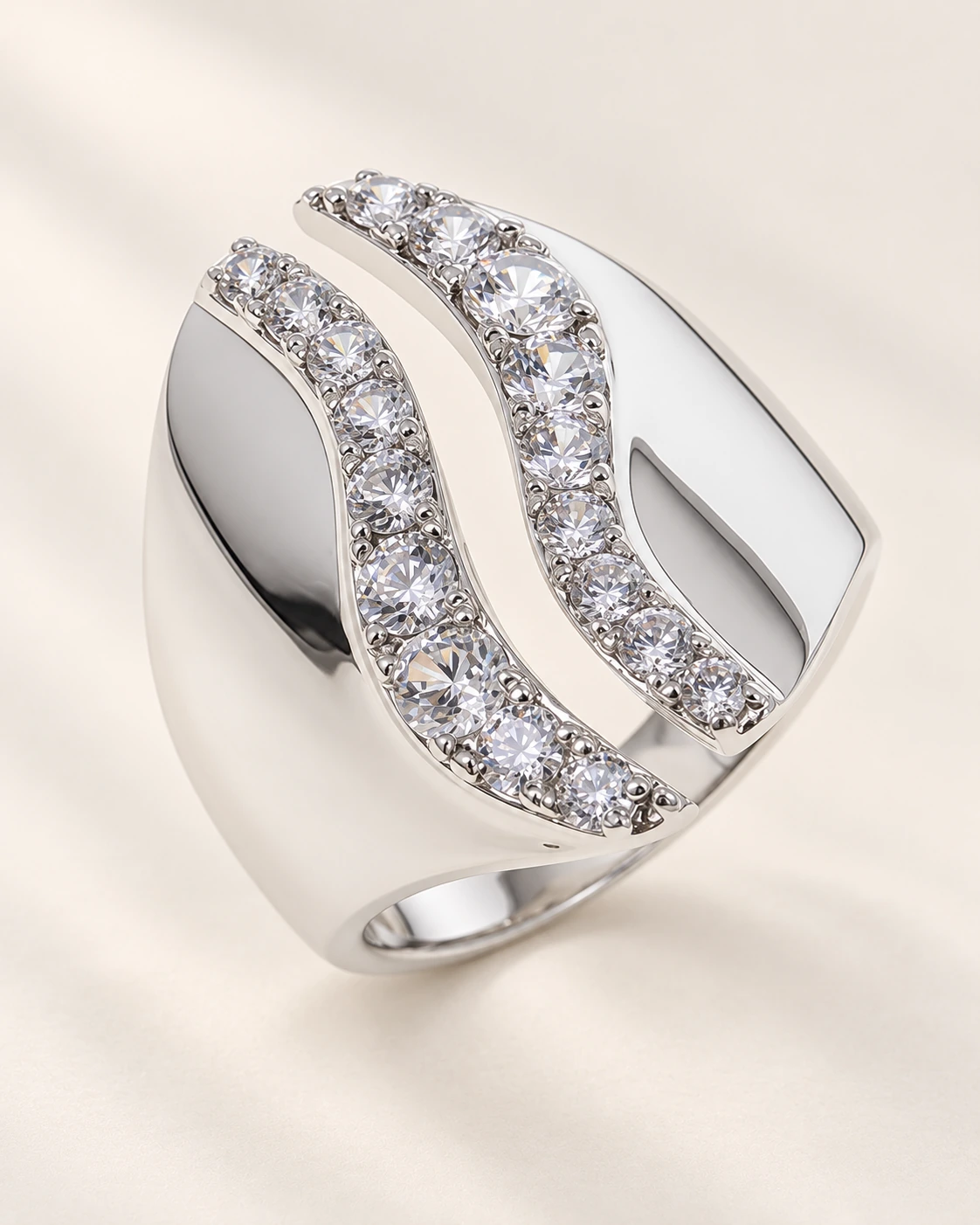
| Courbe Duo, MK-03 | 15, 16, 17, 18 | Wide smooth band with two undulating lines |
If you already wear Lumière Point on the same finger and your original order records size 17, open the listing and check option 17. If all you have is an inside diameter of 17 mm, send it as a diameter with a picture of the ruler. Ask which label matches that reading for the item reference, then check the availability of the variant. Two models offering the same numbers need not feel alike.
Wide bands and readings between two options
A narrow band touches a relatively small area. A wide band covers a longer part of the finger, particularly noticeable when you bend it. For Courbe Duo, compare a ring of similar width or ask a jeweller to use a wide fitting gauge. Try the ring with your hand in a normal position, relax and bend your fingers, then remove it as you usually would. A comfortable fit passes the knuckle and stays in position without painful pressure.
If an edge falls between marks on the ruler, keep the interval instead of rounding at random. For example, write: “Between 17 and 18 mm across a narrow reference band; considering the wide MK-03.” Include the finger and hand. Ask whether you can try the options on or get the actual inside diameter of the two neighbouring variants. There is no single increase to apply to all wide rings. Width, internal profile and knuckle shape can all affect the result.
How to record a measurement for a gift
Borrow a piece the recipient has worn recently and find out which finger it came from. If that detail is unclear, photograph the ring from above beside a ruler and note what remains unknown. A wide top with several rows of stones can hide the inside edge in an angled shot. Take a second picture from the other side before returning the ring.
A useful note fits on one line: right hand, ring finger, narrow closed band, inside diameter between the two marked divisions, intended item reference. If all you have is another ring’s label or a photo without a scale, leave room for the recipient to try two options. The design and card can still be a surprise while you confirm the size together afterwards.
Final checks before ordering
Keep the measurement, method, item reference and selected label together. See wide versus narrow rings for a closer look at the shapes. If your measurements disagree or a ring already feels difficult to remove during a fitting, have the size checked in person before buying. You can compare two neighbouring gauges with the profile you plan to wear.
A closer look