Jewellery for your wedding dress: choosing earrings, a necklace and bracelet
Compare four necklines and three bridal combinations. Check a pendant against a V-neck, drop earrings under a veil and a bracelet beside the bouquet.
Maison Miréa editorial team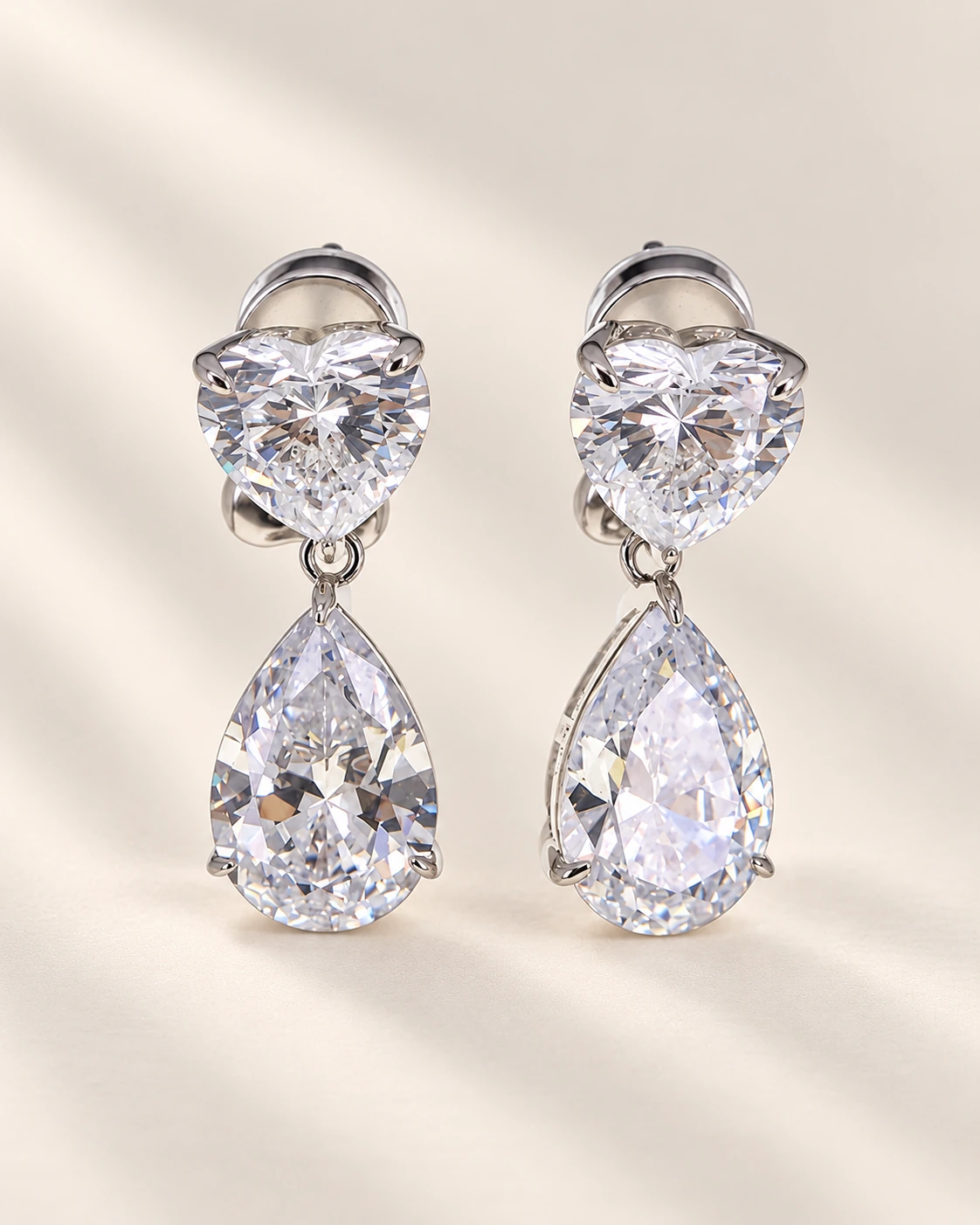
Start choosing jewellery for your wedding dress with three questions. Where does the dress already draw the eye: the embroidered bodice, the shoulder line or the shape of the skirt? Which areas of skin are visible when you stand and when you sit? What will be next to your ears, pendant and wrist: a loose curl, veil edge, lace collar or glove? The answers suggest whether to try earrings, a necklace or a bracelet first.
For bare shoulders, try drop earrings with the neck left open. With a V-neck, start with a pendant that clears the fabric. A high neck or densely embroidered neckline is a good occasion to try studs. With one bare shoulder, compare both three-quarter views before adding a central necklace. You can try all the relevant changes at one fitting. Remove one piece at a time while keeping your dress and hairstyle in place.
Set up a fitting around one dress
Wear the underwear you plan to use and fasten the bodice completely. A corset edge sits differently when you are holding it up with your hands. Ask someone to photograph the full silhouette with your arms down, then take a waist-up picture with a bouquet close to the size you have chosen. A generous bouquet can hide part of a bracelet and introduce the strongest colour in the picture. A close-up of earrings alone misses that context.
If the dress is still at the salon, recreate the neckline with a plain top. Drape a strip of fabric over one shoulder for asymmetry or button a blouse to the neck for a high bodice. Shortlist one pendant length and two earring shapes to take to the salon. Note what the mock-up leaves out, including the depth of real embroidery, the height of a structured bodice and the pull of your veil. Make the final choice in the wedding clothes.
Bare shoulders: notice the space below the earring
With an almost horizontal bodice, a vertical pair draws a second line beside the face. On the Lumière Larme earrings, a clear pear sits below a rounded top. Start with these earrings and a bare neck, then add a smooth bracelet if your wrist shows beside the bouquet. Look at the distance from the tip of the earring to the shoulder when standing straight and when gently tilting your head. That space changes as you move.
With separate off-the-shoulder sleeves, lift your arms as if greeting a guest. A sleeve might come closer to a drop than it does while you stand still. If the two meet, try shorter earrings and keep the bracelet. To draw attention to the collarbones instead, leave the short pair in and add a necklace. Photograph the alternatives from the same distance so that the scale of the image stays constant.
A V-neck: find the place for a pendant
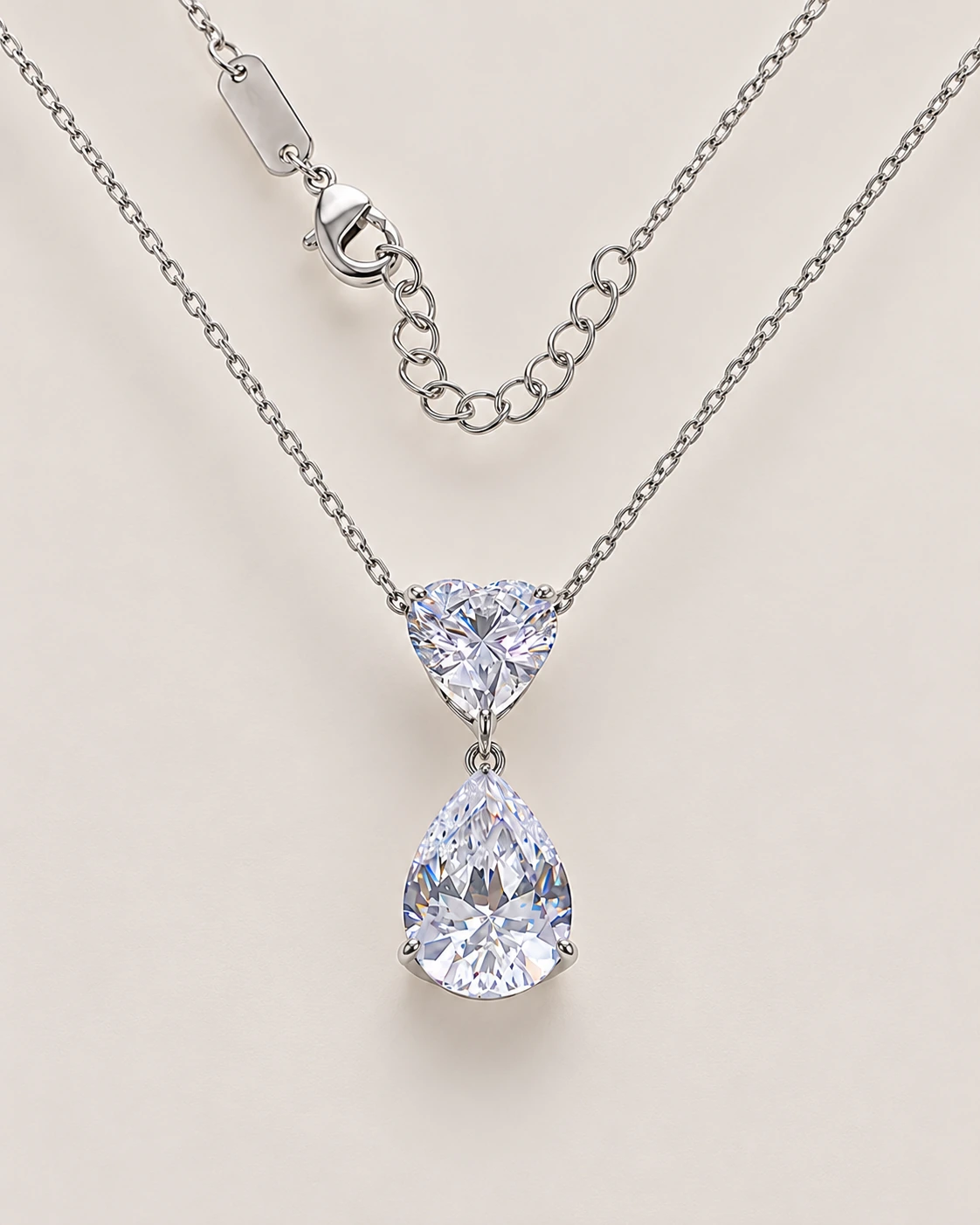
Follow the neckline from your collarbones to its lowest point. The Lumière Larme necklace ends in a clear pear on a 42 cm chain with a 3 cm extender. Where the pear lands depends on your neck, posture and the depth of the dress. Start at the shorter setting and face the mirror, then try a longer link. Look for a position where the tip falls on skin with a visible gap above the fabric.
Sit down and reach across a table as if signing a card. If the pendant slips behind the dress, shorten the chain and repeat. With a narrow V, check the sides of the stone too. The tip might clear the seam while one side catches an embroidered edge. Start with lobe studs and the necklace. Add the matching drop earrings for comparison if you would enjoy repeating the pear beside your face.
High necks and embroidered bodices
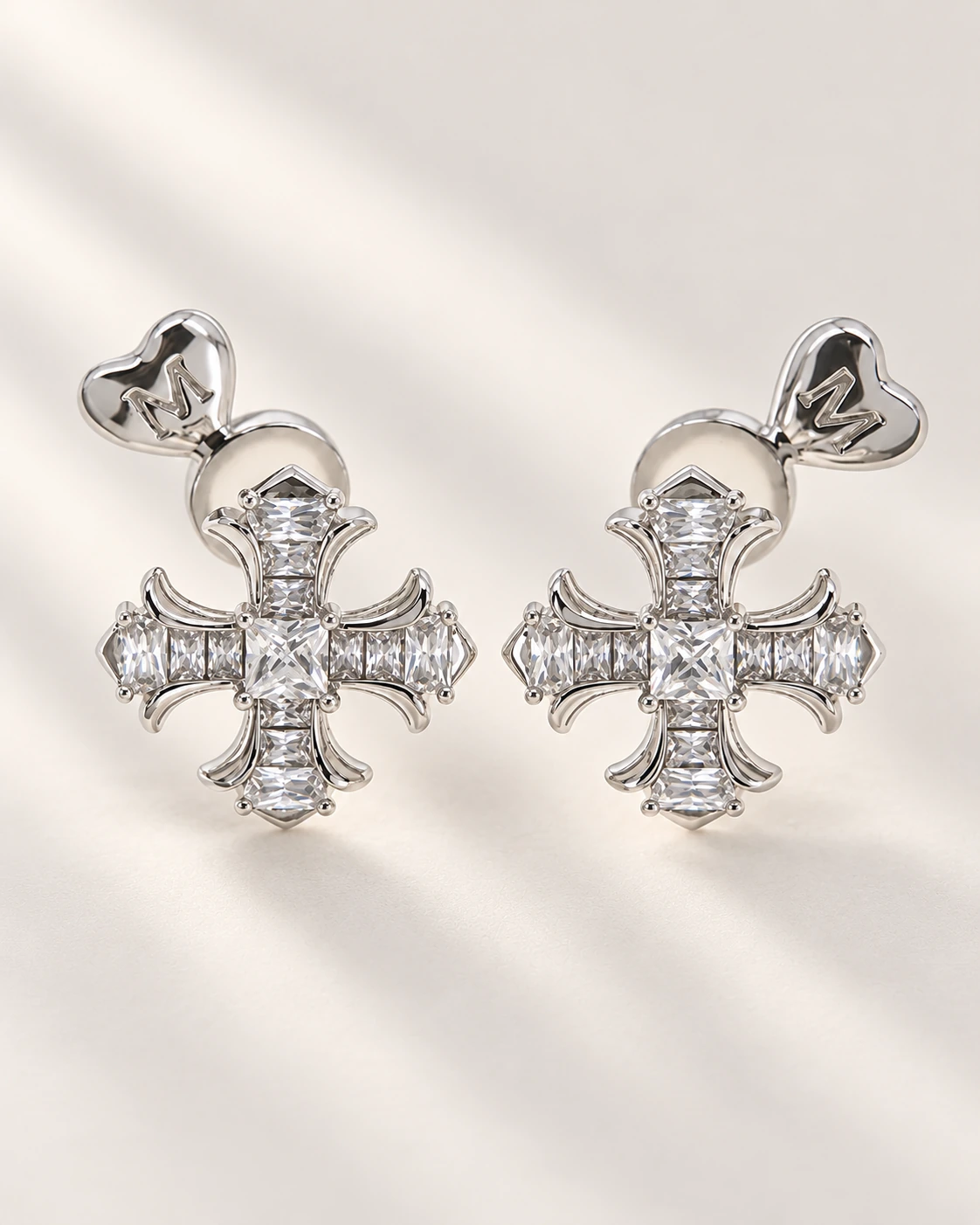
When beadwork or appliqué runs up to the collarbones, look at the dress without a necklace first. Embroidery, chain and stone setting could all occupy the same narrow area. Try the Jardin Croix Petite studs. Their cross motif and clear stones stay close to the lobe. Compare its scale with one repeat of the embroidery. If both motifs draw the eye, sweep the hair back on one side to leave a little space between ear and collar.
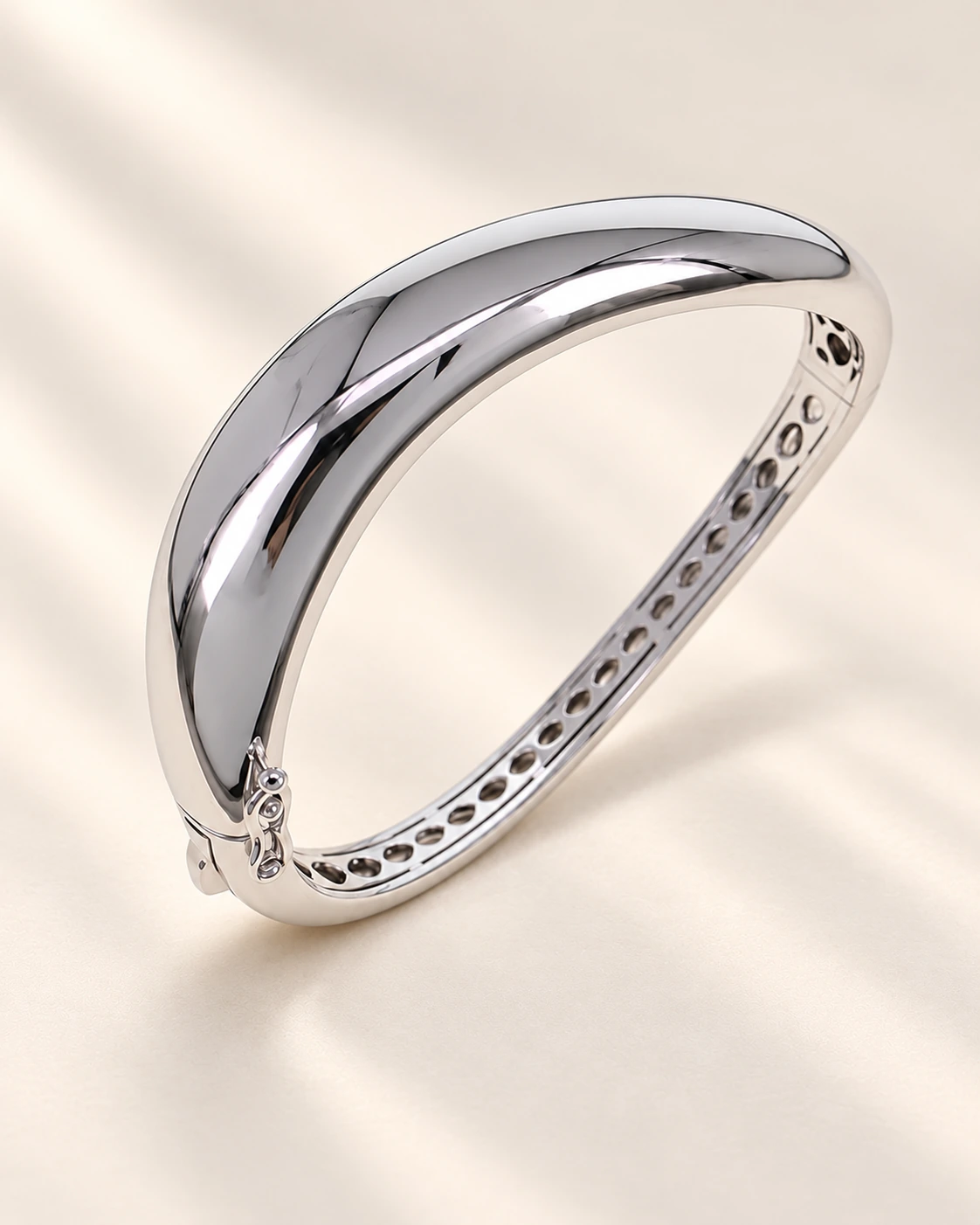
The Courbe Galbe bracelet has a broad, smooth curve. It adds a reflection without bringing another arrangement of stones to a detailed bodice. Try it on the hand that will actually hold the bouquet. With long sleeves, move the cuff past the bracelet without stretching the lace. If it keeps covering or catching the bracelet, save the piece for a change of clothes later in the day. The studs can finish the embroidered look on their own.
One shoulder and a diagonal line
For an asymmetric dress, compare both profiles. Start with studs and a bracelet, leaving off the necklace. Face the mirror first with the bare shoulder nearer, then on the strap side. If the strap carries a bow or flower, photograph both views with your planned hairstyle. A long earring can show beautifully on the bare side and disappear into the bow on the other. Short earrings let the diagonal stay clear from both views and leave room for the bracelet.
Hair, earrings and the edge of the veil
With loose hair, place a strand in front of the ear and another behind it as your stylist intends. A stud might appear only when you turn, which works if you like an occasional glint. For a middle length, use a familiar pair that peeks out below the strand. Compare it with the pear drops without changing the part. A short video taken while you speak can show whether the whole earring appears or the hair keeps hiding the top.
With an updo, both the front and back of an earring become more visible. Pin the veil at its planned height and slowly turn towards each shoulder. Follow the fabric past the lobe, setting and earring back. Walk a few steps and turn again, since the net may settle differently. If it catches, stop, free it gently with your fingers and compare a more compact pair. For a removable veil, rehearse taking it off with the person who will help.
Four necklines at a glance
Scroll the table horizontally to see every column.
| Neckline | First combination | Check |
|---|---|---|
| Bare shoulders | Drop earrings and smooth bracelet | Space above the shoulder as you tilt your head |
| V-neck | Pear pendant and studs | Pendant edge as you lean forward |
| High or embroidered | Studs with optional bracelet | Contact with collar and cuff |
| One shoulder | Studs and bracelet, bare neck | Both profiles beside the strap |
The last fitting in daylight
Stand side-on to a window. Ask for a full-length picture, a profile showing the ear and a three-quarter view with the bouquet. Check the photographs at their normal size on your phone. Close up, every stone seems visible. In the full portrait, the shoulder line and veil may create the main impression. A piece with personal meaning does not need to dominate every picture. Decide which detail you would like the photographer to capture separately.
Sit, turn your head, raise your arms to hug someone, pick up the bouquet and lower it. Check clasps, earring backs, the pendant position and clearance around embroidery. Wear the chosen pair for the rest of the fitting. If your ears feel tired, change to studs and keep the evening option in a separate case. A weight figure on a product page does not tell you the weight on one ear unless it states whether it refers to one earring or the pair.
If the veil comes off after the ceremony, pause for another look. More space around the face can make the same earrings feel quite different. Put any alternative pair and its own backs into a labelled case beforehand. Show the person helping you how the case opens and where to put the first pair. This is easier to arrange at a fitting than while searching for a tiny earring back on the day.
Three combinations to take to the final fitting
Understated. Try Jardin Croix Petite studs and the Courbe Galbe bracelet with a closed or one-shoulder dress. The crosses add a small motif near the face, while the smooth bracelet draws attention to the hands. With long lace cuffs, try the studs alone. A waist-up photograph with your hands in front shows the earrings and the space taken up by the sleeve detail in the same frame.
Earring-led. Pair the Lumière Larme drops with a strapless dress and a bare neckline. If you want a bracelet, try it on the hand without the bouquet. Compare a straight-on portrait with a profile wearing the veil. If the face remains the focal point and the earrings appear when you turn, the pairing does its job. If netting masks the lower stone, check the veil edge with your stylist first.
Necklace-led. Try the Lumière Larme necklace and studs with a V-neck. Choose the extender link by looking at the pear, then photograph the fastening or write down the chosen link. That small reference lets you reproduce the fit in the morning. In the final picture, check the neckline at the shoulders, the pendant in the middle and the lowest point of the fabric. Can you see the whole pendant and still move freely?
A closer look