How to choose a necklace length: where 40, 45, 50 and 60 cm sit
Try four lengths with a cord, measure the chain separately from the pendant and compare the result with your neckline. Four Miréa designs show what changes the fit.
Maison Miréa editorial team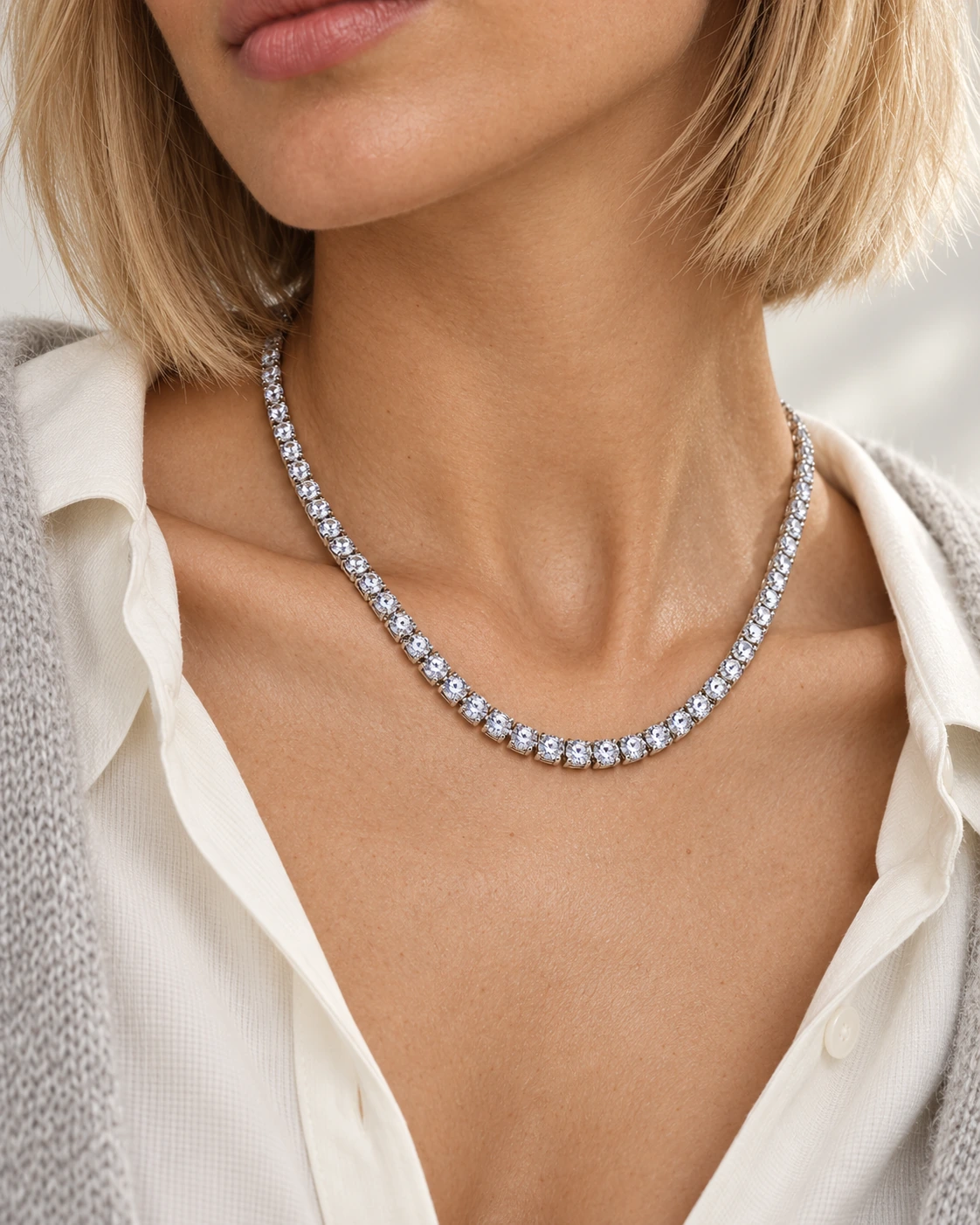
To choose a necklace length, decide where you want the lowest point to fall: above a T-shirt neckband, inside an open shirt collar or on the fabric itself. Put on that top. Using a soft cord that does not stretch, try loops of 40, 45, 50 and 60 cm. Hold the ends loosely together at the back and look at the result from the front and side. Note the length that keeps the centre visible and feels comfortable when you move.
For a pendant, mark two points. The first is the lowest part of the chain; the second is the bottom of the pendant below it. When comparing the result with a product listing, check whether the stated length includes an extension and which link is in use. Two necklaces with the same listed length can place their decorative centres at noticeably different heights.
Four lengths to try in the mirror
Scroll the table horizontally to see every column.
| Length of cord loop | Look from the front | Check while moving |
|---|---|---|
| 40 cm | Is there room between the loop and the base of your neck? | Turn your head and sit upright. If you feel pressure, release the cord and try a longer loop. |
| 45 cm | Where does the centre sit against your favourite T-shirt neckband? | Bring your shoulders forward and relax. Does the centre slip under the fabric? |
| 50 cm | Is the pendant framed by your open shirt or lying on its button placket? | Fasten one more button and see whether you can still see the whole pendant. |
| 60 cm | Which part of the fabric carries the longer line? | Lean over a table and straighten up. Notice what the pendant could catch on. |
Use this sequence as a fitting exercise. A photograph of a 45 cm necklace on someone else cannot tell you how much space it will leave at your neck. Neck circumference, shoulder position, chain construction and the thickness of the fabric all affect the result. If two lengths look similar from the front, check your profile. One may hang freely while the other rests on the raised edge of your top.
Take a reference measurement
Set a soft measuring tape around the base of your neck where a short chain would sit. Let it rest against the skin without pulling tight or deliberately dropping the front. Record the circumference in centimetres. This is useful if you want advice on a short piece. Your neck measurement and a comfortable finished chain length are two different figures. Adding the same number to every neck measurement cannot account for the shape of the jewellery.
A necklace you enjoy wearing makes a better reference still. Unfasten it and lay it straight on a table without stretching the links. Measure from the outer end of the clasp to the link you normally fasten it to. Measure the remaining extension separately. If the clasp is decorative and quite long, note whether you included it. A picture of the whole chain and a close view of the ruler against the chosen link make the measurement easy to explain to a shop.
Try four positions with the same cord
Mark a starting point and the positions at 40, 45, 50 and 60 cm on a length of cord. Use a pen or little paper flags. Knots take up length and make the measurement harder to repeat. Hold the first mark against the chosen mark at the back of your neck with the spare ends hanging behind you. Hold them with your fingers so you can release them straight away. Keep pins and needles away from your skin.
Stand your phone at upper chest height facing you. Use the same top, camera distance and shoulder position each time. Take a front view and turn sideways for a second view. If you are deciding between two lengths, label the pictures and compare the centre with one fixed point, such as the top button. Resist zooming in for just one picture: even a small change in scale can exaggerate the difference.
What a 42 cm chain with a 3 cm extension gives you
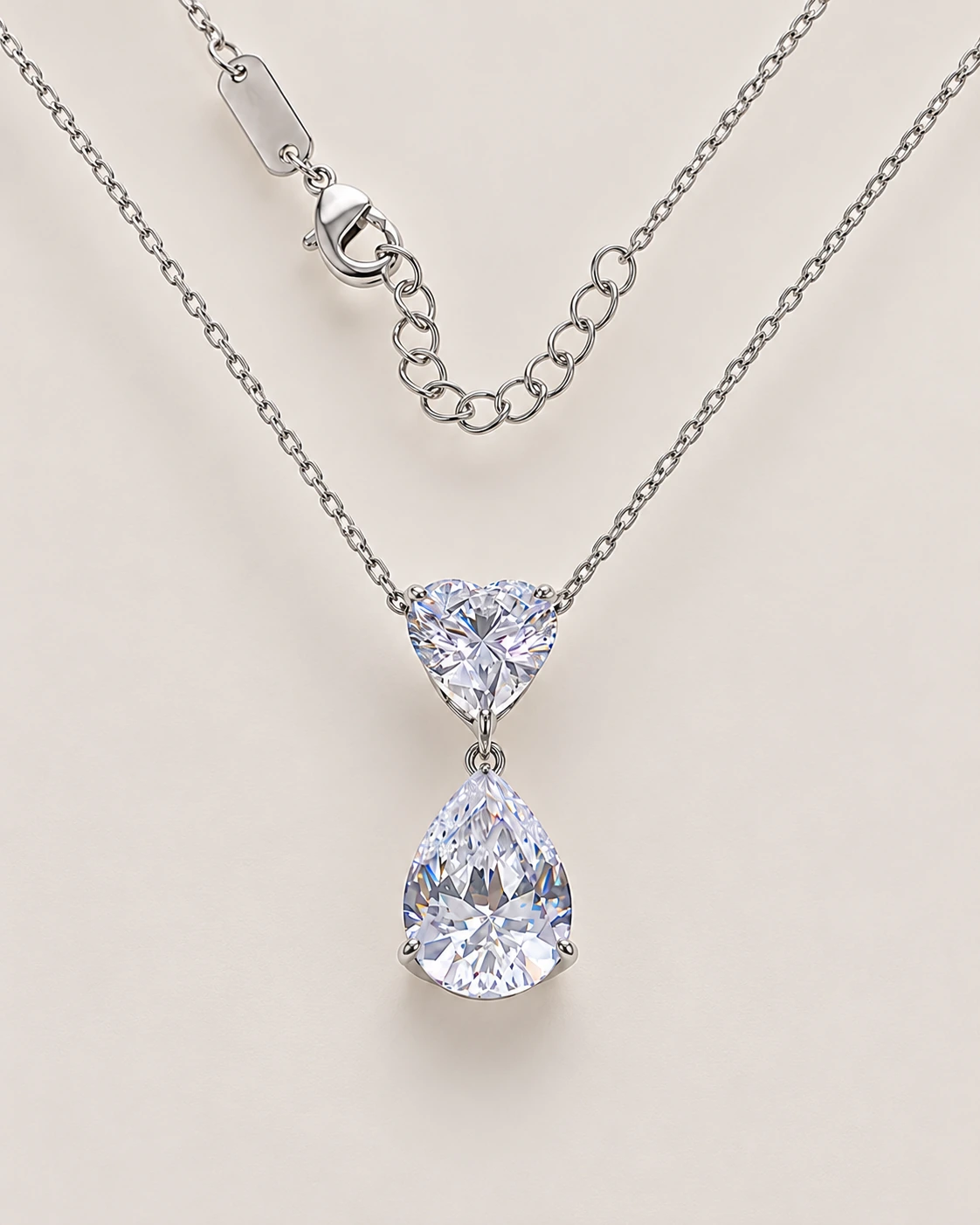
The listing for Lumière Larme specifies 42 + 3 cm. Try a 42 cm cord to represent the shortest setting. Using the entire extension gives a reference length of 45 cm. Changing links on this piece cannot produce the fit of a 50 cm chain. If you want a position in between, ask how far it is to the specific link. The description does not promise continuous adjustment or equal spacing between all links.
A clear drop hangs below the upper element of this necklace. Mark the chain line on your cord, then hold a paper strip the height of the pendant against the middle. Measure the pendant from its suspension point to the bottom edge or ask the seller for that dimension. Hold the strip against the cord in the mirror. It can show where the silhouette ends. The weight of the stone and swing of the real chain will still matter at a fitting.
The same length with and without a pendant
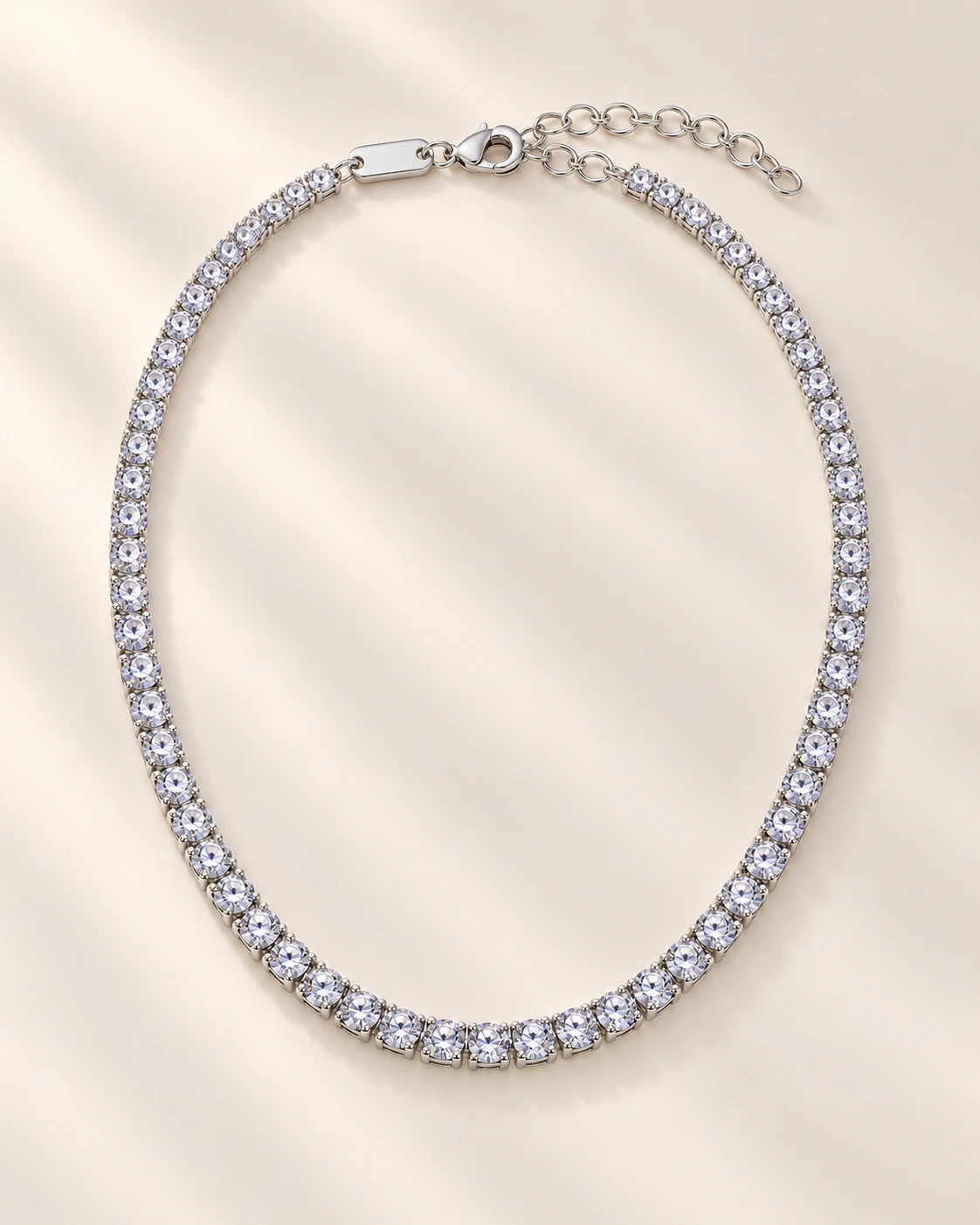
Compare the drop with Rivière Fil. This necklace is also listed at 42 + 3 cm, but clear stones form a line along the front without a separate hanging pendant. For Rivière Fil, look at the whole lower curve of the cord. For Lumière Larme, check where the drop ends. If the curve sits clear of a round neckline but the paper drop touches the trim, you have two options: the line of stones for this top or the pendant for a more open collar.
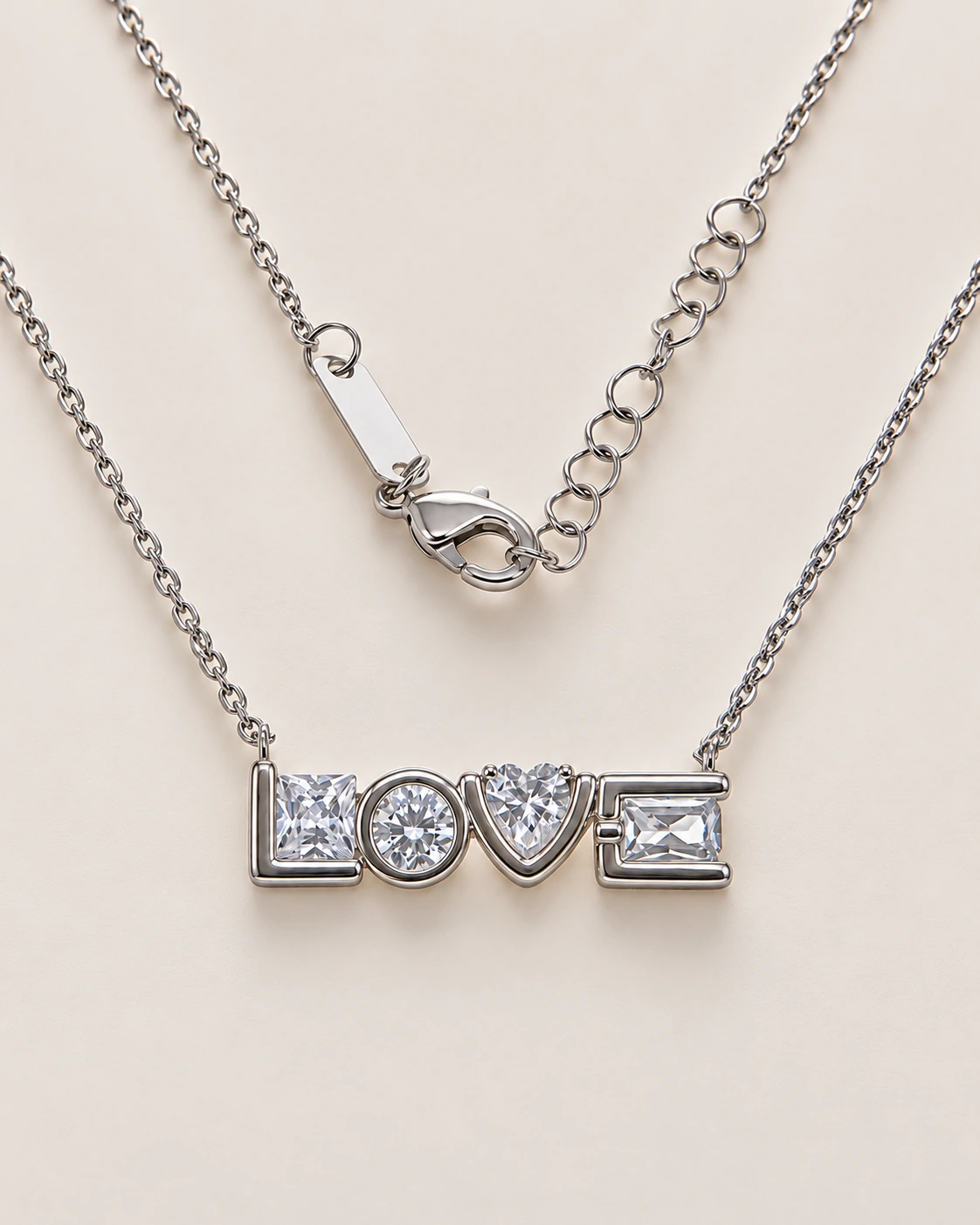
A horizontal motif needs a different check. The LOVE letters of Jardin Lettre sit between two lengths of fine chain, again listed at 42 + 3 cm. A narrow shirt opening can leave the middle of the word in view while covering the outer letters. Cut a paper rectangle to the confirmed width of the motif, or ask for a picture beside a ruler. The width of the shirt opening matters as much as the height of the chain.
How to assess a necklace that holds its shape
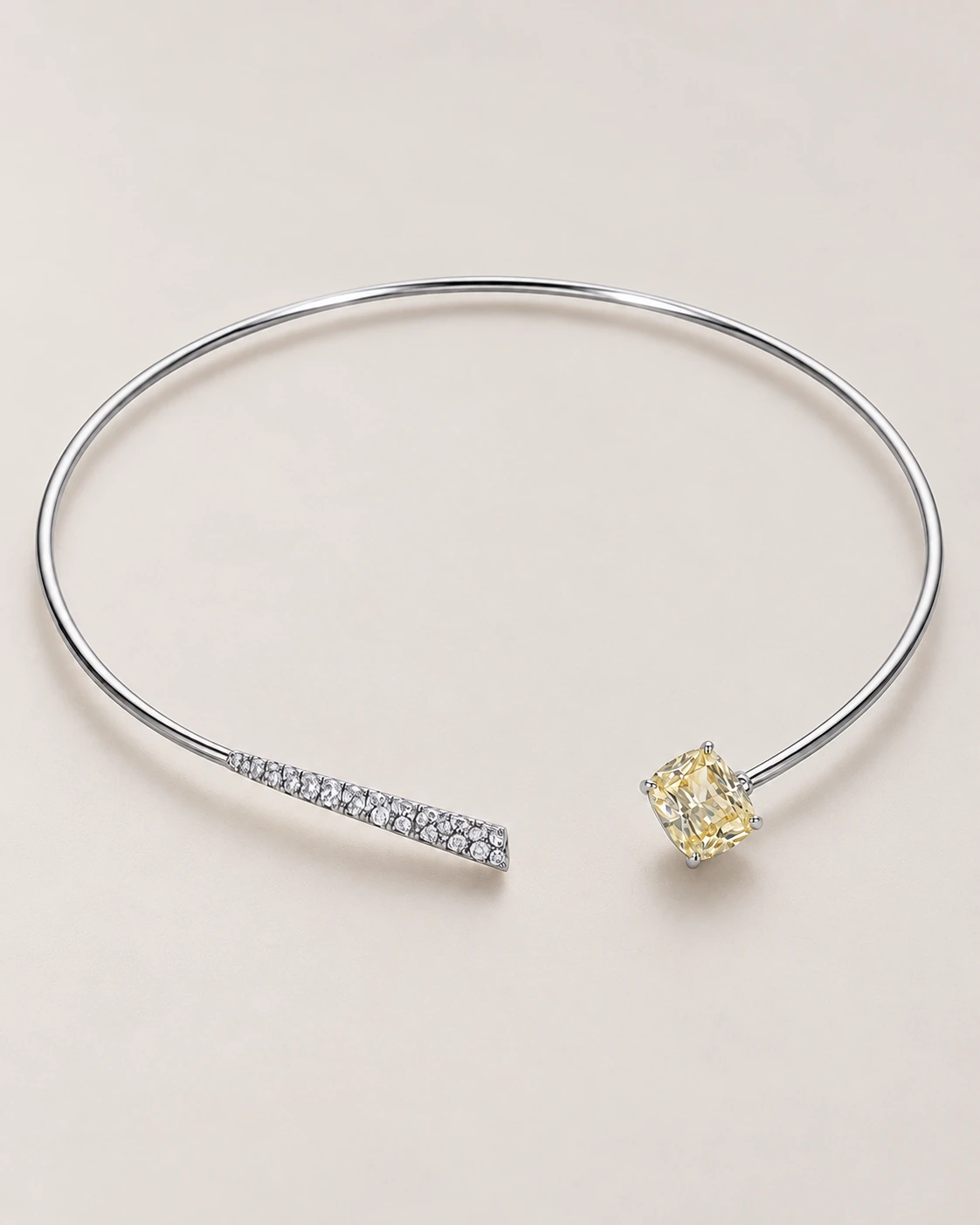
Courbe Horizon has a listed length of 38 cm. Its rigid open outline has two different ends, a yellow stone and a short line of clear stones. A 38 cm loop of cord closes around the neck; this necklace leaves a gap at the front. Ask for the inner width and front-to-back depth of the curve and the distance between its ends. A top view beside a ruler helps. If you own a similar open collar, compare the outlines at the same scale. Keep the rigid piece in its natural shape during fitting.
How two lengths work together
Leave one cord at your chosen shorter setting and position a second below it. Hold the paper pendant against the longer cord and look at the visible gap between the upper curve and the start of the pendant. Then change just one length. If the lower cord slips behind the upper one when you turn your head, look at the sides to see where they cross. Different listed lengths do not guarantee the chains will stay apart.
If both 45 and 50 cm appeal, go back to the clothes you wear most often. Try both positions you normally use for the top button of a shirt. With a jumper, compare the result standing and sitting at a table: the fabric may rise and hide part of the pendant. Mark the lowest point you want to see on one photograph. If both lengths still work, measure a chain you already own and choose the one that gives you a different position in your wardrobe.
Before ordering, write down the intended position, the working chain length and the dimensions of its decorative centre. For a gift, measure a familiar necklace at the link the recipient actually uses. If a listing provides only a total length or an image without scale, ask for the missing measurement. For the shape of the pendant itself see pendants for different necklines. To combine two real pieces, see how to layer two necklaces.
A closer look