How to choose a jewellery box: compartments, lining and size
Measure rings, earrings and bracelets, compare compartment sizes and check clearance under the lid. A practical guide to choosing a jewellery box for home.
Maison Miréa editorial team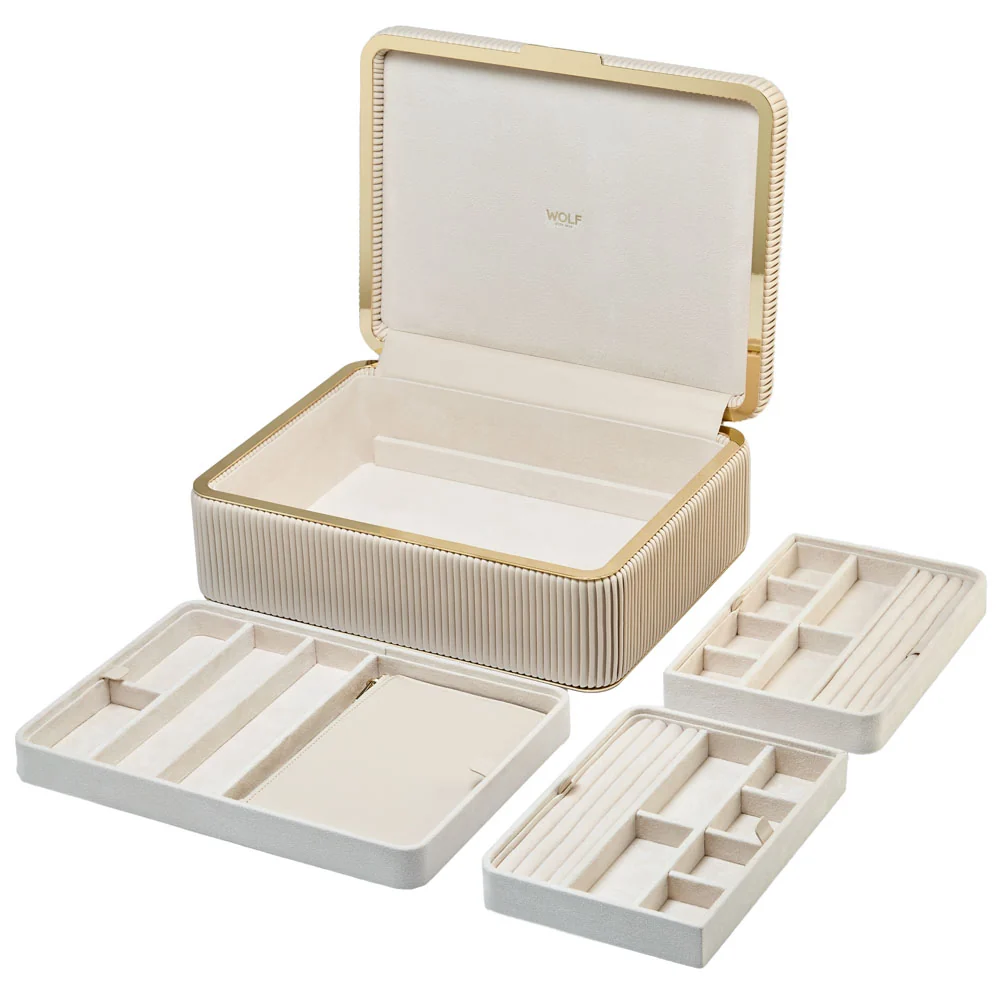
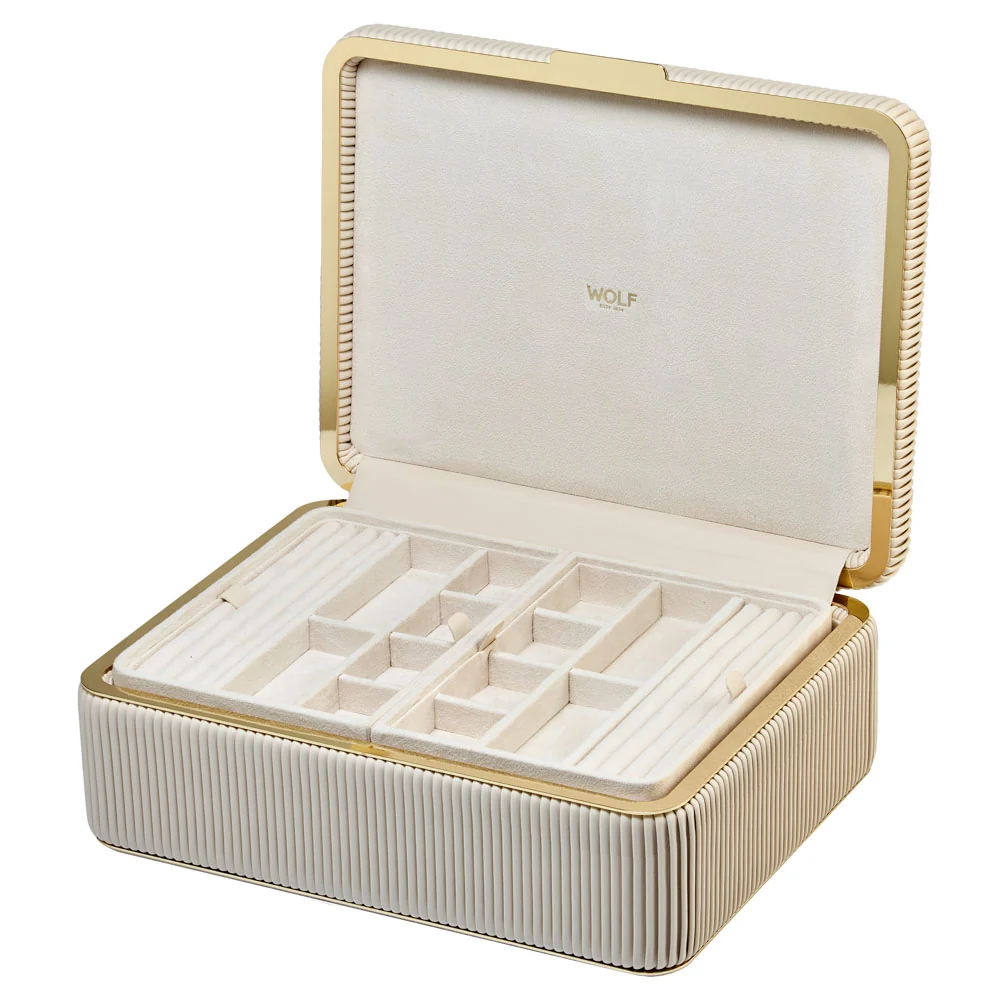
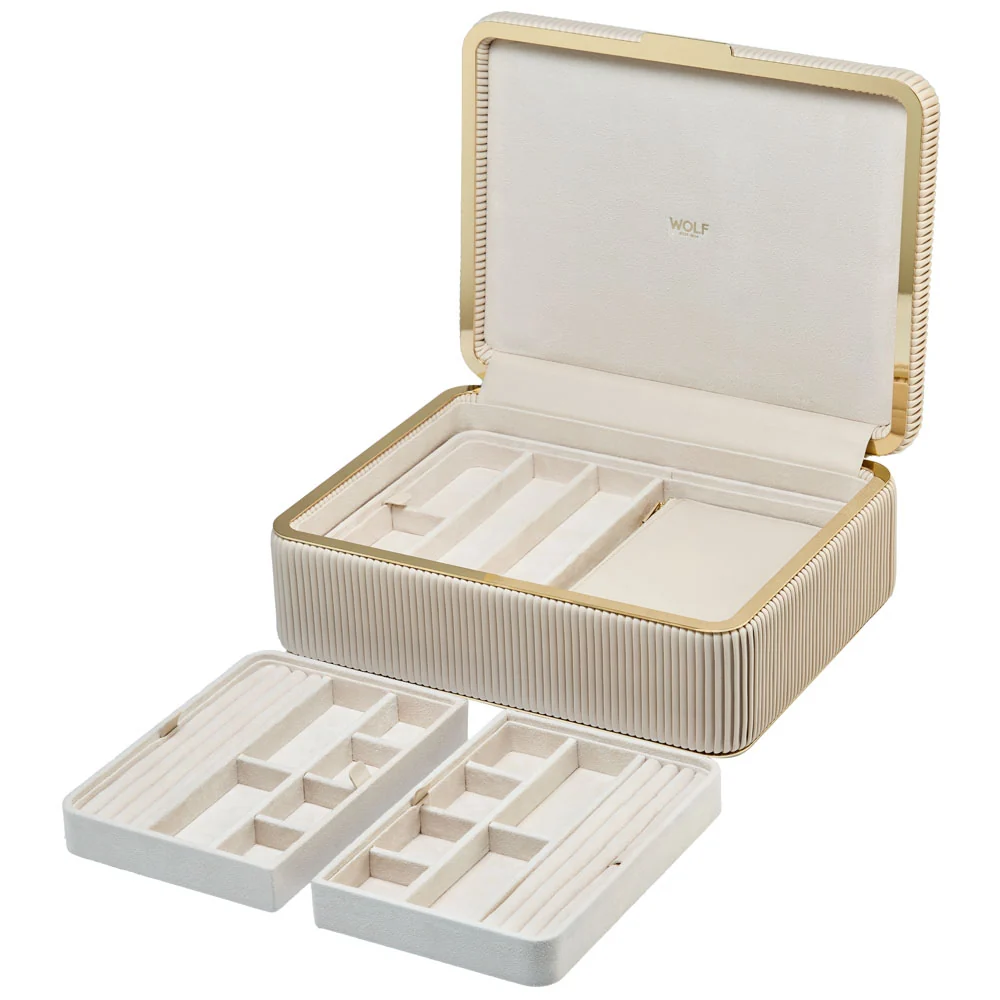
To understand how to choose a jewellery box, begin with three pieces you already own: your longest pair of earrings, your tallest setting and your widest rigid piece. Place them on paper in the positions in which you would store them. Trace their outlines and note how high they stand above the table. These measurements tell you where you need a long channel, clearance under the lid or a wide, undivided tray. Count the smaller spaces once those awkward pieces have a home.
Now picture taking out a single earring, ring or chain tomorrow morning. Can you reach it with your fingertips without shifting its neighbour or lifting a whole tray? Easy access often matters more for an everyday piece than another compartment at the bottom. A deep tray that takes an extra movement to reach may still be worthwhile for a sculptural brooch you wear once a year.
Make an inventory in storage spaces
Group rings, earrings, necklaces and bracelets separately. Count earrings in pairs, then translate that into holes: five pairs of studs need ten holes in a removable panel. Include spare backs and detachable drops. Remember the necklace you are wearing and the evening set still in a small handbag. Your list should describe everything that will return to the box.
Mark the three things you reach for most often. Next, identify the exceptions: a ring with a raised centre, a chain with a chunky clasp or an earring with a long moving drop. Write down what each one needs around it. Two long earrings occupy the width of two separate drops at rest. A ring setting can overhang the next roll even when its shank slips neatly into one groove.
What to measure for each kind of jewellery
Scroll the table horizontally to see every column.
| Piece | Useful compartment | Measurements to compare |
|---|---|---|
| Raised ring | Padded rolls or a soft individual well | Width of the shank, height of the setting above the roll and clearance under the lid |
| Stud earrings | Removable panel with access behind it | Width of each front, distance between holes and space for a post with its back attached |
| Long earrings | An uninterrupted channel for the pair | Overall length, width of both earrings laid alongside one another and room for closures |
| Chain with pendant | An individual lane or a hook with a pocket | Length of the chain in a loose loop, pendant width, pocket opening and projection of clasp |
| Wide rigid bracelet | Deep open tray | Outer length and width, height in its resting position and space to get a finger underneath |
Use the same unit for the jewellery and the compartment. Ask where the ruler was placed: the opening of a padded or sloping section can be wider than its floor. If the box has a removable insert, you need the internal dimensions with that insert in position.
Four dimensions to ask about
Start with the shelf or drawer. Open the drawer as far as you normally would and check the space for your hand and the raised lid. A hinged lid may require room behind the box. For removable tiers, leave a clear spot beside the box where you can put down a tray while choosing a piece.
Compare the clear length of the compartment, its width at the bottom and the depth from the lining to the top of the divider. The fourth measurement is the distance from the surface supporting your jewellery to the nearest part of the closed lid. A mirror frame, sewn pocket or fastening can project farther in one area. The advertised external height cannot settle this question.
When ordering online, ask for two views with a ruler: one taken from above between the inner walls, and a side view of the section in question. Mark the exact compartment on a screenshot. If you are considering stacked trays, ask how far the base of the upper tray drops into the lower one. A tray can effectively act as a lid even in a box without a separate cover.
Three manufacturer layouts to compare
Stackers lists its Classic Jewellery Box Lid 76962 as a standalone module with fixed dividers and external measurements of 25 × 18 × 4.2 cm. Its Mink Classic set 70797 has the same 25 × 18 cm footprint but stands 13.7 cm tall. Two more layers sit below the lid section, including one for watches and accessories. These figures tell you whether the box will sit on your dresser. Ask for the clear depth inside the specific compartment.
A third layout, the Powder Blue Leather Jewellery Box Lid, has a ring roll and twelve sections, including a longer compartment. Imagine your two longest pairs in the diagram: would one need the space next door? That tells you more than counting every visible division. The maker gives the external dimensions as 29 × 20 × 6 cm (width, front-to-back depth and height). If you need another long channel, check whether a suitable extra layer is sold separately.
Ring rolls, studs and long earrings
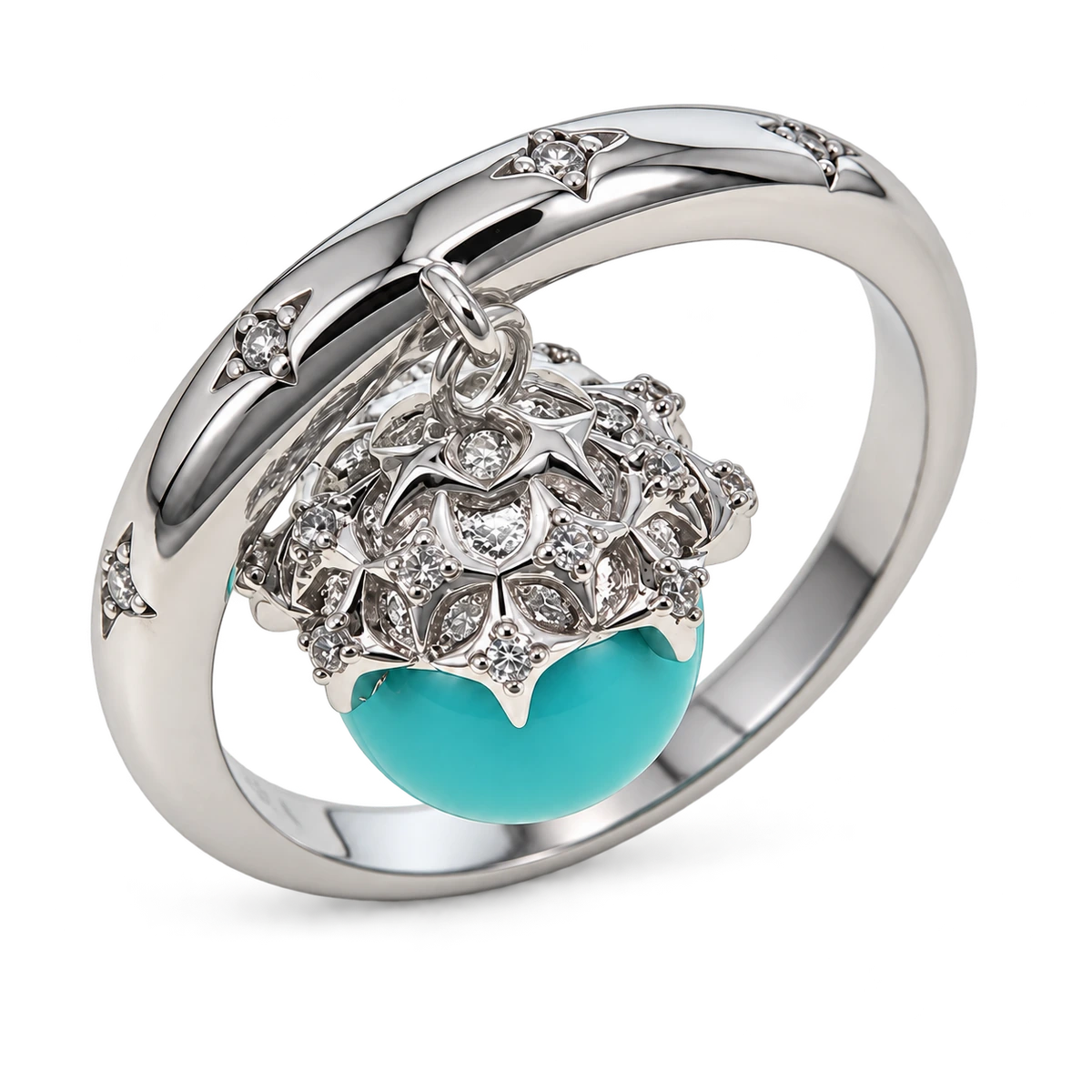
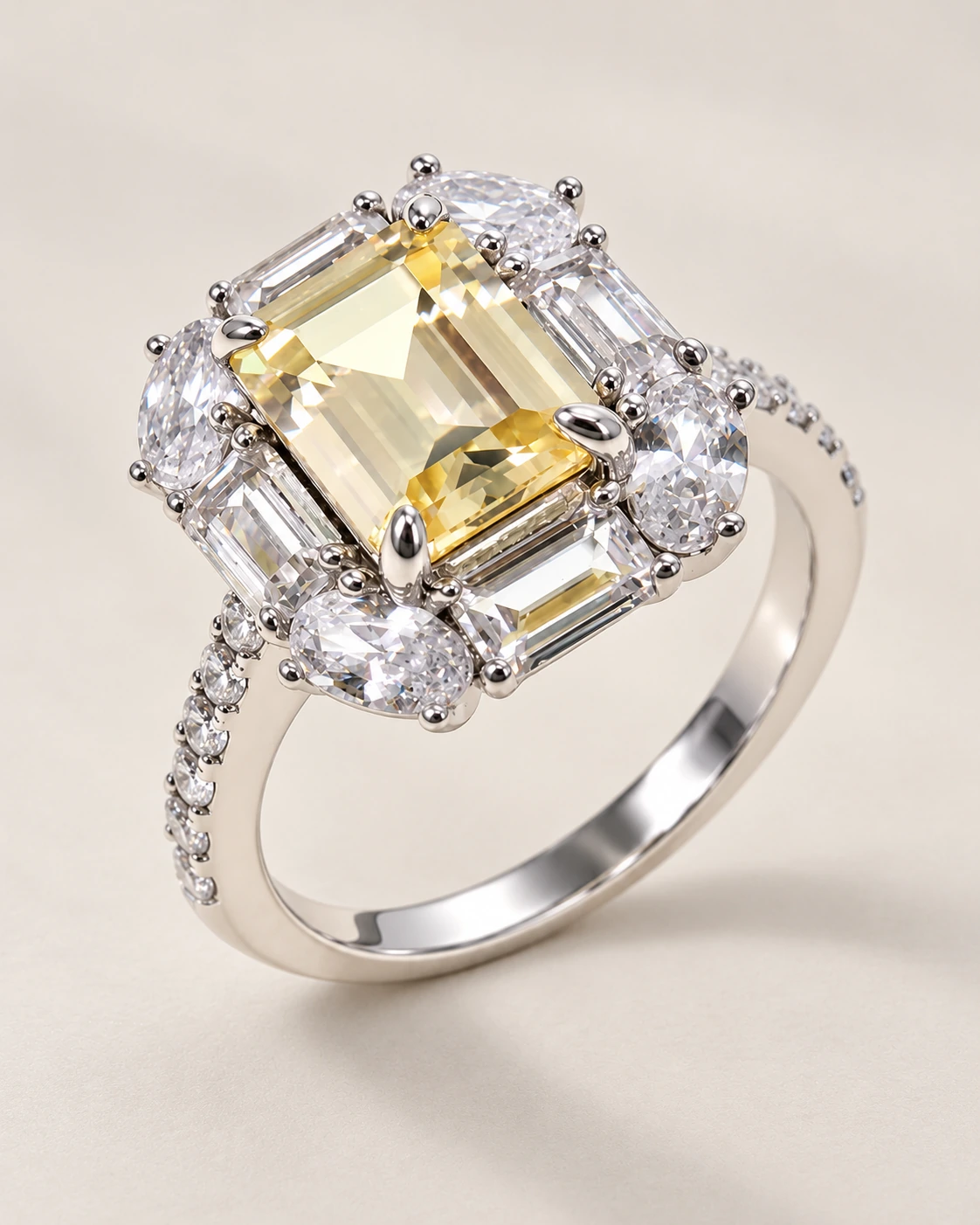
The rectangular centre on the Éclat Aurélie ring extends beyond the band. If it is going in a ring roll, compare the width of the setting with the distance to the next ring. Check that you can grip the band without pressing down on the setting or pushing another piece aside. A space left vacant beside a broad setting can serve a purpose.
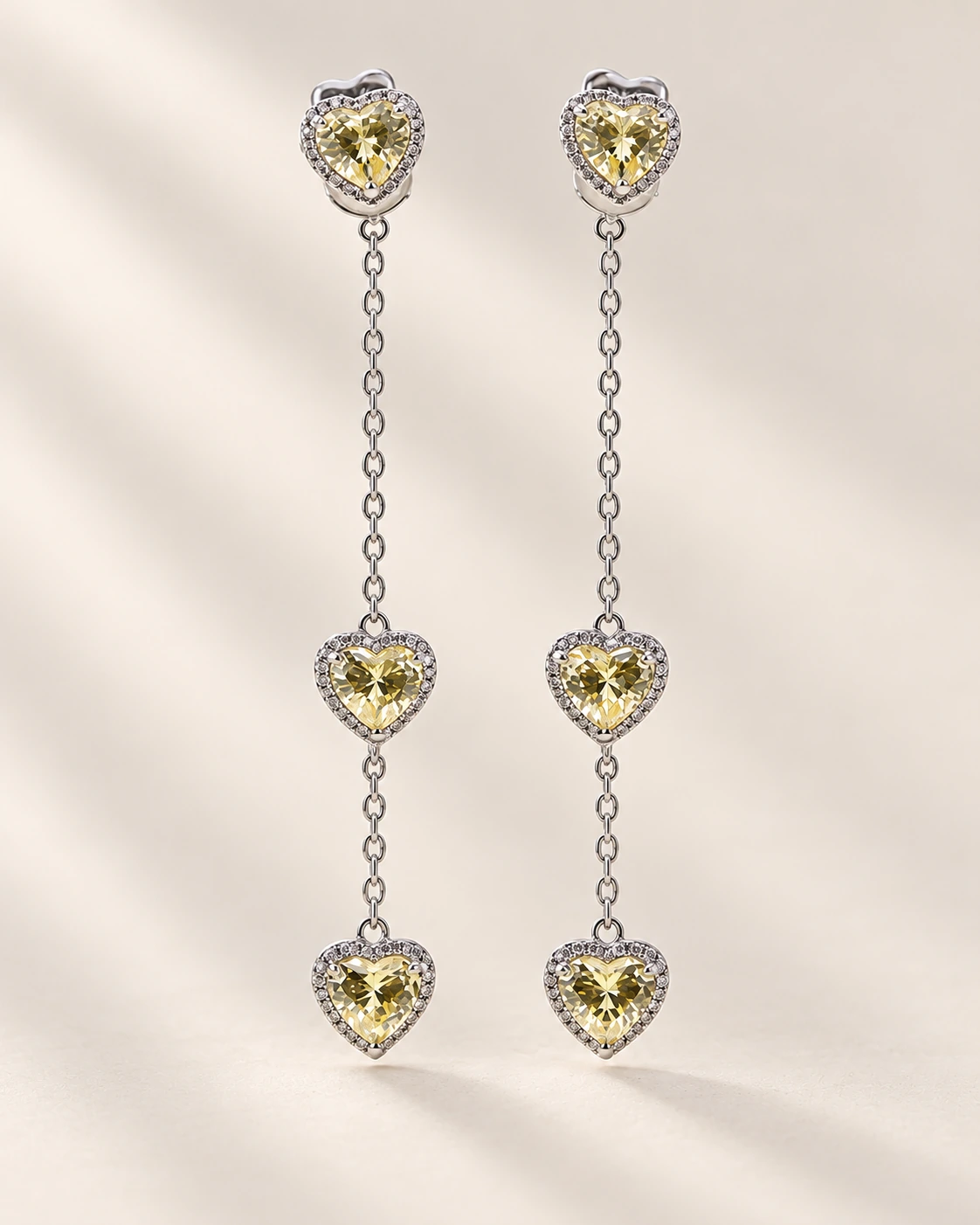
With studs, lay a separate back beside a fully assembled earring. Choose a panel that you can turn over and support while fastening the back. Look underneath: the tip of the post needs clearance when the panel is in place. For the long Rivière Cœurs Dorés earrings, lay both chains side by side and let the hearts lie flat. Measure the complete pair, including the tops, then check whether you can lift one without drawing the other along with it.
Give a pendant and a bracelet enough room
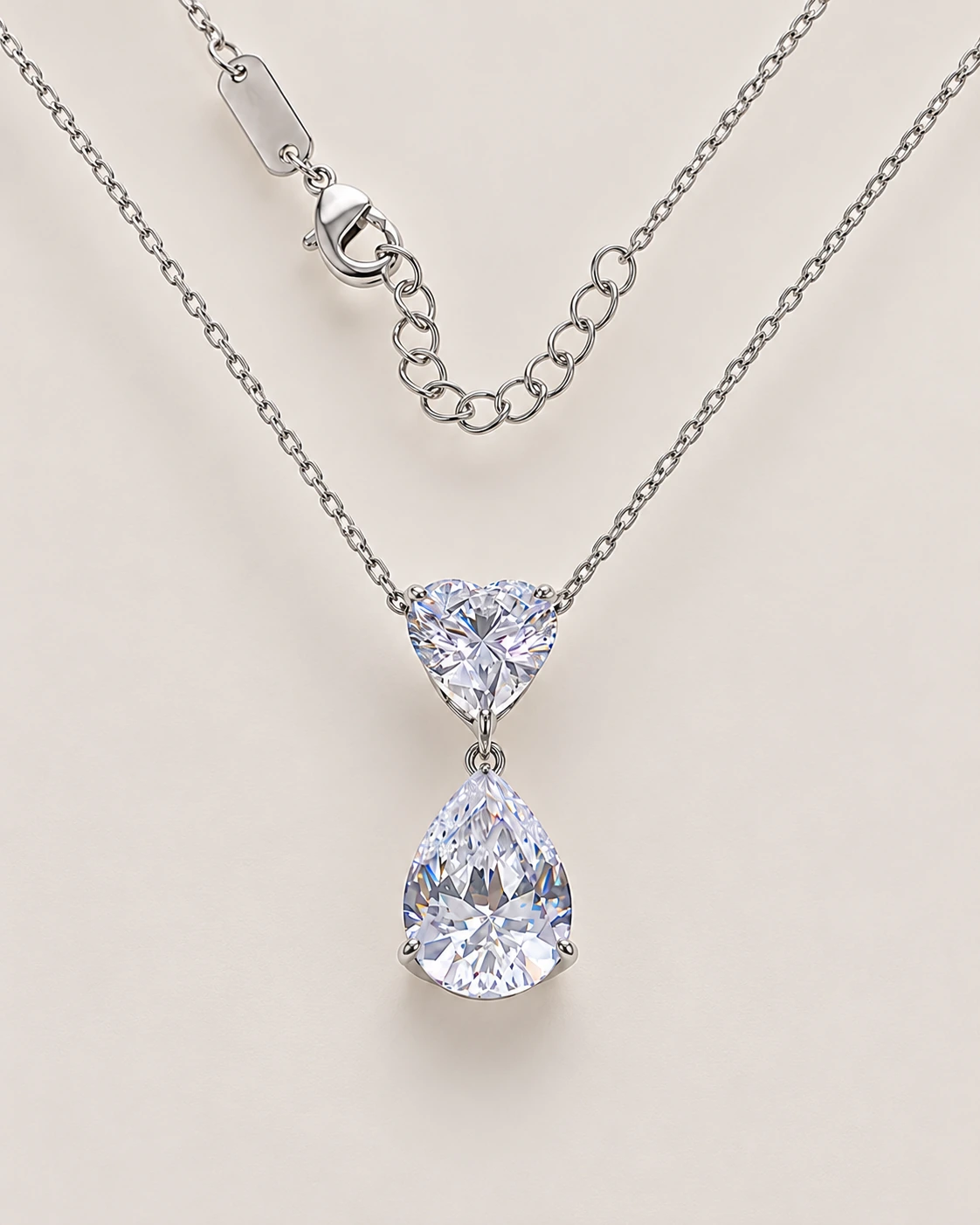
The Lumière Larme necklace carries a drop on a fine chain. Lay the chain in a gentle loop with the clasp to one side of the pendant. Compare that outline with a paper template of the compartment. For a lid fitted with hooks, check the distance to the mouth of the pocket. A short chain can leave a pendant hanging outside it. When the lid stands upright, see whether pendants on neighbouring hooks collect at the same low point. The listed chain length is 42 cm with a 3 cm extension. Include the loose end when arranging it.
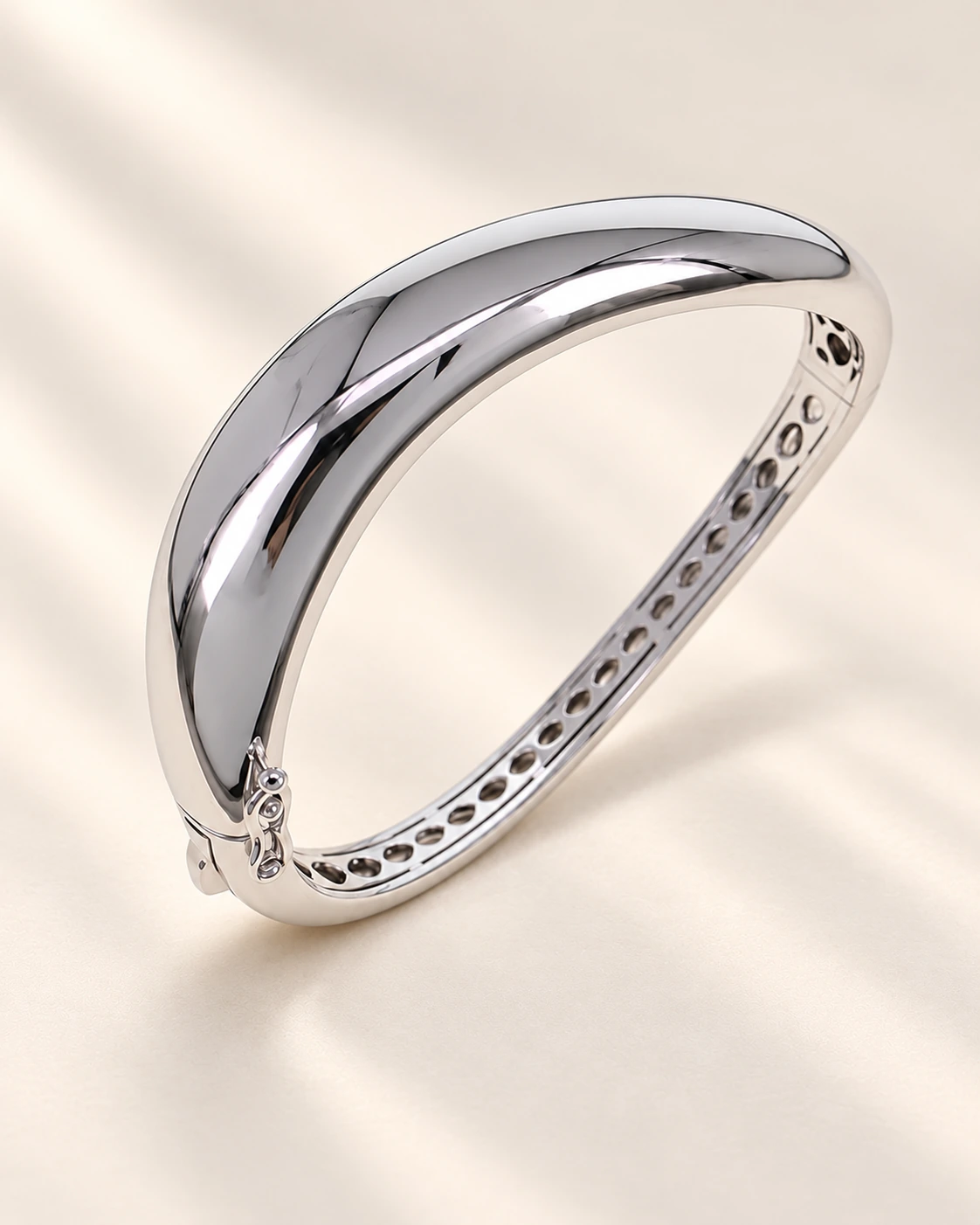
Measure Courbe Galbe around its outer profile in its natural position. Avoid squeezing a bracelet to make it fit a rectangle. Leave room to get a finger around the edge. If the only way to retrieve it is to tip the box, the space is awkward for everyday use. If the tray has a cushion, measure the bracelet on the cushion. It may raise the widest part into the path of the tray above. The catalogue length of 17 cm gives you a bracelet measurement. You still need its outer width for the tray.
Inspect the lining and check the lid
Examine the floor in angled light. Look for a seam running through the centre, an exposed rivet near the edge or a metal hinge beside a patch of soft fabric. Pass a clean, soft, dry cloth over the empty compartment. If the edge snags the cloth, find another place for a delicate chain. Gently move an empty divider at its top to see whether it will hold its shape when the next section is occupied.
Start a lid check with a folded piece of paper made to the height of the jewellery. Remove the jewellery, put the paper on its intended support and slowly lower the lid, watching for the first contact. If the paper creases or the lid stops early, choose a deeper compartment. Keep pressure off a real setting. Check the zones closest to the hinge and immediately under a pocket particularly carefully.
Choose between the final two
For a collection of rings and earrings, reserve the easiest upper section for favourite pairs and keep one long space free. For a collection of chains, count independent lanes or hook-and-pocket positions, then trace where the pendants would move as the lid opens. For a mixed collection, allocate space to the broad bracelet and the high ring before filling the smaller sections.
When two layouts work on paper, try the movement you will make every morning: take one piece out, return it and close the box with a free hand while the others stay in place. Our guide to storing jewellery at home covers where to keep the box. If it will spend most of its time in a suitcase, see how to pack jewellery for travel. For a bag with limited room, compare jewellery rolls, zip cases and miniature boxes by their closed shape.