Travel jewellery organisers: a roll, zip case or mini box?
Choose a travel jewellery organiser for chains, earrings and rings. Compare three layouts, manufacturer dimensions and four pieces from Maison Miréa.
Maison Miréa editorial team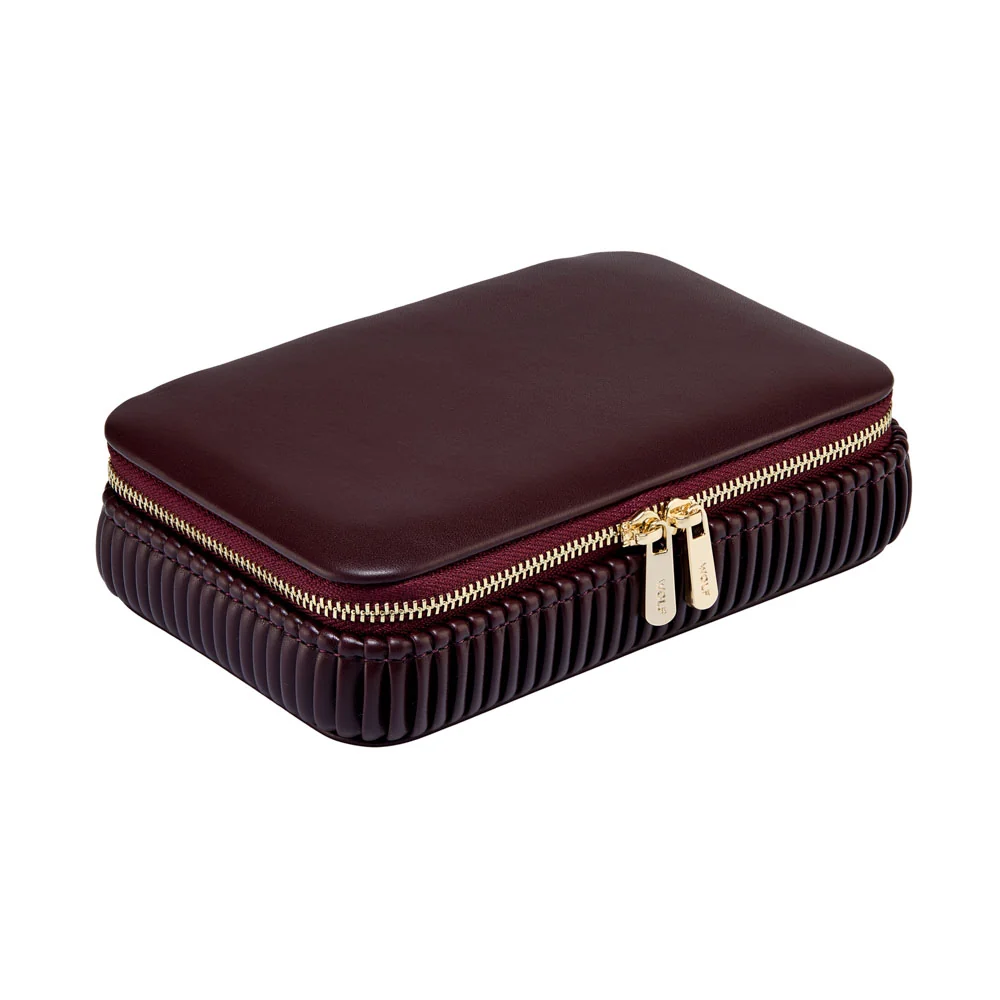
Choose a travel jewellery organiser around the piece that is hardest to put away. A roll with separate necklace fasteners suits fine chains that can lie flat. A zip case with divided spaces makes sense if you change earrings during the day. For a tall ring or a pair with long posts, look first at a small box with measurable space above and behind each piece.
Make two comparisons before buying. First, compare the internal measurements with the jewellery in its storage position, backs fastened and pendant attached. Then compare the outside of the closed organiser with the opening in the bag you actually carry. The three commercial examples below illustrate construction using manufacturer specifications.
Start with the least forgiving shape
Set the pieces you will actually wear on a clean cloth. For a necklace, note where the clasp, extender and pendant fall when you double the chain loosely. For an earring, include the backing in the measurement. A drop earring needs room along its entire length, especially if its lower part moves. For a ring, take the height in the position it will occupy between two rolls. Measuring it flat on the table can hide how far its setting will stand above the lining.
Write down the limiting measurement next to each piece. The figure on a necklace label describes length when stretched out. It does not tell you the distance needed from the fastening tab to the bottom of the pendant pocket. Trace the shape you intend the chain to take on paper, leaving the clasp clear of the pendant. You can take that outline to a shop or send the two relevant measurements to the seller.
A roll for necklaces that follow the fold
The Stackers Burgundy Mini Jewellery Roll shows the difference between an anchor and a compartment. Stackers lists snaps and elastic loops for necklaces, a snap section for rings and studs, and a zipped pouch. Its stated dimensions are 8.5 cm wide, 3 cm high and 16.2 cm deep. Those figures describe the item as sold. They do not establish its thickness once a ring, two pendants and their clasps sit between the folds.
Follow the route of one necklace with your finger. Can its pendant sit below its clasp without crossing a second chain? Does a narrow clasp slip through the loop, and will a thicker link pass through without pulling the elastic tight? Look at what lies opposite the pendant after folding. A snap on the next panel can meet the front of the pendant even when they seem far apart on the open roll. Ask for a photograph of the roll partly folded if the product page shows only the open interior.
A zip case for changing one piece at a time
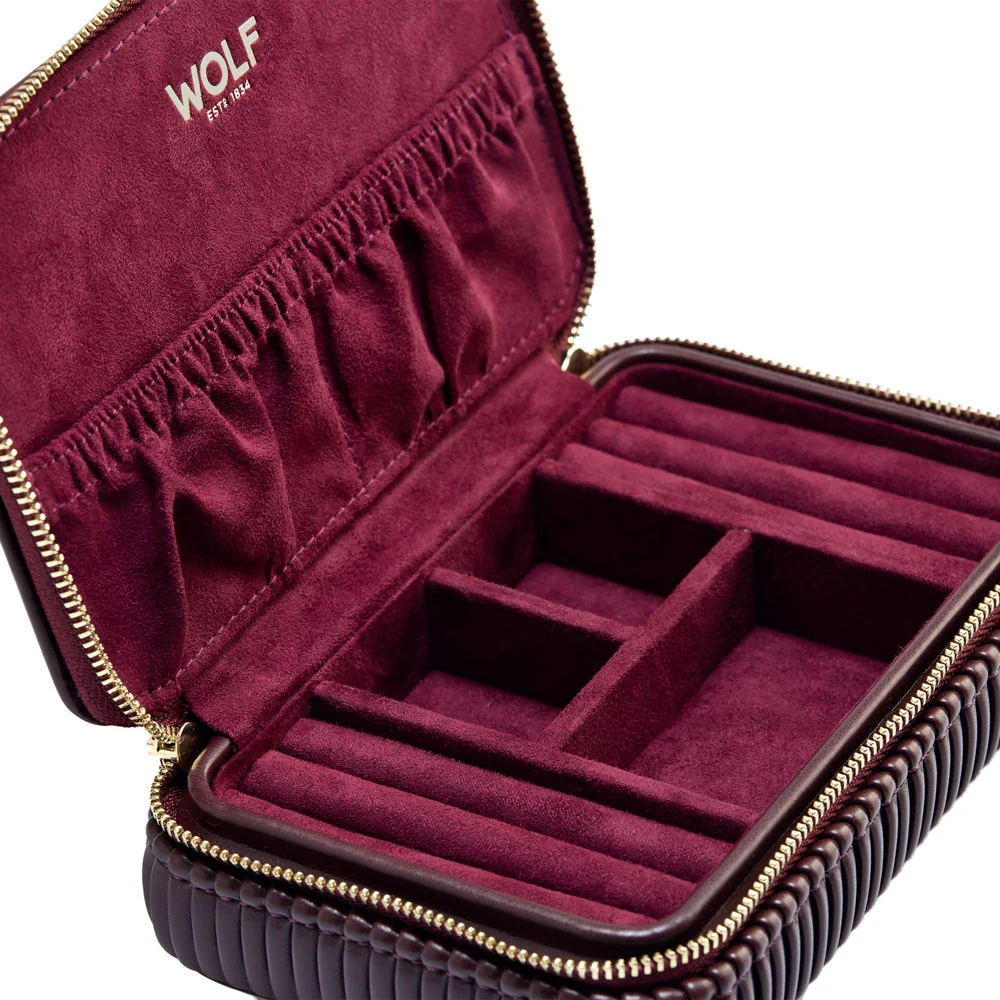
The WOLF Bella Zip Case in Bordeaux has three small compartments, two ring rolls and two elasticated pockets inside the lid. WOLF gives its outside dimensions as 16.5 × 10.2 × 4.4 cm, in length, width and height. Picture opening it on a narrow hotel desk. If the evening earrings occupy one compartment, can you lift the pair straight out while the necklace and ring remain in place? Count the spaces that stay independent when the lid opens, especially if you expect to change pieces on the move.
Inspect a lid pocket from the side. With a clasp inside, the pocket can project into space you counted as clearance over a ring. A zip can still close around soft contents while the centre of the lid presses against the setting. Request the usable height above the rolls with the lid down and the pocket empty. If you need to use the pocket directly over a raised stone, try a different arrangement before considering a larger overall case.
A miniature box for pieces with depth
A box with a defined base and lid gives you a more repeatable layout from one evening to the next. Consider how much of that base the fittings occupy. The Stackers Travel Jewellery & Watch Box in Taupe includes a watch pad and divided sections for small jewellery. Stackers lists 7.5 cm width, 8.5 cm height and 12.5 cm depth. If you never travel with a watch, ask whether the pad comes out and what space remains. A tall exterior alone tells you little about the depth below each divider.
Compare a pouch with a true divider. The Town Talk Anti-Tarnish Jewellery Pouch is a separate soft accessory, useful as an example of a layer between two pieces. It cannot tell you whether the surrounding box leaves room for a post or keeps a pendant still. When adding a pouch to a box, measure the piece inside the pouch. The seam, drawstring or folded flap also takes up space and may change which side of the compartment can safely face a setting.
Compare fittings at a glance
Scroll the table horizontally to see every column.
| Format | What to check | How it holds pieces | Trip |
|---|---|---|---|
| Roll | Fold line and loaded thickness | Fasteners and individual loops | Weekend with fine chains |
| Zip case | Clearance below a filled lid pocket | Rolls, pockets and separate cells | Work trip with changes |
| Mini box | Clearance over a setting and width of the opening | Dividers and a fitted support | One sculptural evening set |
Four pieces to take to a fitting
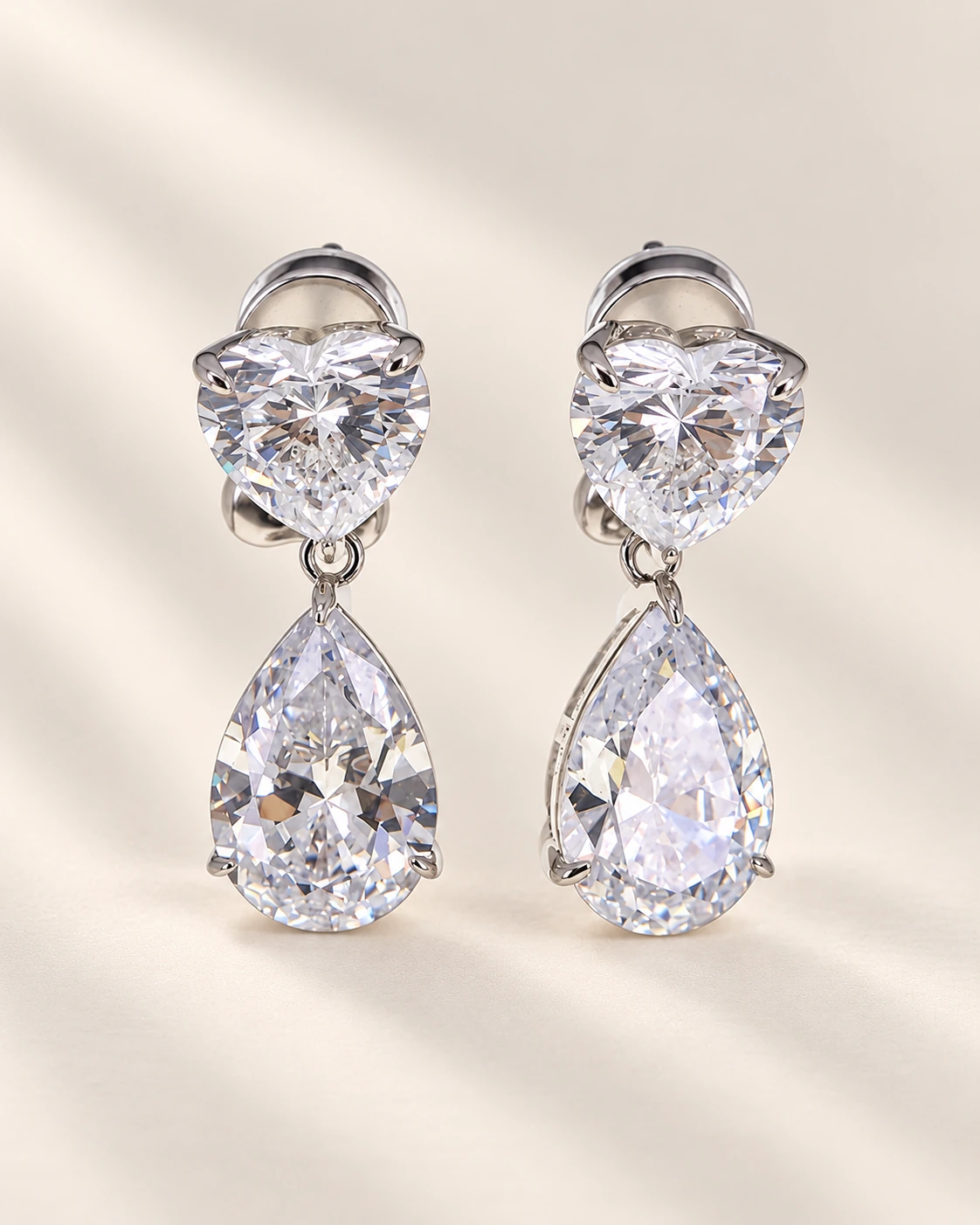
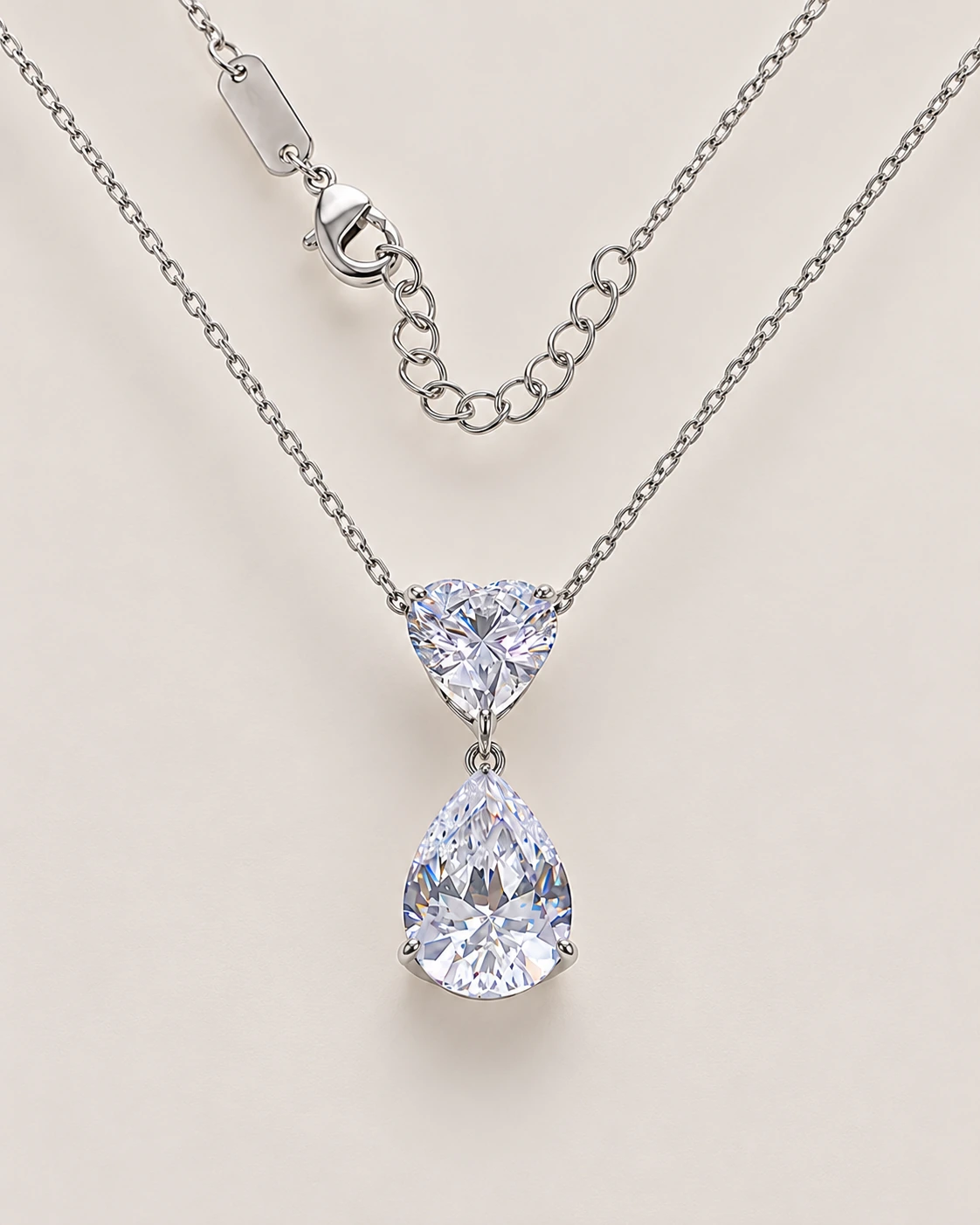
The necklace Lumière Larme MP-17 has a listed chain length of 42 cm with a 3 cm extender. Before choosing a roll, trace the route from the tab to the pocket with the pear-shaped pendant hanging below the chain. Check where the loose end of the extender will sit when the clasp is fastened. In a shop, try taking the necklace out without unfastening its neighbour. For a second, thicker chain, bring one you actually own so you can check how its clasp passes through the same loop.
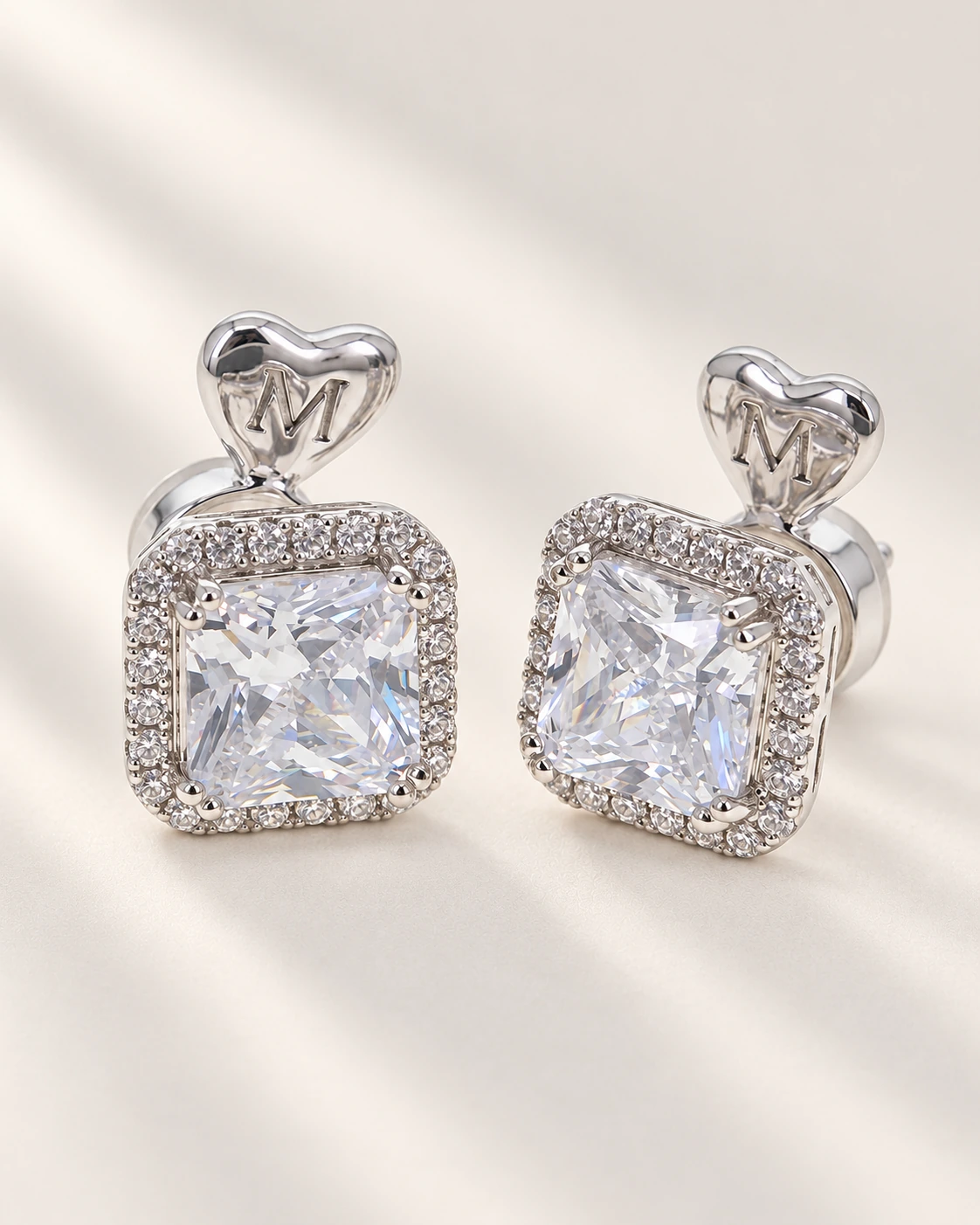
Compare Éclat Céleste White MS-12 with the drops Lumière Larme MS-24. The first pair has a central stone framed by a halo. For that shape, ask whether each earring face can sit clear of the next one and whether its back will meet the wall behind the holder. With the pear-shaped drops, trace the full outline of both earrings, including the upper elements. A square cell that looks generous when empty may leave only one orientation for a long pair. Consider whether you could lift one earring out without pulling the other by its setting.
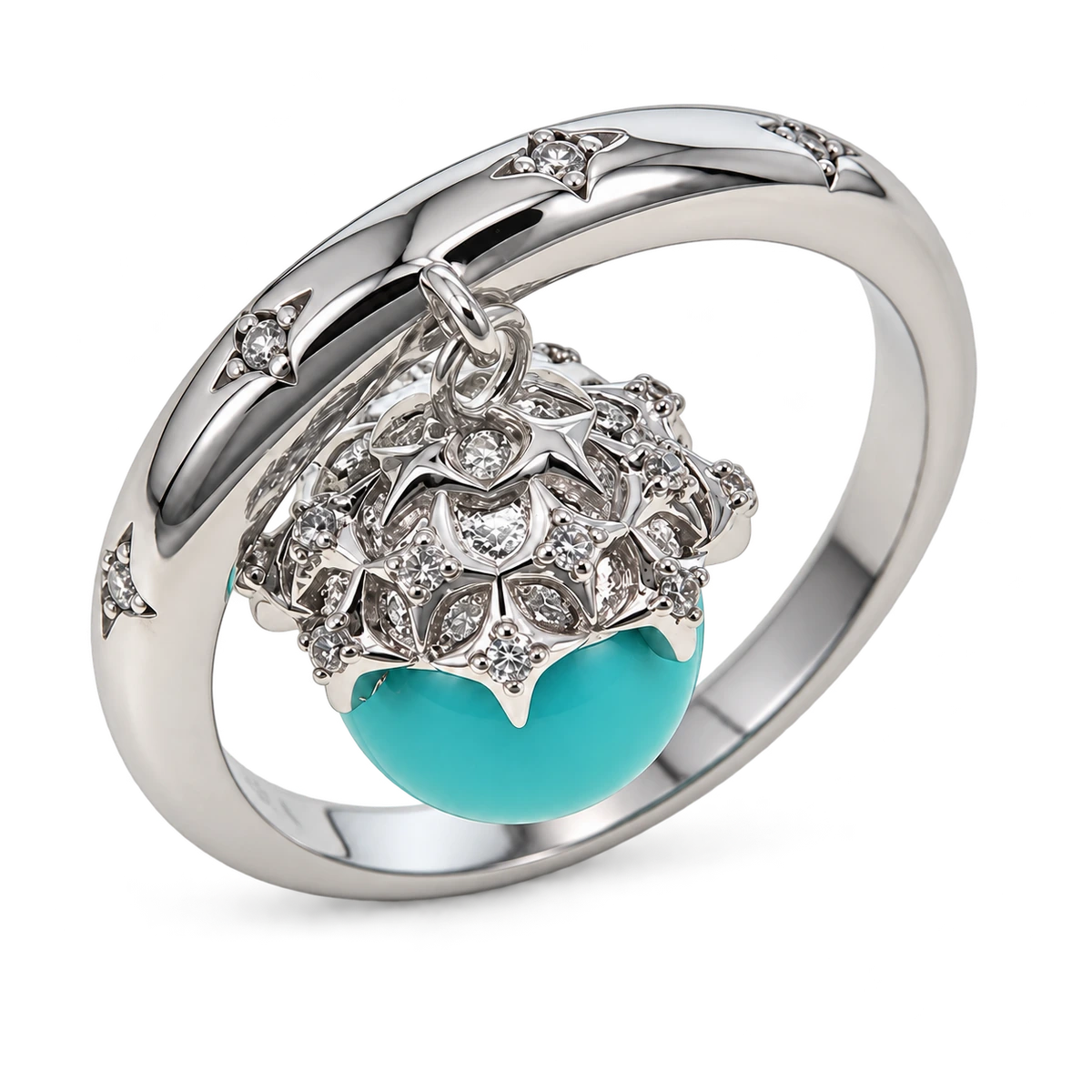
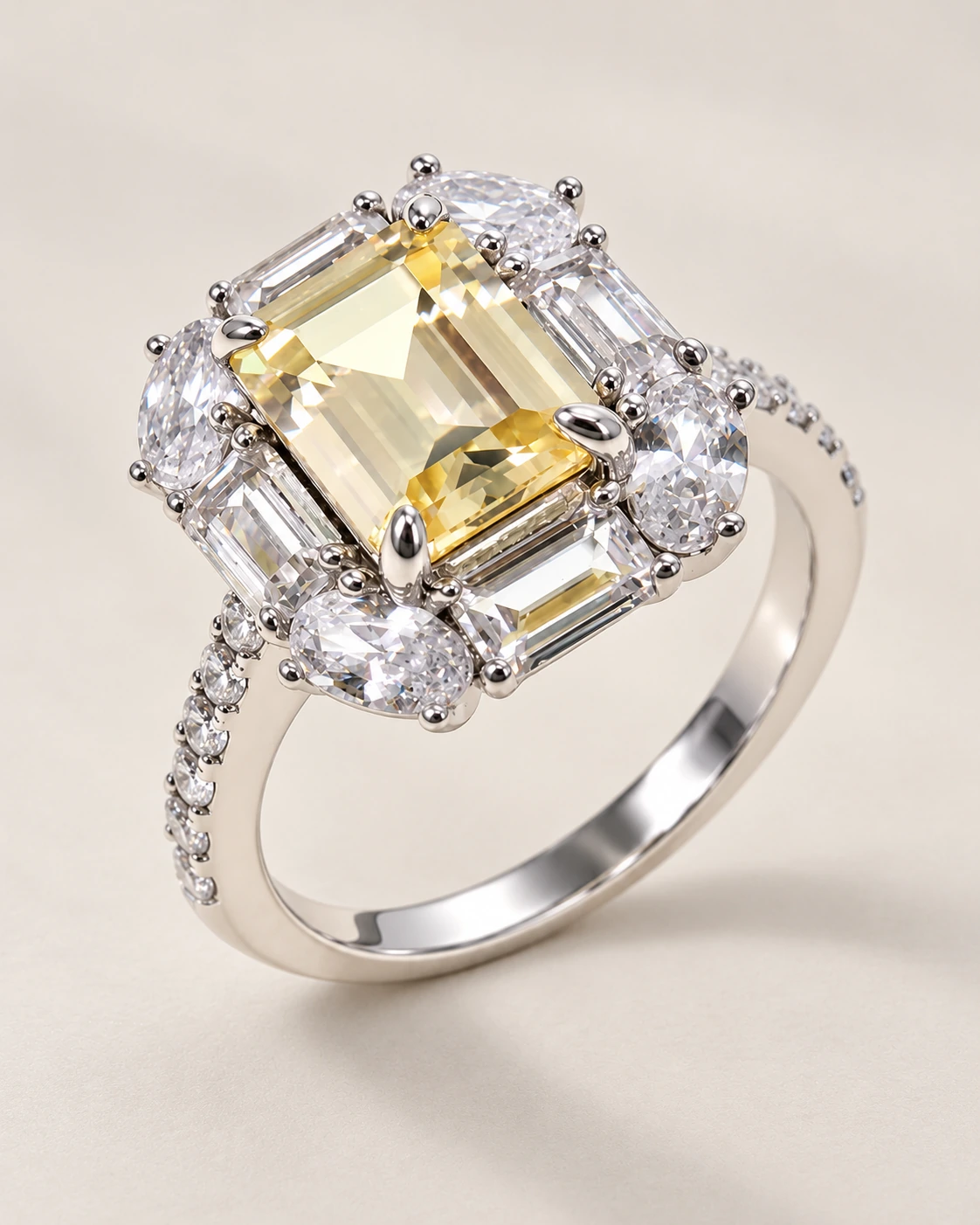
The ring Éclat Aurélie MK-15 has a decorative halo around its pale yellow centre. The finger size on the product page tells you nothing about the height of that halo above a ring roll. Offer the band to the gap between two rolls, leaving the stones above the lining. Look at the ring from the side, then look at the inside of the lid from the same angle. A pocket seam directly over the highest part is a reason to try another slot. Never press on the stones to drive the band deeper.
Choose for the bag and the occasion
For a weekend with two necklaces and the earrings you leave in all day, try the roll first. Use a paper outline of its closed footprint to find a place for it in your bag before you buy. Then add a folded cloth to represent the thickness and try closing the bag normally. This is only a check on available space. If keys, a charger or the corner of a book share that pocket, choose a separate compartment before adding delicate jewellery.
For a business trip, imagine changing the halo earrings for the drops between a meeting and dinner. Choose the case that allows you to put away the first pair before lifting out the second, with no loose back waiting on the table. For one evening set, the ring usually settles the question: if it needs a deeper compartment, keep the box in the larger travel bag and transfer only the pieces you will wear to the dressing area. Measure the opening of an evening clutch before relying on it to carry the box home.
When you have access to the actual organiser, close it gently and carry it upright in the chosen bag on an ordinary walk. Open it on a clear surface and compare each piece with its starting position. Stop if the fastening resists or a post touches the lid. Once the format is settled, our guide to packing jewellery for travel takes you through separating pendants and closing the case for the journey.