What earrings to wear with hair down: three silhouettes compared
Compare Miréa studs, fine hoops and long drops. Try two hair positions to check the outline beside your face, the view in profile and contact with loose strands.
Maison Miréa editorial team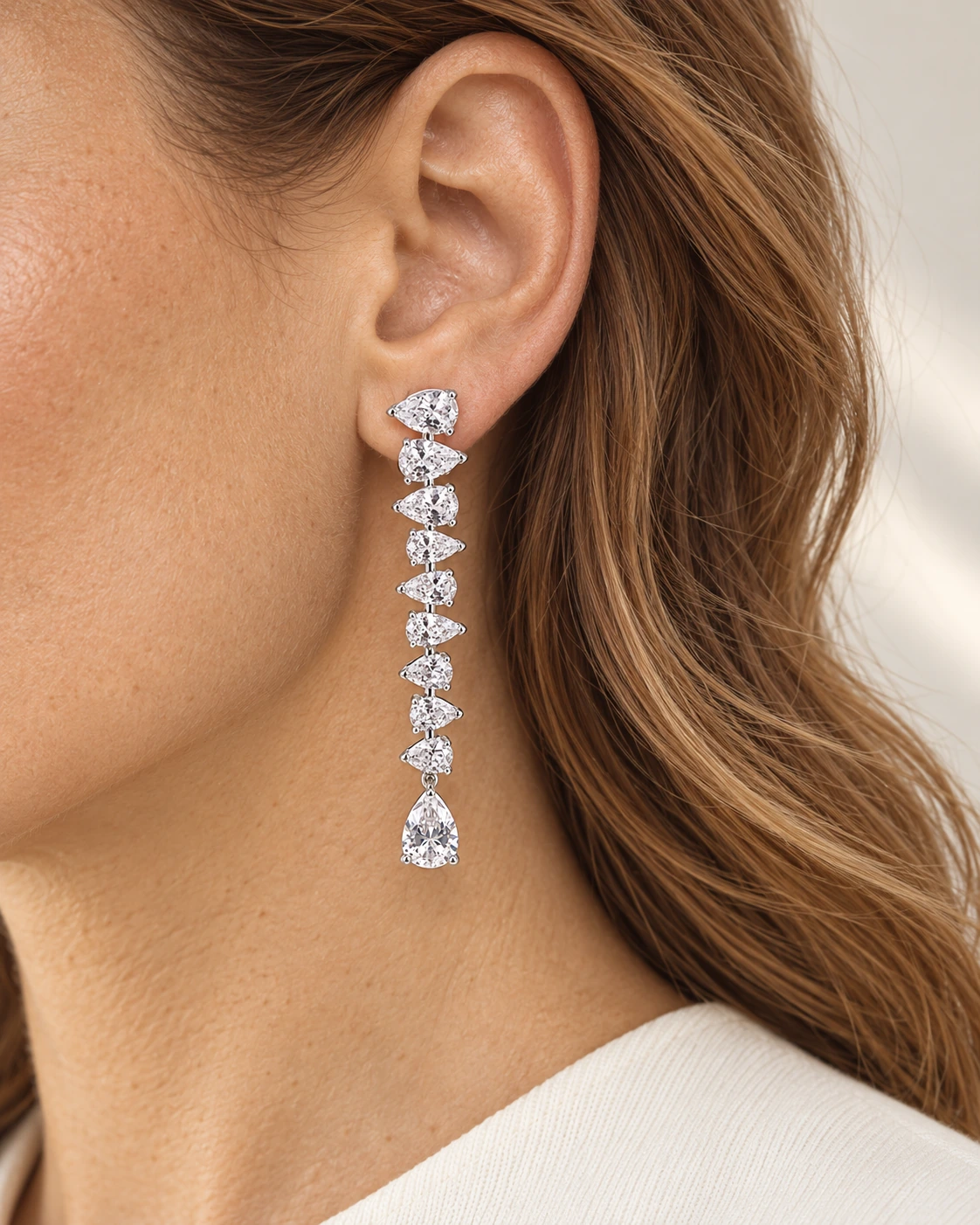
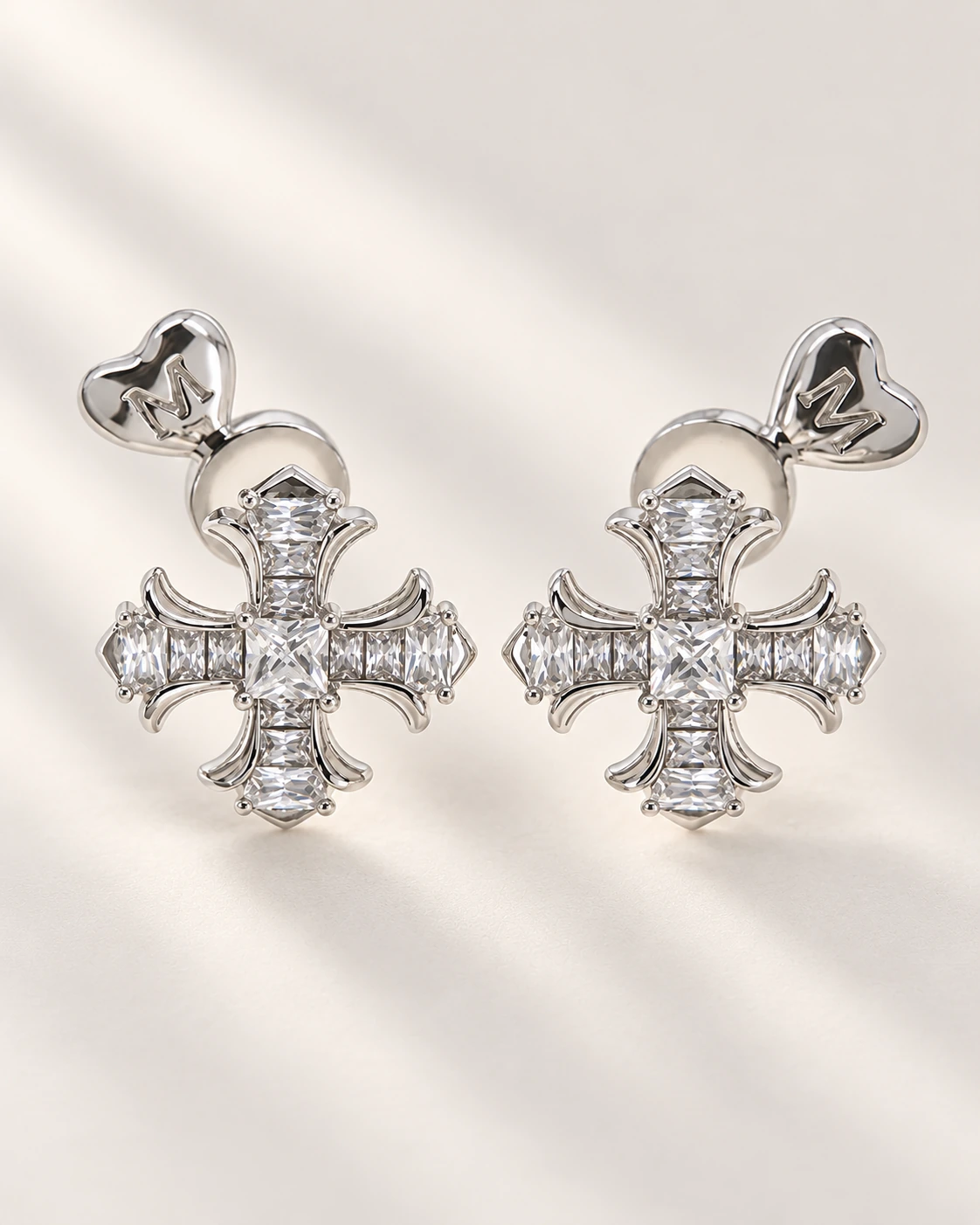
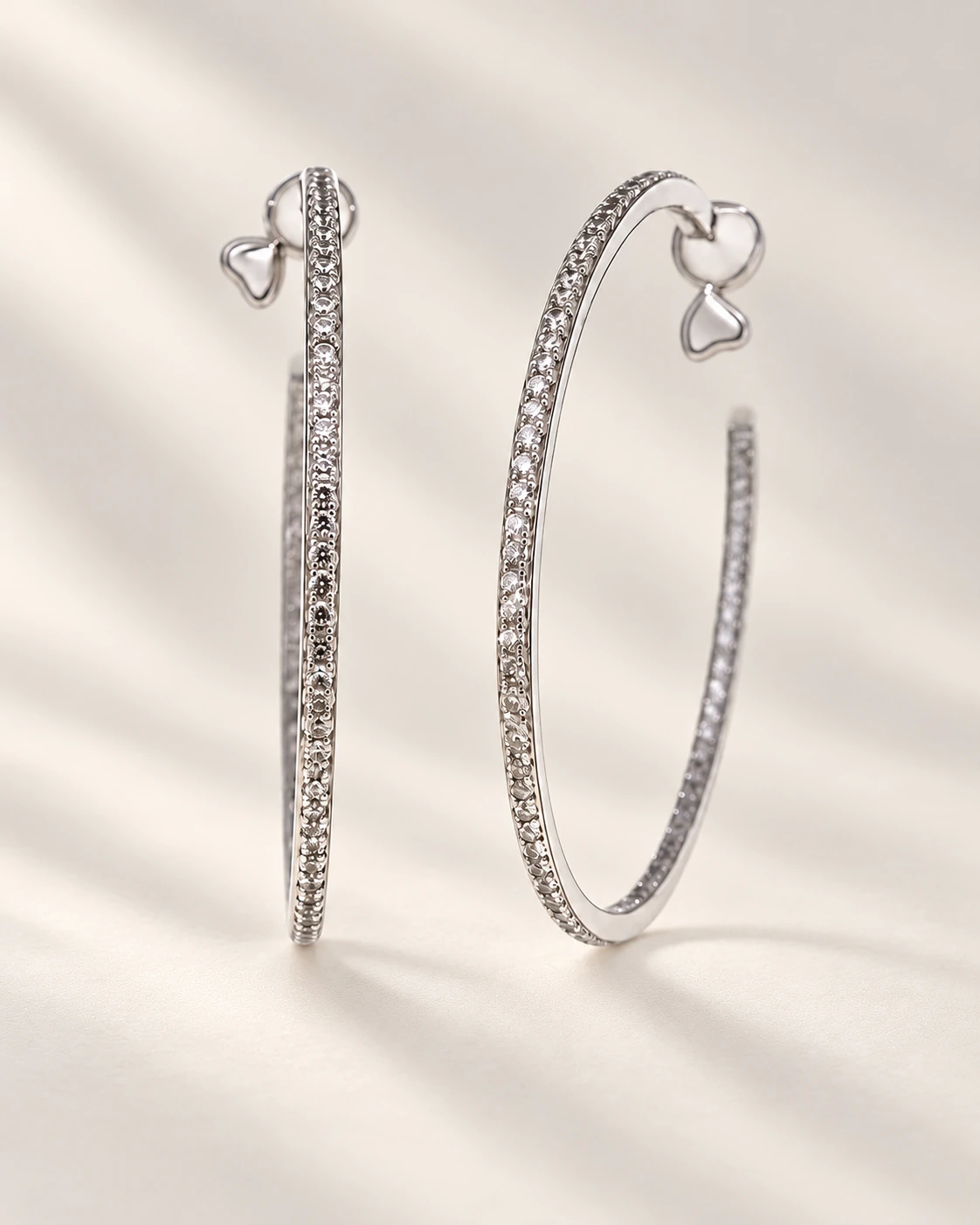
Choose earrings for hair worn down by the detail you want to see. For a glint at the lobe, try Jardin Croix Petite studs. For a clear curve in profile, start with Courbe Orbite hoops. For a drop that appears below a strand as you turn, try Rivière Cascade. Compare all three with your everyday parting. There is no need to keep the whole ear uncovered unless that is how you actually wear your hair.
Two mirror pictures and what to look for
Stand by a window in a plain top and take two pictures from far enough away to include your face and shoulders. Leave the ear covered in the first, then tuck the strand in the second. Keep the parting, phone height and chin position the same. Put the small images side by side. Where does your eye stop first: on the lobe, below it or at the neck? Then zoom in to find the section hidden by hair. You can distinguish a lost outline from a top fitting that simply disappears behind a strand.
Hair length tells only part of the story. Two shoulder-length cuts can cover the ear differently if one's front sections are straight and dense while the other's form waves with gaps. Compare your everyday texture first, then your usual evening style. A pale outline can show well against a solid dark strand, while the same stone may merge with a highlight in light hair. Check against skin too. Moving one strand changes the background behind the earring.
Choose a viewing condition before the fitting. For video calls, open the camera at your usual desk: a stud you can see in the mirror by a window may disappear on screen. For dinner, look at the hoop in profile while seated. For an evening when you want light in motion, record one unhurried turn wearing the drops. Judge each pair in the view that matters for your day.
Jardin Croix Petite studs: a small motif on the lobe
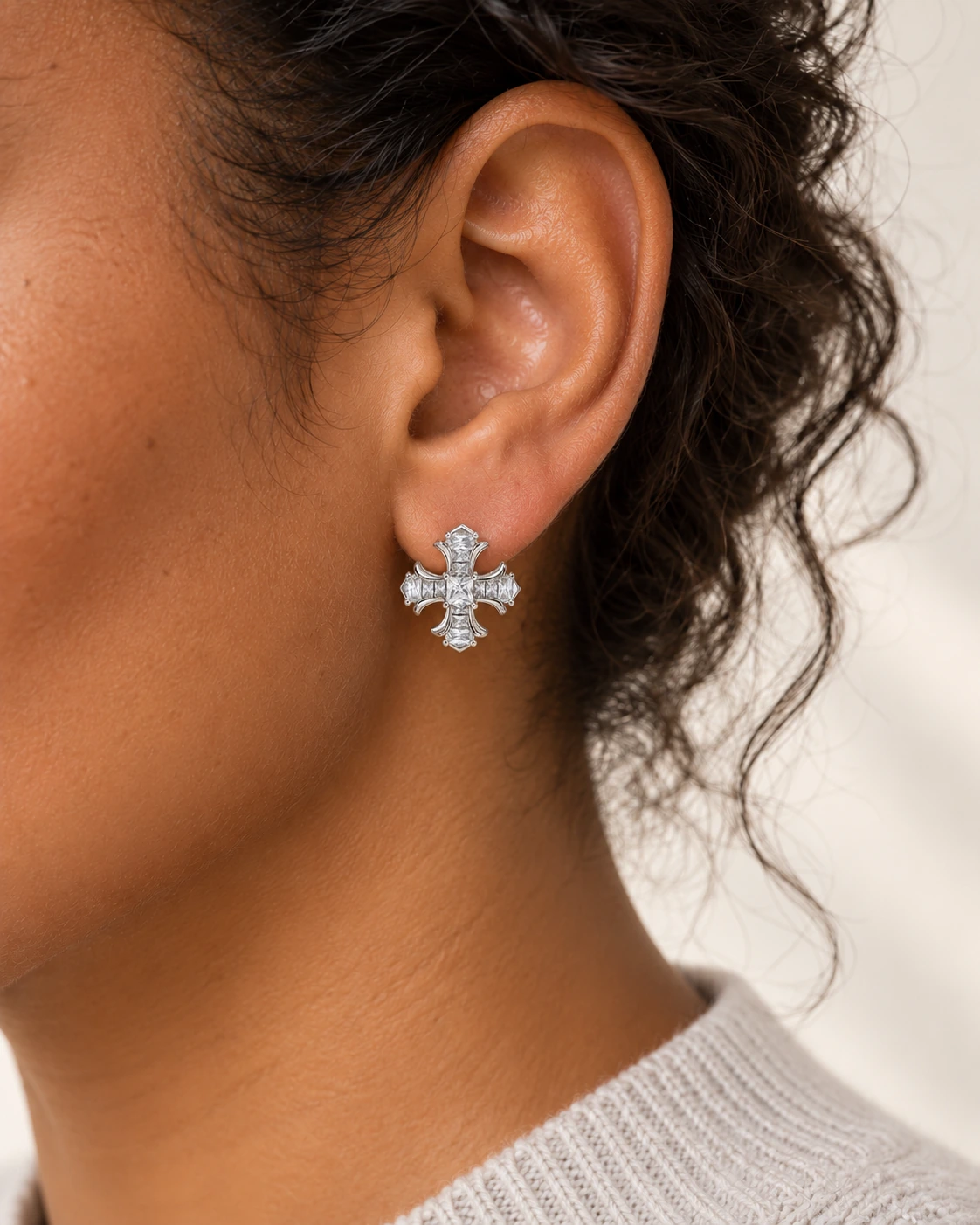
Trace the four tips of the Jardin Croix Petite cross with your eye while the lobe is uncovered. Now let the front strand fall. If it crosses the two side arms, you may see just a short bright line; if it covers the top, only the lower stones will show. That answers a practical question: do you want the cross itself or just a glint? For a glint, leave the hair alone. For the motif, clear just the lobe and keep the volume above the ear.
The close-up on the product page helps you read the ends. For hair worn loose, move the screen away and judge the motif at roughly face scale. If you like jewellery that someone only notices in conversation, partial disappearance may be exactly the effect you want. This design has no separate lower drop to carry the line below the lobe.
Courbe Orbite hoops: look at the space inside the curve
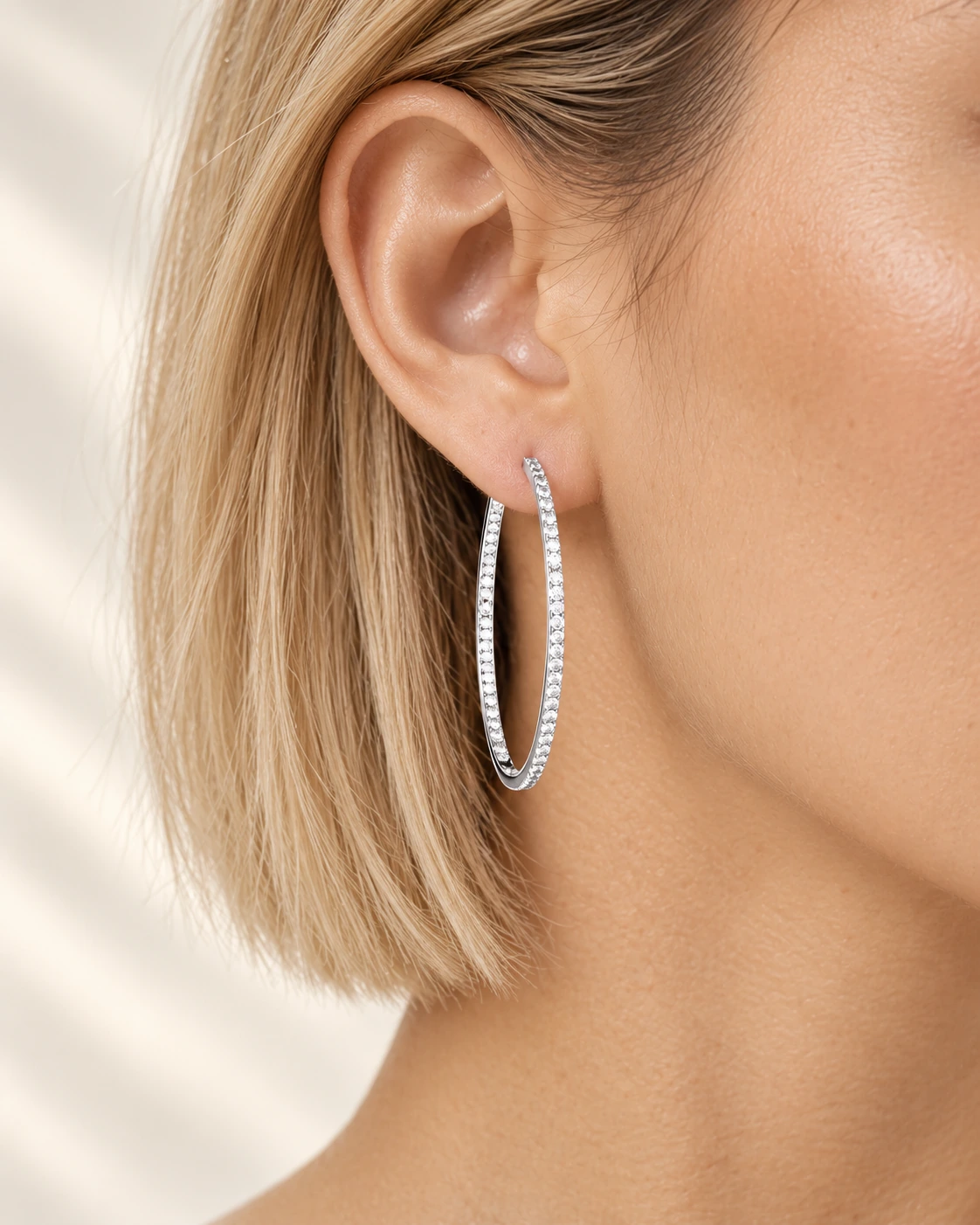
Courbe Orbite has a large but fine, elongated curve. Step back to conversation distance and find the open centre. A dense strand crossing it can turn the hoop into two separate bright strokes. Tuck that strand back and turn until the hoop presents its broad face to the mirror. If you prefer that outline but usually leave your hair over it, give the first view more weight in your decision: that is what people will see most often.
Choose hoops for a clear graphic silhouette on the open side of the face. Watch the angle in the mirror: even a large hoop looks narrow when seen edge-on. A photograph without a scale cannot tell you its size. If you need it to stop above your collar, ask for its height from the fastening and compare that with the distance from your own piercing to the collar in your usual head position.
Rivière Cascade: a vertical line between strands
On Rivière Cascade, a line of clear pear-shaped elements leads down to a pendant. Turn the side with more hair towards the mirror and notice which drop emerges first. Face forward and let the strand settle on your shoulder. If the bottom pendant disappears behind the hair and rests on your collar, uncover one ear or try the same pair with an open neckline. That separates a question about visibility from one about contact with clothing.
A short video at normal speed is particularly helpful here. Turn your head as if answering someone beside you, then look straight ahead again. Where does the last drop fall as your hair settles back on your shoulder? Repeat at the same speed with one strand tucked. A still image shows a position, but it cannot establish the swing or whether a particular connection catches your own hair.
When hair colour changes the choice
Hold the earring near the lobe and look at it against skin, then let a strand fall behind it. Clear elements on Jardin Croix Petite and Rivière Cascade can read differently even at the same distance and in the same light. With curls, look at the fine Courbe Orbite outline: does it echo one wave or disappear among several? On straight hair, a long drop may run parallel to the strands. To make the drop stand apart, shift the parting before looking for a different length.
Check contact with your hair and choose a pair
There is no need to pull hair through a setting to test it. Put the pair on, style your hair as usual and make one ordinary movement: turn towards someone, tuck your hair or take off a scarf. If a strand catches, pause. Support the earring and free the individual hairs without tugging. Note where the contact occurred: at the fastening, on the hoop edge or between parts of the drop. If nothing was damaged, try a different hair position. One awkward combination does not describe every pair of the same type.
For a quiet detail, start with the cross on the lobe. For visible geometry, try a fine hoop and an open side of the face. For an accent on a turn, begin with the vertical drops and an open collar. If the final choice depends on the arms of your glasses, our guide to earrings with glasses deals with that extra line by the ear. If you want a half-up style held by a claw clip instead of a loose front strand, see our guide to earrings with claw clips. Lifting the hair changes the space between the clip and the earring.