Which earrings to wear with glasses: eight pairings for four frames
Compare studs, hoops and drops with fine, bold, round and coloured frames. Try eight combinations and check the fit with your hair and headphones.
Maison Miréa editorial team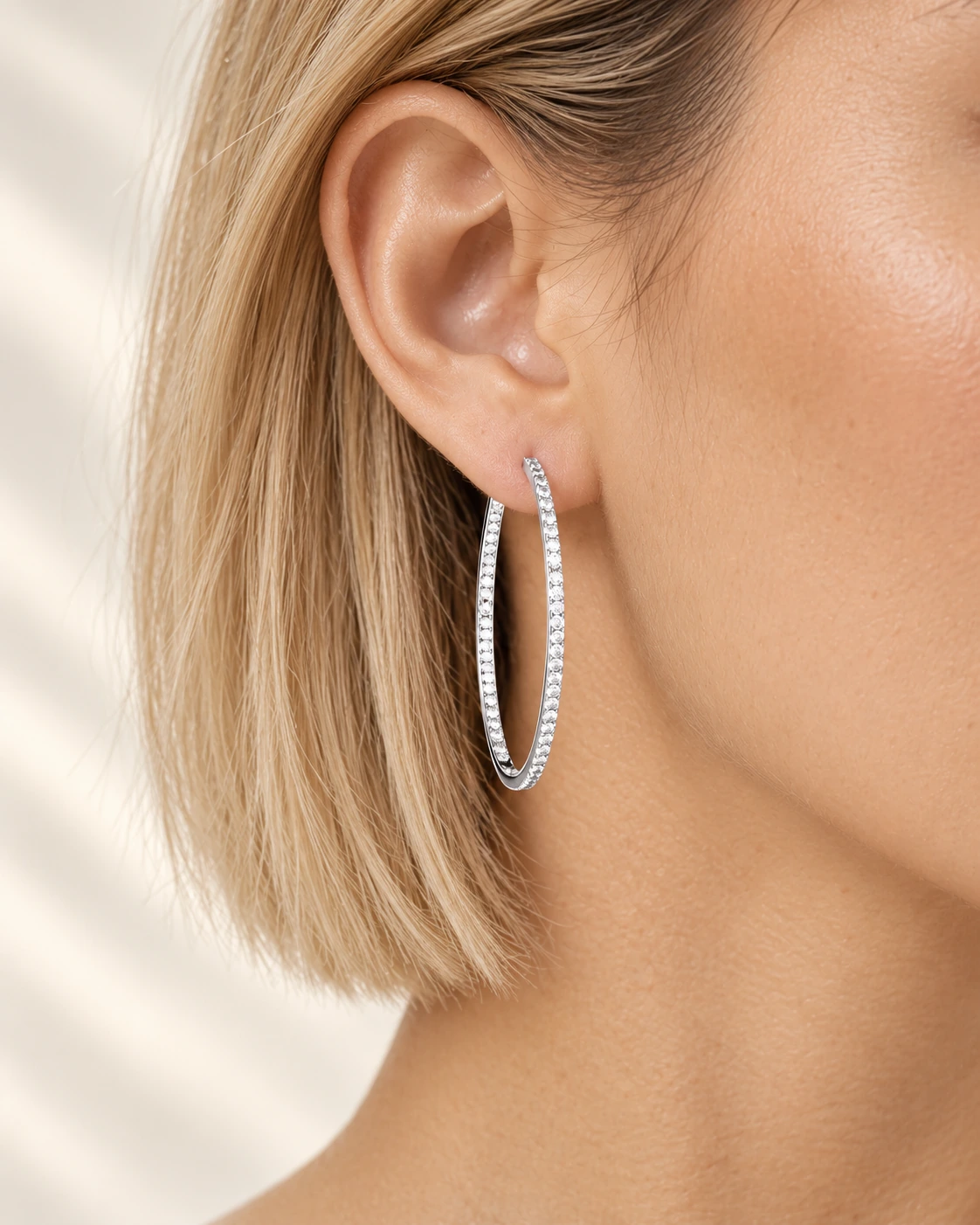
The best earrings to wear with glasses depend on which detail you want someone to notice first. To keep a distinctive frame in focus, start with studs at the lobe or small hoops. To bring the jewellery forward, try a drop that appears below the lens or a stone that stands out against your hair. Compare the pairs in a full mirror with your glasses on and your hair as you usually wear it.
Look at three things: how much space the outline occupies, whether it echoes the lines of the glasses, and how many distinct colours appear near your face. Then take your glasses off and put them on again, turn your head and tuck your hair behind an ear. Even a small earring can be awkward if your hand catches its back every time. Here are eight combinations to try with your own frames, changing one pair at a time.
What shows up at conversation distance
Step back until your head and shoulders fit in the mirror. A large, thin hoop leaves open space inside its outline. An earring with a saturated blue centre may catch the eye first despite occupying much less space. Take one straight-on photograph without zooming in, then a second at a three-quarter angle. The first makes colour and frame width easier to compare. The second reveals the gap between the side arm, a strand of hair and the earring. Keep the light the same.
Fine metal frames
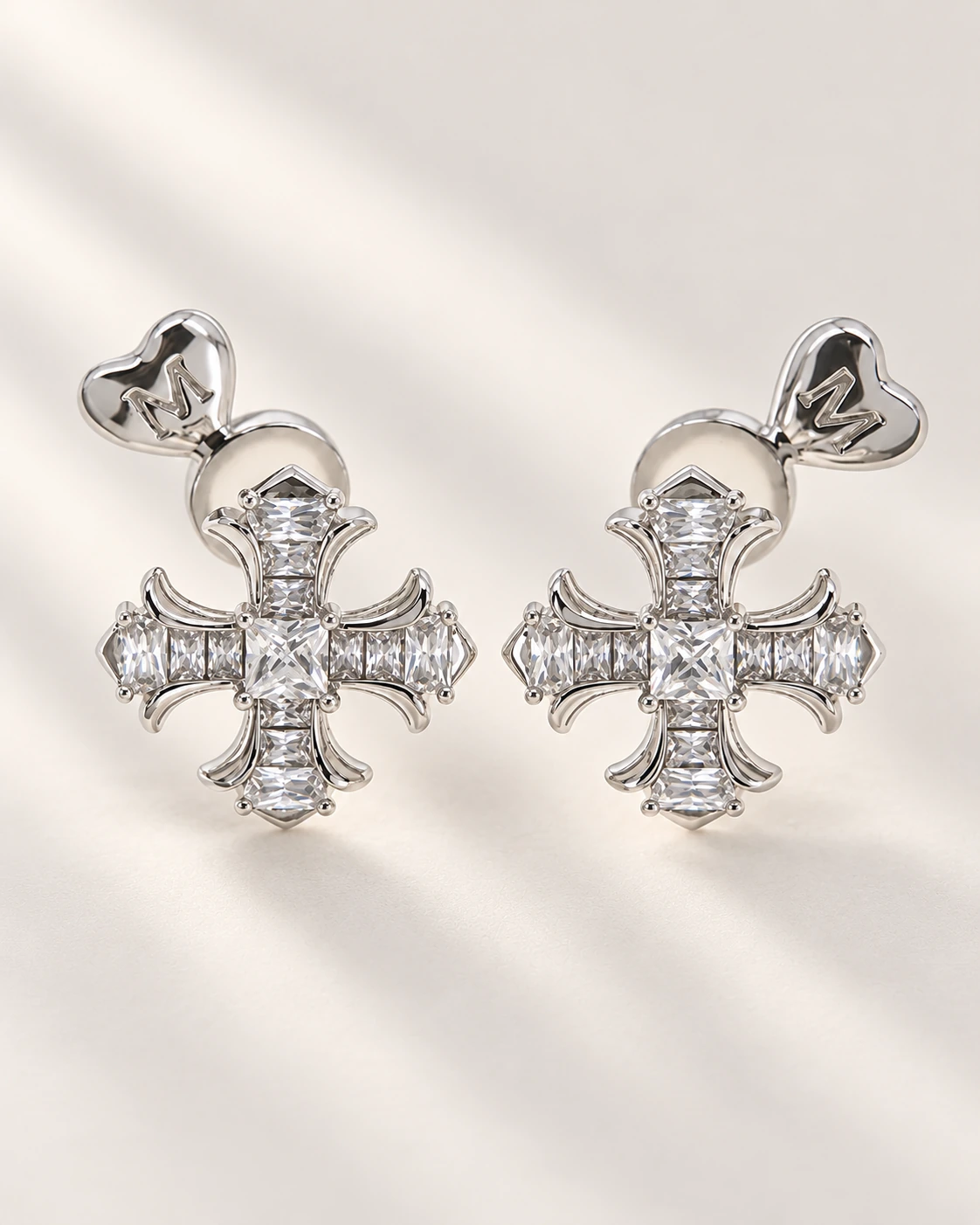
For a quiet combination, try Jardin Croix Petite. Clear stones outline the short arms of a cross with softly flared ends. The detail sits at the lobe with no long drop to draw a line towards the chin. Look for a strip of skin between the lower rim and the stud. If the cross seems to merge with the arm in a front view, turn slightly. Moving one strand of hair may be enough to reveal the motif.
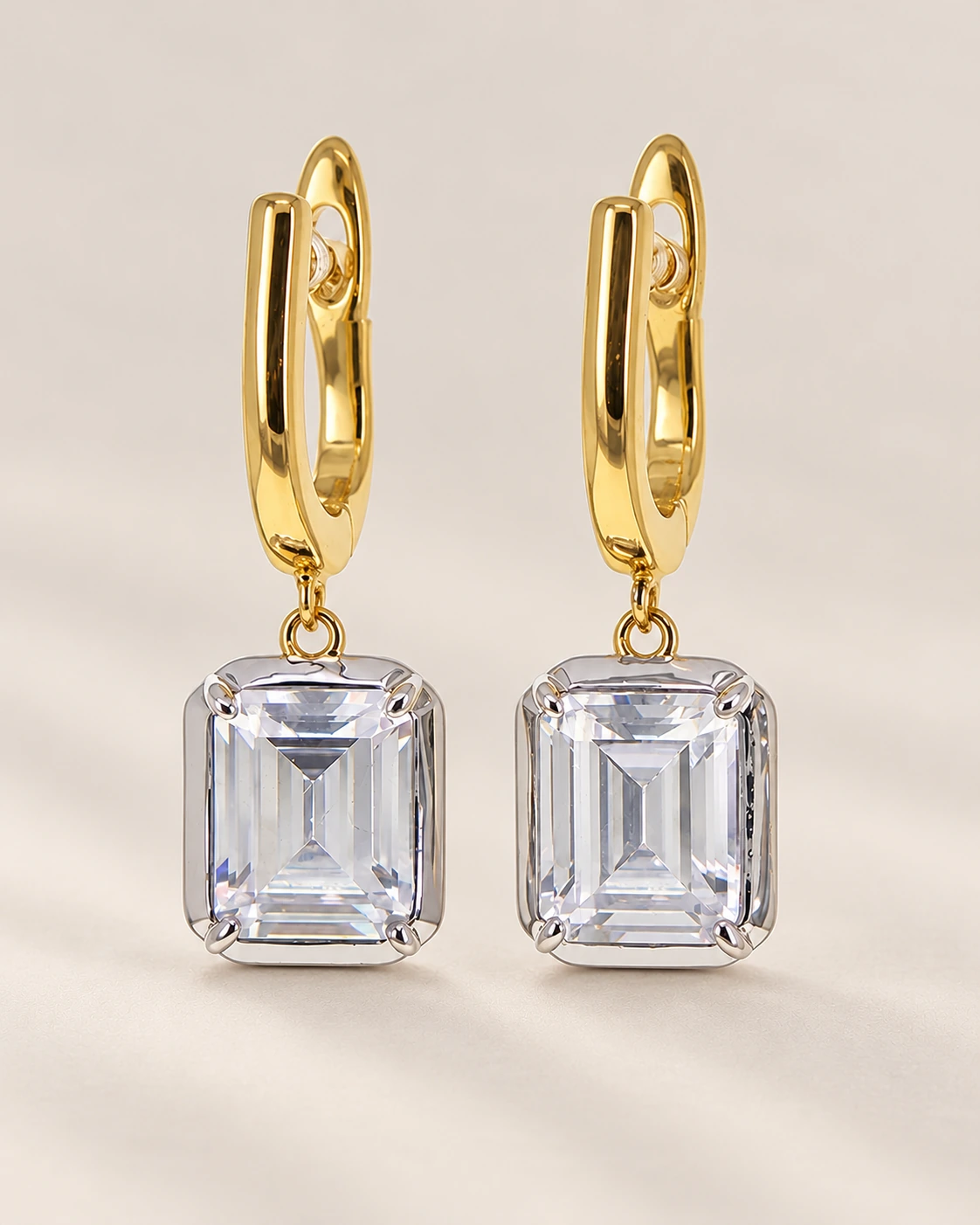
For more definition, keep the glasses and replace the studs with Lumière Recto. A clear rectangle hangs below a smooth, warm gold-toned upper element. Against a fine wire rim, the change from a curve to straight edges becomes the detail to look for. Check where the lower edge falls beside your shirt collar. If they meet when you turn, open the top button or try a pair without a moving element.
Bold dark frames
A quiet pair beside thick black frames can still have a pattern. Try the Jardin Croix Petite crosses with a plain top. The dark band above the eyes remains the widest line, while the clear points near the lobe catch the light when you turn. Check the side facing away from the window. If the earrings register only as flashes, decide whether that is the effect you want in the room where you will wear them.
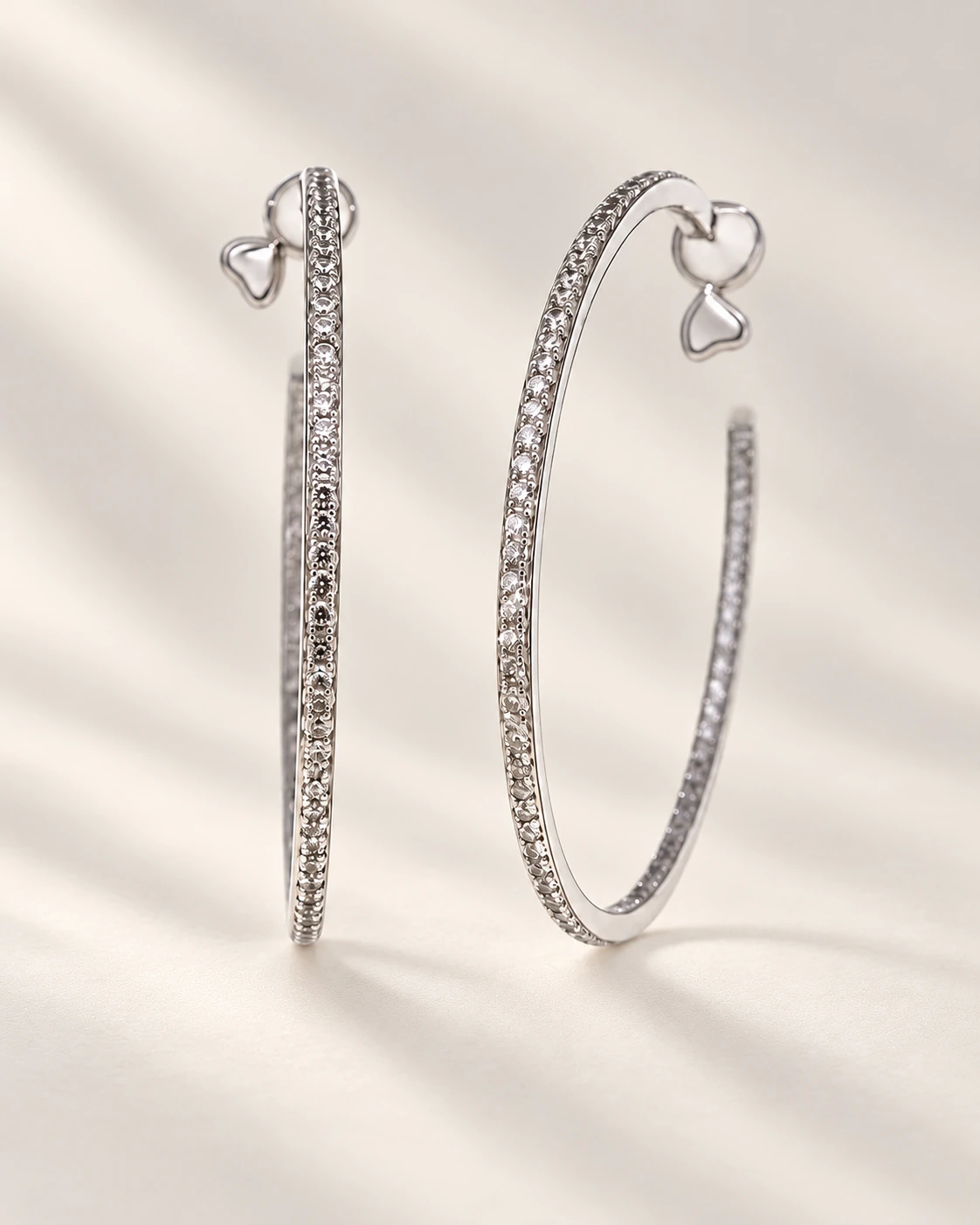
For a stronger silhouette, choose Courbe Orbite. These are large, thin hoops with an elongated curve and small clear stones. The solid rim of the glasses and the open space inside each hoop give you two different shapes. Sweep your hair to one side and follow the outer edge of the hoop. From the front it may read as a narrow line, while a three-quarter view reveals the arc. This is a good reason to compare more than the straight-on product photograph.
Round lenses with a pale rim
For a soft echo of the lenses, try a small pair of plain hoops you already own. Look for a pair with just a little space between the lobe and the lower curve. Face the mirror, then turn slightly. Can you distinguish the two scales of circle? Small hoops are a shape to try here. Courbe Orbite has a large, elongated arc, so a short hoop from your own collection will make a clearer comparison.
For contrast, bring back the rectangular Lumière Recto drops. Their straight sides are particularly easy to see beside the curved lower rim of a round lens. Pin your hair up to see the entire outline, then let it down as you intend to wear it. If only a corner of the drop shows through, try a side part. That changes how much of the earring is visible while keeping the glasses, clothing colour and drop length constant.
Coloured frames, using blue as an example
With a coloured frame, first locate the colour. On translucent blue glasses, the rim may look pale against the light while the side arm looks dark against your hair. For a quieter combination, keep the single colour at eye level and add the clear Jardin Croix Petite studs. If your frames are both blue and round, choose the feature that matters to you today. Here the starting point is colour, while the previous comparison explored the shape of the lens.
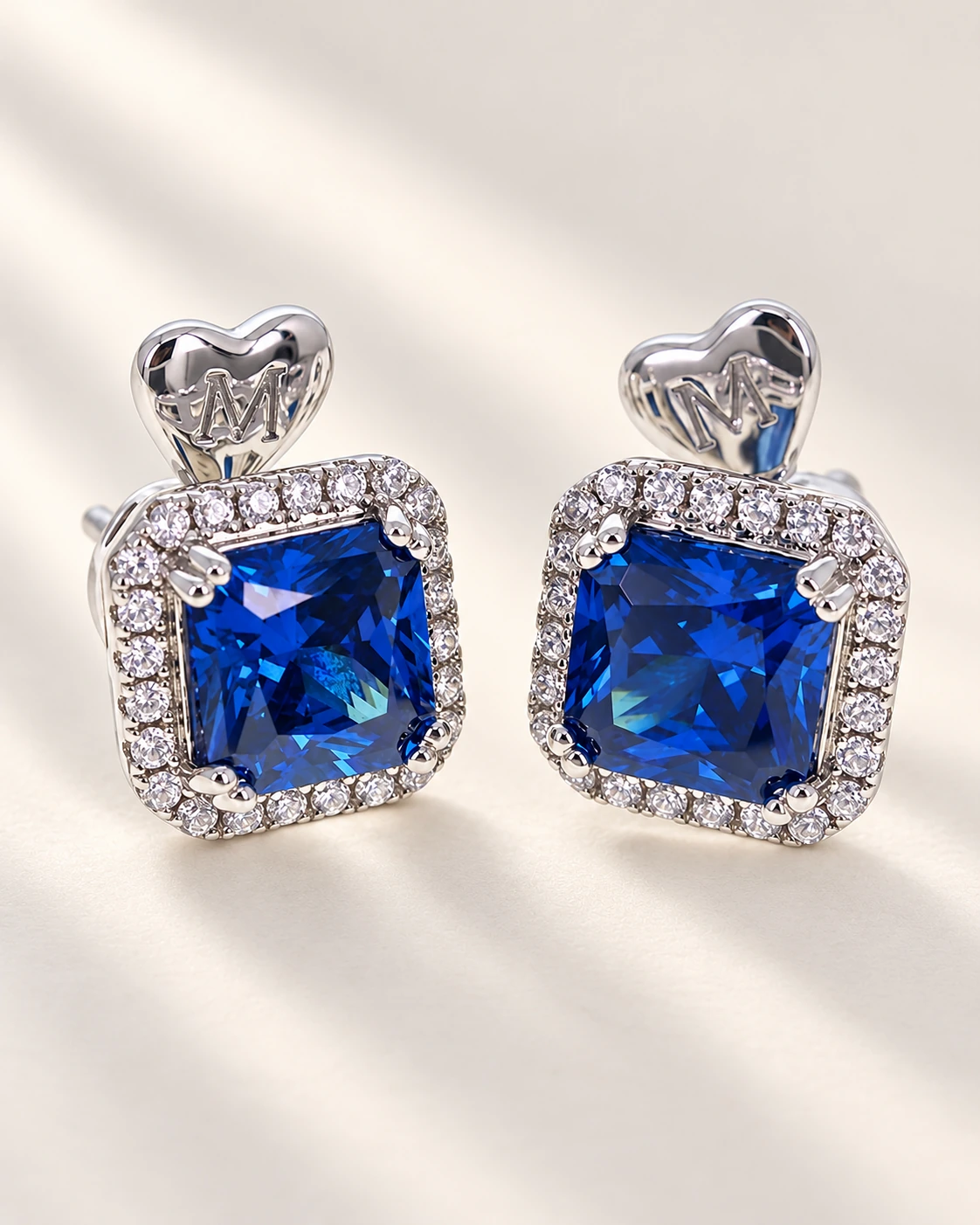
For more colour, try Éclat Céleste Blue. A saturated blue centre sits inside a clear square halo with rounded corners. Hold an earring near the side arm by a window. Do you see related blues, or does one shade lean towards violet? Either can be appealing. Put the earrings on and step away from the mirror. A white shirt leaves two areas of colour close to the face, while a blue scarf introduces a third. Try them in turn.
A check that takes you away from the mirror
Put your glasses case where you normally leave it. Take the frames off with your usual movement, put them away, then put them back on. Follow the tip of the arm. Does it clear your hair without being lifted over the earring? Turn towards your shoulder and back. If a strand slips between the earring back and your ear, repeat the movement with your hair loose and tied before choosing a pair for a full day.
If you use headphones, make a short test call with your usual headset. With padded ear cups, feel where the rim meets the face of the earring or the arm of the glasses. With earbuds, pay attention to your hand: can you reposition a bud without pulling on a hoop? If you notice pressure or catching, remove the earrings and try a different construction. A product photograph of an ear cannot predict how your own headset will sit.
To check scale, reverse the order of your fitting. Keep the earrings and swap a fine frame for a wider one. Look at the side where you normally part your hair. If an earring appears in one picture and disappears behind the arm in the other, the width of the arm at the temple may explain it. The difference in colour between the two frames may matter much less.
Choose for the day ahead
On a day of calls, start with studs and check them with the headset you will actually wear. For an ordinary walk, try small hoops with your everyday glasses, then add your scarf and fasten your coat. For dinner, when you would like the earrings to lead, compare the clear rectangular drop and the blue centre with the same top. Look at a photograph of your whole face. Which combination puts the attention exactly where you want it?
Keep two favourite photos together, labelled for the occasion, such as a working day with headphones and dinner without a scarf. Add a note about the detail that made you choose each pair: the outline appears below the lens, your hair stays in place, or the earring back clears your headphones. Take that note shopping when you want to compare a similar earring with a different drop.
A closer look